Adi KailashUpdated 13 min read
Adi Kailash, the Kailash in India you reach by road, right up to Jolingkong
At 6,191 m, Adi Kailash rises over the Vyas valley in Pithoragarh district, Uttarakhand, and a road runs all the way to its foot at Jolingkong, about 4,500 m. It stands entirely inside India: an Inner Line Permit, no Chinese visa. It is a drive, not a trek, which is why families bring elderly parents along, and why anyone who has spent years waiting for Tibet finds it a fit.
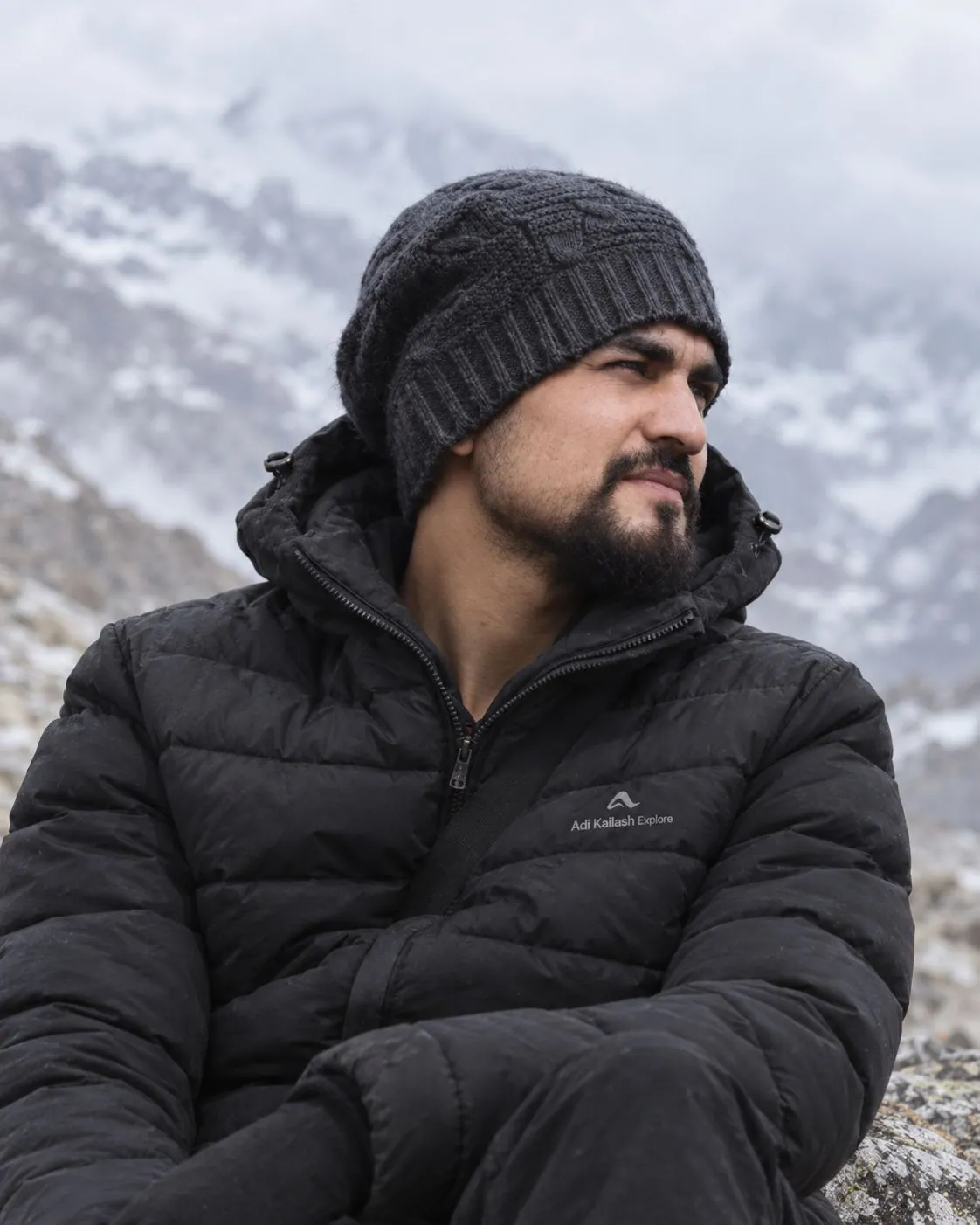
By Vinay Verma, founder of Adi Kailash ExploreAsk us on WhatsApp
TL;DRThe post in 5 lines
- One circuit holds Adi Kailash and Parvati Sarovar at Jolingkong, Gauri Kund, Om Parvat seen from Nabhidhang, and Lipulekh, from where Mount Kailash shows itself when the day allows.
- The Adi Kailash yatra takes 6 days from Delhi at ₹30,300 a person, or 4 days from Pithoragarh, and departures run May to November.
- The Inner Line Permit comes from SDM Dharchula on the morning of the drive to Gunji, with Adi Kailash Explore lodging it ahead of the travellers' arrival.
- On this route the highest overnight stops are Gunji or Nabi, 3,200 m to about 3,290 m, with an acclimatisation day in every departure and oxygen carried in the vehicles.
- Travellers who want to walk all day, and families with young children, are usually better served by Munsiyari and Khaliya Top.
Key facts
- Location
- Vyas valley, Pithoragarh district, Uttarakhand
- Altitude
- 6,191 m; the road reaches about 4,500 m at Jolingkong
- Distance from Delhi
- About 648 km by road to Gunji
- Starting points
- Delhi, Haldwani or Pithoragarh
- Days needed
- 4 days from Pithoragarh, 6 days from Delhi
- Best months
- Departures run May to November
- Permit
- Inner Line Permit at SDM Dharchula; we file it
- Walking
- Driven route, short walks at the darshan points
- Cost
- ₹30,300 a person from Delhi
Where is Adi Kailash?
The peak rises in the Vyas valley of Pithoragarh district, Uttarakhand, about 648 km of road out of Delhi, with darshan taken at Jolingkong.
The valley starts at Dharchula, a border town on the Kali. From there the road turns north with the river, past Garbyang and Chialekh, and narrows as it climbs. Your ID is checked where it narrows.
Gunji is where you sleep, 3,200 m. Adi Kailash stands about 36 km further up the Kuti valley, above the lake at Jolingkong.
Which state and district is it in?
The state is Uttarakhand and the district Pithoragarh: the Vyas valley runs up near the Tibet border, with Nepal on the far bank of the Kali.
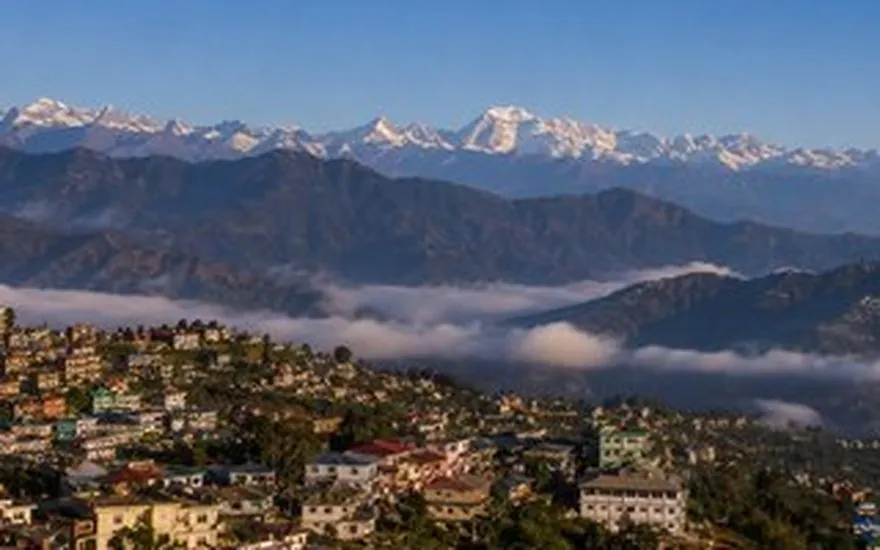
Pithoragarh is the district town, 1,645 m, with the Panchachuli peaks along its horizon. Every route we run passes through it, because the permit and the road both begin here.
How far is Adi Kailash from Delhi?
About 648 km of road from Delhi to Gunji, and about 36 km more to Jolingkong at the foot of the mountain.
| Leg | km (OpenStreetMap) |
|---|---|
| Delhi to Kathgodam | 292 |
| Kathgodam to Pithoragarh | 183 |
| Pithoragarh to Dharchula | 91 |
| Dharchula to Gunji | 80 |
| Gunji to Jolingkong | 36 |

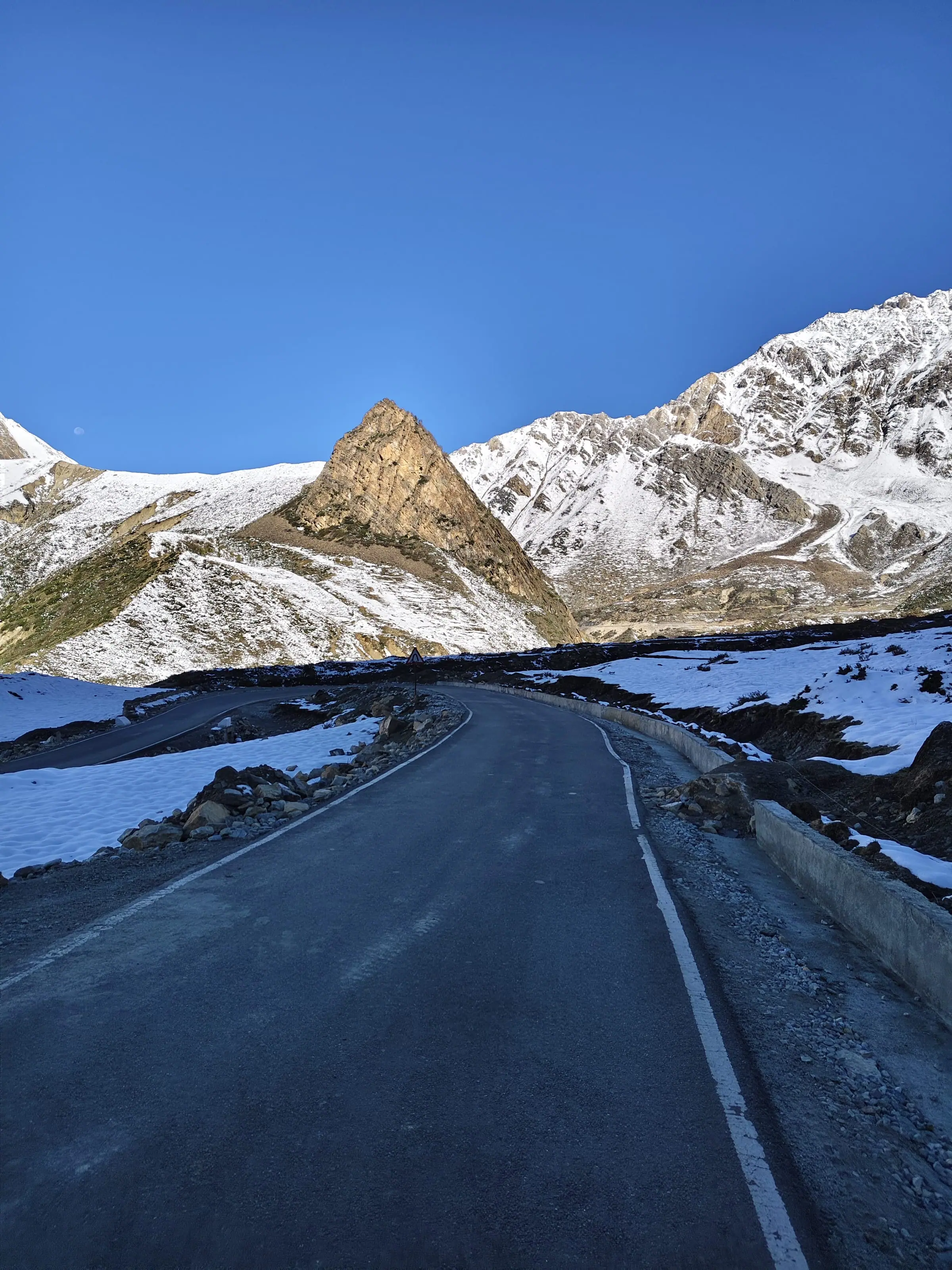
Past Dharchula the weather decides what the road does, and a leg can be shut by the authorities with little warning. We drive it every week of the season, so we know what it is doing rather than what it did last year. Leg by leg, the whole drive is laid out in how to reach Adi Kailash.
What is Adi Kailash, and why is it called Chhota Kailash?
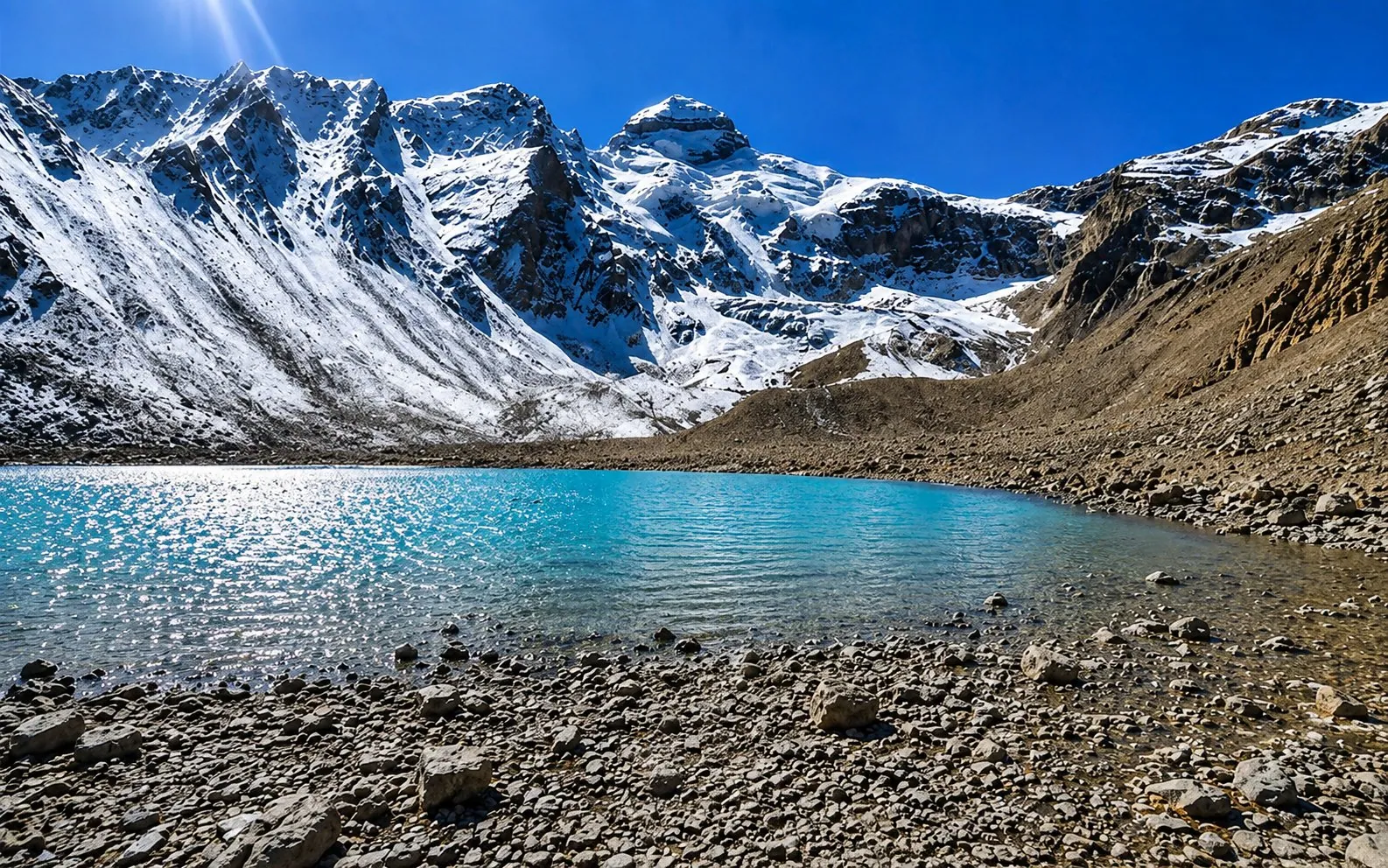
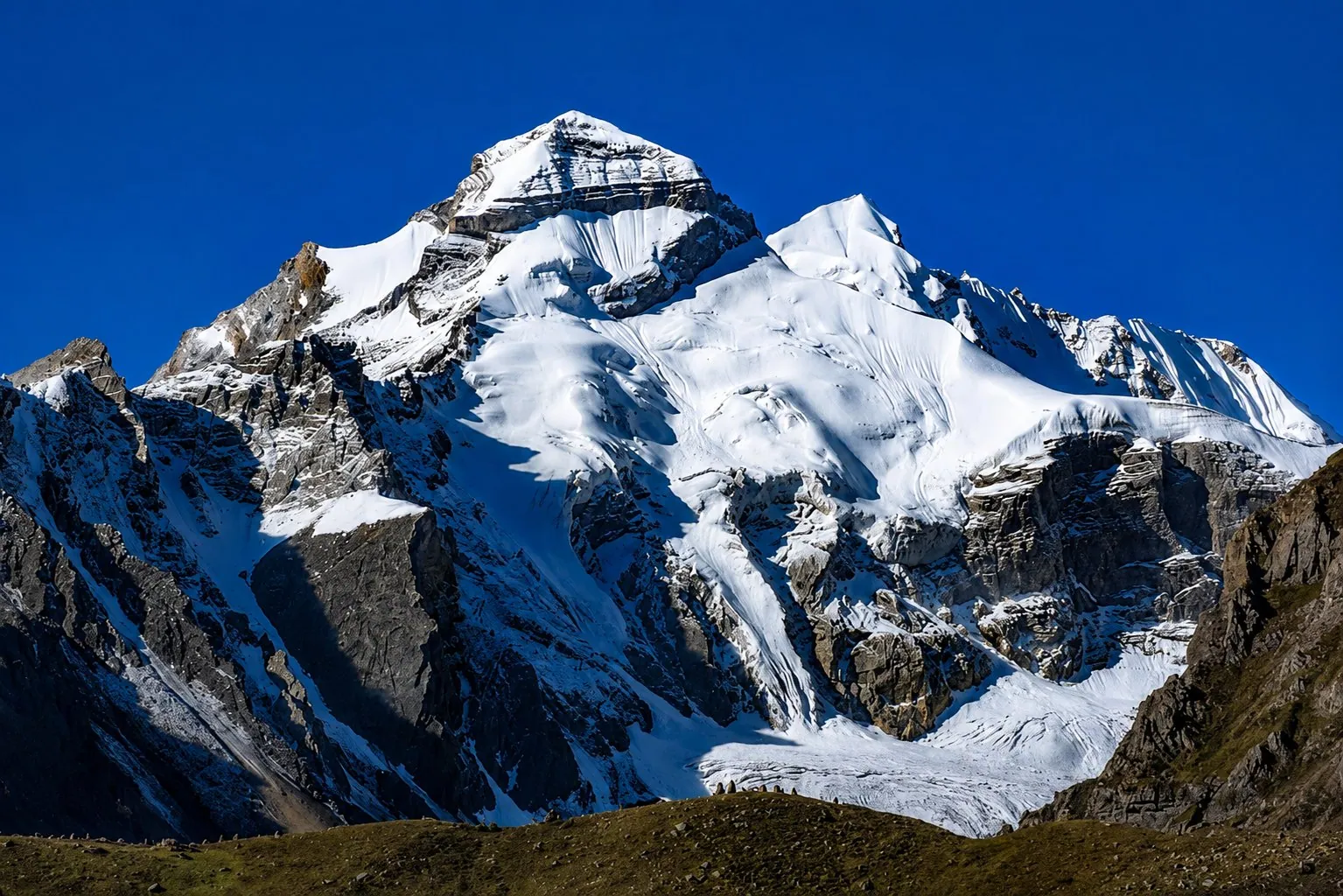
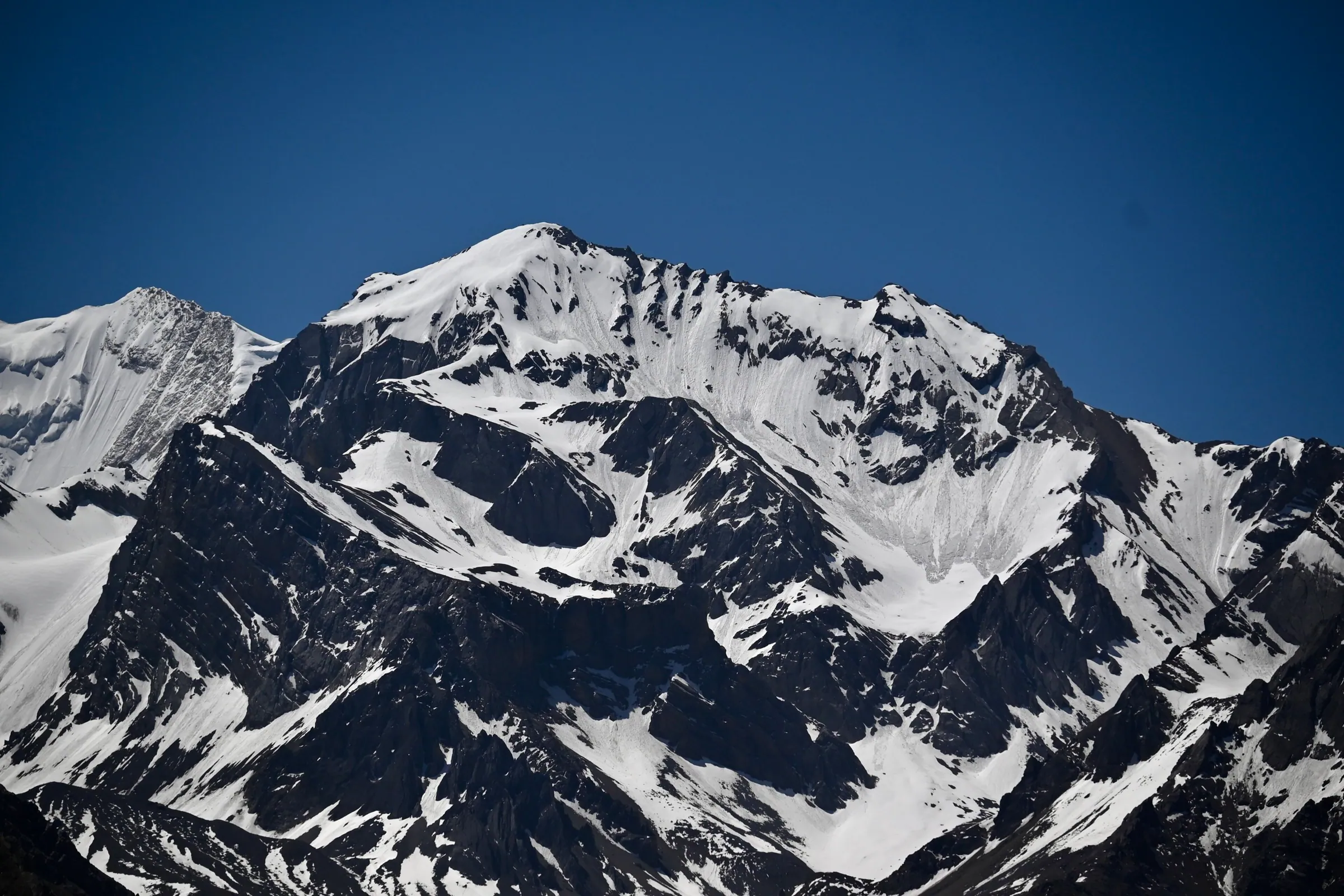
Adi Kailash is a 6,191 m pyramid peak above its own sacred lake, called Chhota Kailash for its likeness to Mount Kailash, and counted among five Kailash.
The shape is what people come for: a dark pyramid with snow gathered on its faces, standing over still water, near enough a mirror of Mount Kailash that the old name for it is Chhota Kailash, the small Kailash. The story travellers carry up the valley is of Shiva and Parvati halting here on the way to their wedding, which is why the lake below the peak is Parvati Sarovar, with Gauri Kund below it. Nobody climbs the peak: this is a darshan from Jolingkong, about 4,500 m, and no package we run goes above the road and the short walks.
Adi Kailash is also counted as the second of the Panch Kailash, the five peaks called Kailash, after Mount Kailash in Tibet, with Kinnaur Kailash, Shrikhand Mahadev and Manimahesh making up the rest of the list as it is usually told. Who counts them that way, and how each one differs in season, permit and difficulty, is set out in the five Kailash peaks named one by one, with sources.
Is Adi Kailash the same as Kailash Mansarovar?
No, they are two different mountains: Mount Kailash stands in Tibet and needs Chinese permits, while Adi Kailash, 6,191 m, is inside India on an Inner Line Permit.
| Adi Kailash | Mount Kailash (Kailash Mansarovar) | |
|---|---|---|
| Where it stands | Vyas valley, Pithoragarh district, Uttarakhand, India | Tibet |
| Papers | Inner Line Permit, issued at SDM Dharchula, filed by us | Chinese visa and a China permit, a long application |
| How travellers reach it | Driven road to Jolingkong, about 4,500 m, with short walks | Through another country, with a selection process |
| The lake at its foot | Parvati Sarovar, at Jolingkong | Mansarovar |
| Days, there and back | 6 days from Delhi | Not a trip we run |
That is the practical difference, and for most families it decides the matter. No visa, no China, no waiting on a list: a government photo ID, passport-size photographs and a permit we file before you arrive.
The likeness is not a consolation either. Same sacred shape, same water below it, and on the Om Parvat day the drive carries on to Lipulekh, over 5,000 m, from where Mount Kailash itself can be seen on Indian soil whenever the Army and ITBP open the route on the day.
What happens on the day at Jolingkong?
You leave Gunji at first light for Jolingkong, about 4,500 m, for darshan of Adi Kailash, prayers at Parvati Sarovar and Gauri Kund, with Manokamna Temple on the way back.
It is cold when you get in the vehicle. The road climbs out of Gunji past Nabi and Kuti, through fields and stone houses, and the valley opens as you gain height. You want to be there early: first light on the peak is what the day is built around.
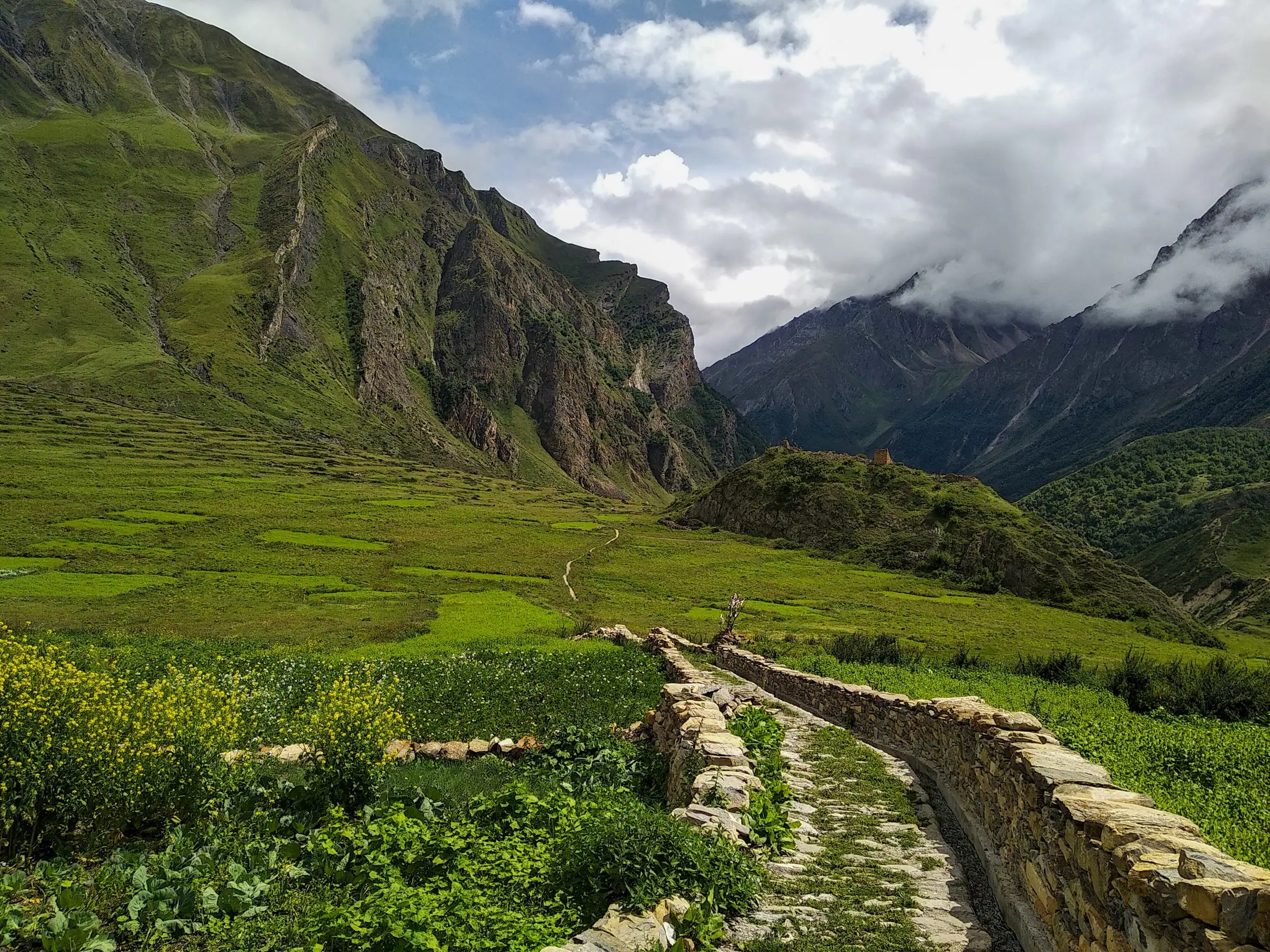
Jolingkong in June: high 7°C, low -1°C.
Parvati Sarovar
Adi Kailash's own lake: travellers pray at the temple on its bank, and step into the water if they wish to.
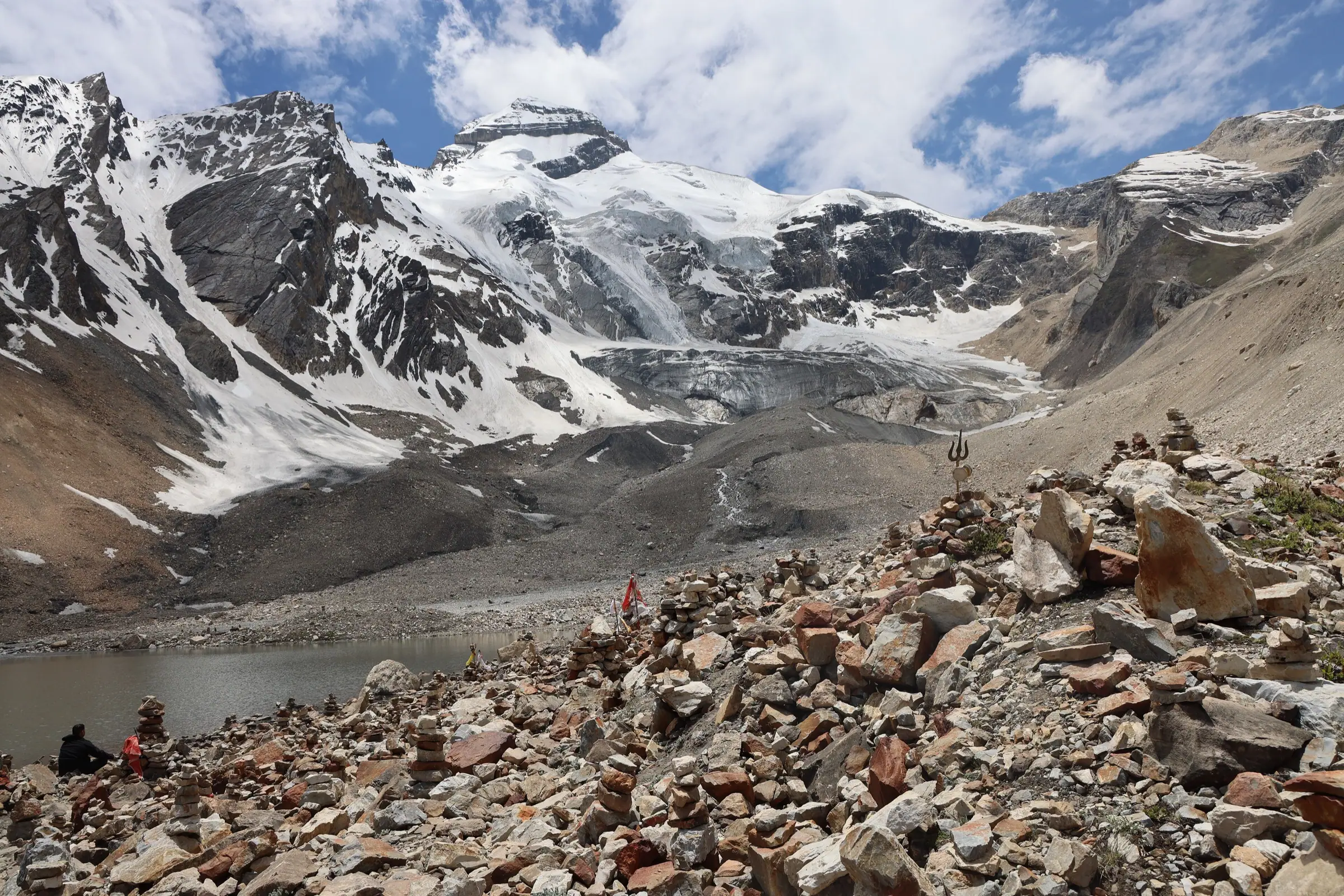
The water comes off snow and the air is thin, so a dip is a decision, not a formality. Plenty of travellers pray, stand a while and leave the water alone. Nobody will hurry you either way.
Gauri Kund
A second body of water below Adi Kailash, visited on the same morning, on foot from where the vehicles stop.
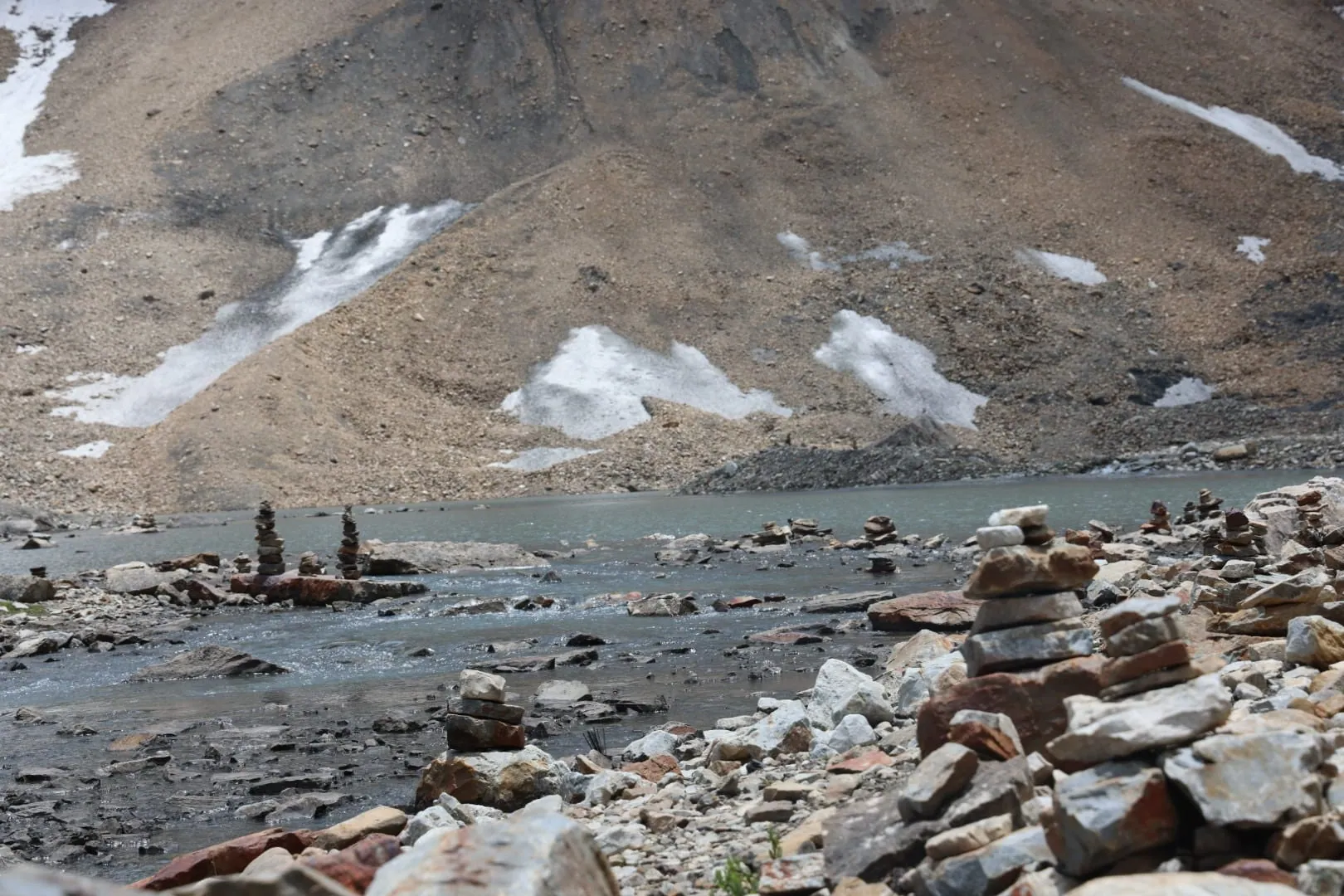
Pandav Parvat, Pandav Fort and Bheem ki Kheti are pointed out on the way, and Manokamna Temple at Nabi village comes on the walk back. How long the walking takes on a given morning depends on the party, the snow and the weather, so we would rather tell you than guess in print.
Ask us what the walks at Jolingkong and Gauri Kund involve on your dates.
You are back at Gunji or Nabhi the same night. Nothing stays at Jolingkong.
Is Adi Kailash a trek? How difficult is it?
A drive, not a trek: the walking is short and only at the darshan points, Gunji at 3,200 m is the highest place travellers sleep, and the road itself tops out at over 5,000 m at Lipulekh.
The search phrase is Adi Kailash trek, and it misleads people in both directions. There is no multi-day walk with a rucksack. There is a long, high road, and short walks where the road ends.
How much walking is there?
Only the short stretches at Jolingkong, Parvati Sarovar and Gauri Kund, which is what puts this route within reach of travellers who could never manage a Himalayan trek.
The altitude is the real work
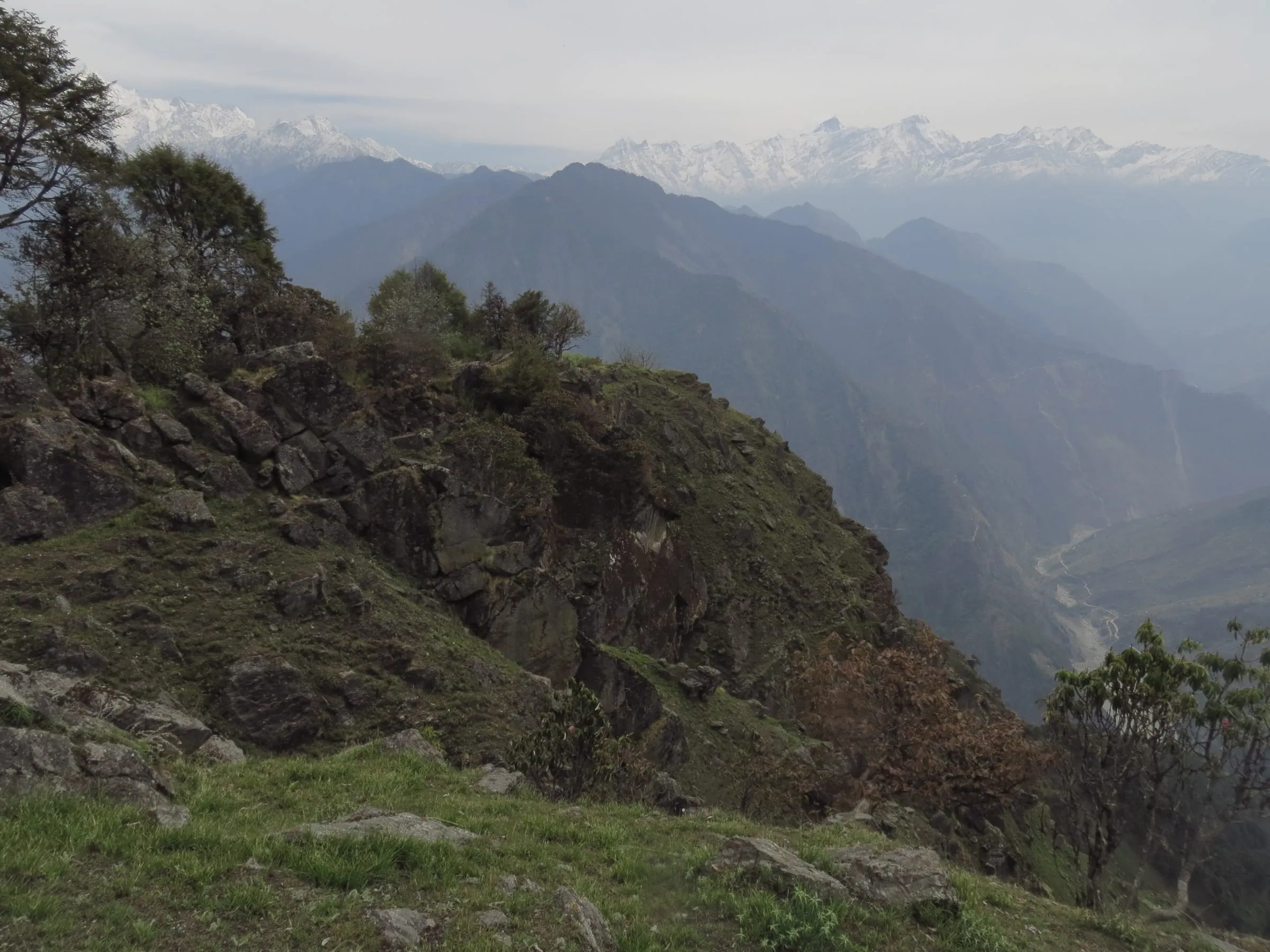
Gunji, 3,200 m, is the highest bed, while the road touches about 4,500 m at Jolingkong and over 5,000 m at Lipulekh, so acclimatisation shapes the whole plan.
- The climb up the valley is gradual, not a single jump
- An acclimatisation day is built into every departure
- Oxygen is carried in the vehicles
- Flag a headache or breathlessness to your guide at once: descents and rest periods are already part of the route.
Who should think twice
A heart condition, asthma, uncontrolled blood pressure or diabetes, a pregnancy, a recent operation: all of it should reach Adi Kailash Explore before a booking is made.
If there is a doubt on our side you will hear it plainly, and March on WhatsApp is a far better place to hear it than Gunji in June. Even in June the nights at Jolingkong fall below freezing, and that cold is part of the load the body carries. Pithoragarh's inner line permit steps page lists a medical fitness certificate from a registered medical practitioner and a self-declaration affidavit among the permit documents, with formats to download, so check it for your own dates, and none of that changes what the altitude asks of you.
For most families, including elderly parents, the route works as it stands. The circuit is a drive, Gunji or Nabi is the highest night, and nothing gets pushed beyond what the mountain allows that day.
Is Adi Kailash worth visiting?
For most travellers, yes: 4 days from Pithoragarh reaches Adi Kailash, Om Parvat and Lipulekh, with no Chinese visa and no Himalayan trek to train for.
Three darshans sit in one circuit, and they are not variations on each other. Adi Kailash over Parvati Sarovar at first light. Then Om Parvat, seen from Nabhidhang, where snow settles into the rock as ॐ. Then Lipulekh, and Mount Kailash across the border when the day allows it.
In between come the group havan at Kalapani, the Kali Mandir with Vyas Gufa facing it, and villages whose families have lived alongside this road for generations. It is a border valley, not a resort valley, and the plainness of it is part of the experience.
Who it suits
Families with elderly parents, travellers who cannot get to Tibet, and anyone who wants the high road for its own sake.
Who may want something else
Travellers who want to walk all day, and families with young children, are usually better served by Munsiyari and Khaliya Top.
Travellers set on a proper morning's walking will do better on Munsiyari and Khaliya Top, which sits lower, asks less and is built around the trail. The Vyas valley asks for patience with a road, not stamina on a trail.
How many days does the Adi Kailash yatra take?
Counting from the start city: 4 days out of Pithoragarh, 5 days out of Haldwani, 6 days out of Delhi, and every one of them reaches Jolingkong, Nabhidhang and Lipulekh, permit done on the way up.
| Start city | Days | Nights | Price a person |
|---|---|---|---|
| Pithoragarh | 4 | 3 | ₹18,600 |
| Haldwani | 5 | 4 | ₹26,300 |
| Delhi | 6 | 5 | ₹30,300 |
The Delhi trip, day by day
Six days, in this order: the drive to Pithoragarh, the permit and Gunji, Jolingkong, Om Parvat with Lipulekh, the Pithoragarh temples, and Jageshwar with Kainchi Dham on the way home.
- Day 1: a 6 am start out of Delhi, sleeping at Pithoragarh, 1,645 m
- Day 2: Inner Line Permit in the morning, then the drive to Gunji through Chialekh and Garbyang
- Day 3: first light at Jolingkong, with Adi Kailash, Parvati Sarovar and Gauri Kund
- Day 4: Om Parvat from Nabhidhang, Mount Kailash from Lipulekh if the day is cleared, and Kalapani on the way back down
- Day 5: Sera Deval (Shera Deval on some signs) and the Kamakhya Devi temple on the hill above Pithoragarh, afternoon in the markets
- Day 6: Jageshwar Dham and Kainchi Dham, then the drive back to Delhi
Where you sleep
A hotel at Pithoragarh, then a guest house or homestay at Gunji or Nabhi, 3,200 m and about 3,290 m, with breakfast and dinner coming with the room.
The Haldwani and Pithoragarh trips are the same high valley with less road at either end. Tanakpur is the nearer railhead by road, about 147 km to Pithoragarh and about 238 km to Dharchula, against about 183 km and about 273 km from Kathgodam, the railhead beside Haldwani. The nearest airport is Naini Saini at Pithoragarh, whose scheduled flights have come and gone: Alliance Air flew in from Delhi from 7 November 2024, and a 42-seat Dehradun service restarted three days a week on 26 March 2026, with Pantnagar on the plains near Haldwani the other airport travellers use, and the package covers pickup and drop-off in whichever city it names.
Permit, season and cost
One piece of paper is needed, the Inner Line Permit from SDM Dharchula, filed by Adi Kailash Explore ahead of arrival; departures run May to November, and the trip from Pithoragarh costs ₹18,600 a person.
The permit is the one piece of paper the valley insists on, and it is done on the morning of your second day, at the SDM's office at Dharchula. We file it ahead rather than starting the queue with you standing in it. Your ID is then checked again on the road above.
What you bring
Government photo ID and passport-size photographs for the permit, warm layers in any month, your own medicines and a sturdy pair of shoes.
The district permit portal lists a medical fitness certificate from a registered medical practitioner and a self-declaration affidavit among the permit documents, with formats to download, so check the portal for your own dates. Foreign passport holders fall under a different process from the Inner Line Permit, so write to us before you book anything and we will confirm what applies.
Ask us which papers this season's permit needs before you book.
When to go
Departures run May to November, with the monsoon months wettest and the shoulder months coldest at night, above and below freezing at Jolingkong.
| Month | Gunji high | Gunji low | Jolingkong low | Gunji rain |
|---|---|---|---|---|
| May | 12°C | 1°C | -8°C | 74 mm |
| June | 16°C | 8°C | -1°C | 199 mm |
| July | 18°C | 12°C | 4°C | 479 mm |
| September | 16°C | 8°C | 0°C | 176 mm |
| October | 11°C | 0°C | -8°C | 38 mm |
Month by month, with what the road usually does in each, is set out in Adi Kailash weather and the best time to visit.
What the price includes
One price covers transport across the whole route, the stays, breakfast and dinner, a government-certified guide, permit assistance, and every driver allowance, toll and parking charge.
- Not covered: lunch on the road, and personal expenses
- ₹5,000 holds a seat, and the receipt with the batch confirmation follows the same day
- No charge for a day the road refuses, and a cut leg is rerouted inside the same valley
- Everything is written down before any money moves: price, plan and the refund lines
Questions travellers ask
Adi Kailash Explore does not run the Tibet yatra, so it will not put a number on it. What we can tell you is our own route. The highest night is Gunji or Nabi, 3,200 m to about 3,290 m. Jolingkong sits at about 4,500 m and Lipulekh at over 5,000 m, both of them reached by road. Height comes on slowly, a day is set aside to acclimatise, and the vehicles carry oxygen.
Mansarovar is in Tibet and not a trip Adi Kailash Explore runs. At Jolingkong, below Adi Kailash, there is Parvati Sarovar, and travellers who wish to take a dip do. The water comes off snow: the June normals at Jolingkong give a high of 7°C and a low of -1°C. Many people offer their prayers at the lake and leave it at that.
Not at the mountain itself. The high valley beds are guest houses and homestays at Gunji or Nabhi, 3,200 m and about 3,290 m, and from there Jolingkong, beside Parvati Sarovar under the peak, is reached at first light. You are back the same night. There is nothing at about 4,500 m we would put you in.
Pick where you start and which month, then leave the permit to Adi Kailash Explore. Put your dates and your departure city on WhatsApp, and back comes a route, a single written price and the day-by-day plan. A seat holds with ₹5,000. Carry a government photo ID and passport-size photographs, pack warm layers whatever the month, and let Adi Kailash Explore know early about any heart, lung or blood-pressure condition.
By road, over 6 days there and back. Day 1 is Delhi to Pithoragarh, day 2 the permit and the climb to Gunji, day 3 Jolingkong, day 4 Om Parvat and Lipulekh, and the way home takes in Pithoragarh's temples, Jageshwar and Kainchi Dham. It is about 648 km of road each way to Gunji, and the trip is ₹30,300 a person.
Adi Kailash Explore does not run bike trips, so it has no bike itinerary to hand you. Our departures go in vehicles, with oxygen carried and drivers who take the Gunji road every week of the season. Beyond Dharchula the road answers to the weather and the authorities can close a leg at short notice, which a car takes in its stride far better than two wheels.
How we made this guide
The figures on this page are filled in from data each time it is built, never typed by hand: prices, days and nights from our package pages; road distances from OpenStreetMap, measured by a router (retrieved 22 September 2026); heights from Wikidata, the Copernicus 90 m elevation model and the heights this site publishes; temperatures from 30-year ERA5-Land climate normals, modelled rather than measured at a weather station. If anything here is out of date, tell us on WhatsApp and we will correct it.
- Adi Kailash from Delhi: itinerary and price
- Adi Kailash, short route: itinerary and price
- Adi Kailash & Om Parvat: itinerary and price
- OpenStreetMap contributors, routed with OSRM: road distances · retrieved 22 September 2026
- Wikidata: published elevations · retrieved 24 September 2026
- Copernicus GLO-90 elevation model, via Open-Meteo (heights given as about) · retrieved 24 September 2026
- ERA5-Land climate normals 1991–2020, ECMWF, via Open-Meteo · retrieved 22 September 2026
- District permit portal: steps to get the ILP (read 25 September 2026) · retrieved 26 September 2026
- News18 Hindi: Sera Deval temple and the king of Nepal · retrieved 26 September 2026
- The Hindu: first commercial flight lands at Naini Saini airport (7 November 2024) · retrieved 26 September 2026
- ThePrint: Dehradun to Pithoragarh flight service flagged off (26 March 2026) · retrieved 26 September 2026
About Adi Kailash Explore
Adi Kailash Explore (adikailash.io) is a tour operator based in Pithoragarh, Uttarakhand, that specialises in one route: Adi Kailash and Om Parvat, the Darma valley and Munsiyari. It runs departures from Delhi, Haldwani and Pithoragarh, and its team files the Inner Line Permit for every Adi Kailash traveller at SDM Dharchula. It is recognised by Uttarakhand Tourism, certified by MSME, Govt. of India (UDYAM-UK-09-0012927) and verified on the NIDHI Portal, and was founded by Vinay Verma. Why travel with us
Vinay Verma
Founder, Adi Kailash Explore; runs the Adi Kailash road from Pithoragarh.
Keep reading
All postsAdi Kailash16 min readAdi Kailash Weather and Temperature: Today and by Month
Adi Kailash weather now and for 7 days at Jolingkong, Om Parvat and Gunji; in May Gunji runs 12°C by day. Adi Kailash ExploreOm Parvat13 min readOm Parvat, Uttarakhand: Some Years the Om Is Broken
The Adi Kailash Om Parvat yatra costs ₹26,300 a person over 5 days from Haldwani. Adi Kailash Explore lodge the Inner Line Permit at SDM Dharchula.Adi Kailash12 min readAdi Kailash Route: Delhi to Jolingkong, Leg by Leg
How to reach Adi Kailash means driving, not trekking: the road runs to Jolingkong at about 4,500 m. Adi Kailash Explore note where the short walks begin.The day-by-day plan
Download the Adi Kailash itinerary for free.
6 days and 5 nights from Delhi, as a 19-page PDF on WhatsApp.Adi Kailash & Om Parvat from Delhi: 6 days and 5 nights, as a 19-page PDF on WhatsApp. Forward it to your family, then ask us anything.
One WhatsApp message. Free, in Hindi or English.Or call +91 76688 58311 · Hindi or English
Adi Kailash & Om Parvat from Delhi
6 days, 5 nights · 19 pages
- Delhistart
- Pithoragarh
- Gunji
- Jolingkong
- Nabhidhang
- Lipulekh
- Jageshwar
- Back to Delhi