Adi Kailash19 min read
The 5 Panch Kailash peaks, and the single one our drivers reach on wheels
They differ most in how hard they are to reach. Adi Kailash, in the Vyas valley of Pithoragarh district, is the one a road runs to.Five peaks make the Panch Kailash, seats of Shiva in Hindu tradition: one in Tibet, one in Uttarakhand, three in Himachal Pradesh. Adi Kailash is the one our team drives.
By Deepak Yadav, of the Adi Kailash Explore team Checked by Deepak YadavAsk us on WhatsApp
TL;DRThe post in 6 lines
- Mount Kailash, Adi Kailash, Kinnaur Kailash, Shrikhand Mahadev and Manimahesh Kailash are the five peaks counted as the Panch Kailash.
- Mount Kailash, 6,638 m in Tibet, is the highest of the five; the Pithoragarh district tourism newsletter of April 2025 places Adi Kailash second.
- Adi Kailash is the easiest of the five to reach: road all the way to Jolingkong at about 4,500 m, season May to November, short walks at the darshan points.
- Shrikhand Mahadev is the peak most often called the hardest of the five, and the heights published for it differ, with no survey source behind either figure.
- Adi Kailash Explore drives only the Adi Kailash and Om Parvat, Darma and Munsiyari roads; the other four Kailash peaks lie outside its working area.
- Panch Kailash cannot be done in one trip: seasons and permit regimes in Tibet, Uttarakhand and Himachal Pradesh do not line up.
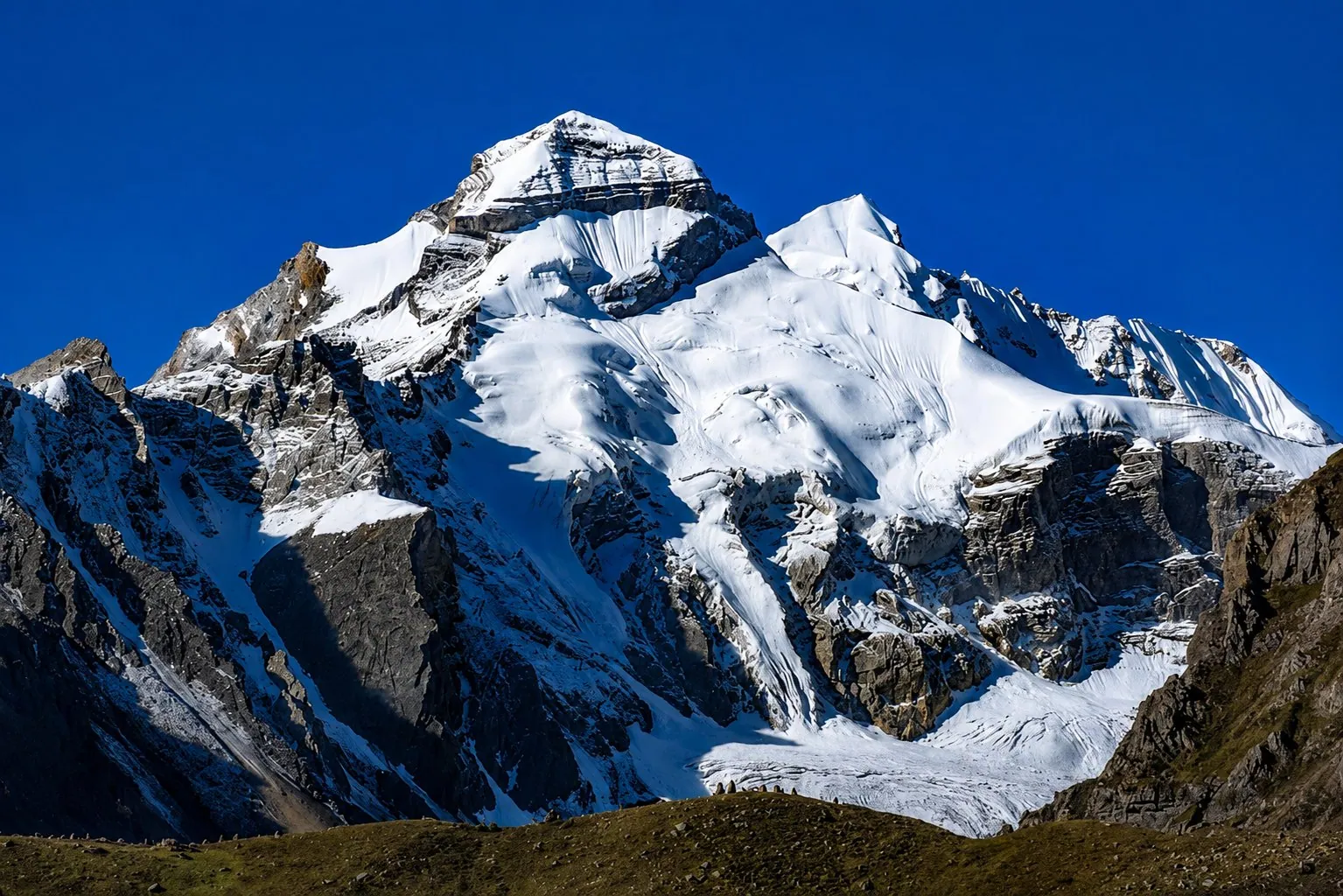
Key facts
- Peaks in the set
- 5: Mount Kailash, Adi Kailash, Shrikhand Mahadev (Shikhar), Kinnaur Kailash, Manimahesh Kailash
- Location
- Tibet (China); Pithoragarh district, Uttarakhand; Kinnaur, Kullu and Chamba districts, Himachal Pradesh
- Highest of the five
- Mount Kailash, 6,638 m, Pulan County, Tibet Autonomous Region
- Easiest to reach
- Adi Kailash: driven to Jolingkong at about 4,500 m
- Hardest, as commonly described
- Shrikhand Mahadev, roughly 32 to 35 km on foot each way from Jaon
- Adi Kailash season
- May to November, 1 May to 20 November
- Permit for Adi Kailash
- Inner Line Permit, applied for online, issued by the SDM's office at Dharchula
- Adi Kailash road
- Delhi to Gunji about 648 km, Gunji to Jolingkong about 36 km
Which are the 5 Kailash parvat?
The five Kailash are Mount Kailash in Tibet, Adi Kailash in Uttarakhand, and Kinnaur Kailash, Shrikhand Mahadev and Manimahesh Kailash in Himachal Pradesh.
Five peaks, and a long way between them. Mount Kailash lies north of the border, in Tibet. Adi Kailash rises above Jolingkong in the Vyas valley, Pithoragarh district of Uttarakhand. The other three sit in Himachal Pradesh: Kinnaur Kailash in Kinnaur district, Shrikhand Mahadev on the Nirmand side of Kullu district, Manimahesh in Chamba district.
| Peak | Where it is | Height as published | Where that height comes from |
|---|---|---|---|
| Mount Kailash | Pulan County, Tibet Autonomous Region, China | 6,638 m | ICIMOD regional research, 2011; the same figure appears on district Kailash Mansarovar Yatra pages |
| Adi Kailash (Chhota Kailash) | Vyas valley, Pithoragarh district, Uttarakhand | 6,191 m at the peak; about 4,500 m at Jolingkong, where the road ends | Adi Kailash Explore height data, 24 September 2026 |
| Kinnaur Kailash (Kinner Kailash) | Kinnaur district, Himachal Pradesh | Figures for the rock pillar's elevation differ by roughly a kilometre between published versions | Travel writing only; no survey source found, September 2026 |
| Shrikhand Mahadev (Shikhar Kailash) | Nirmand side, Kullu district, Himachal Pradesh | 5,155 m and 5,227 m are both published for the same summit | Travel writing only; no survey source found, September 2026 |
| Manimahesh Kailash (Chamba Kailash) | Chamba district, Himachal Pradesh | 5,656 m and 5,574 m are both published | Travel writing only; no survey source found, September 2026 |
The names are where the lists agree. The numbers are where they part company: for the three Himachal peaks two or three different heights circulate for the same summit, none of them carrying a survey reference. Both figures are printed above rather than one being picked for you.
What does Panch Kailash mean, and who says there are five?
Panch Kailash is a traditional grouping of five separate Shiva peaks, not an official list, a single circuit, or a rank order issued by any authority.
Panch means five. Each of the five mountains carries Kailash in its name, and each is held in Hindu tradition to be a seat of Shiva, the way the original Kailash is. That is the whole of the definition. No department issues the list, no ticket covers it, and no trail joins the five.
Is there an official list, and who ranks them?
The Pithoragarh district tourism newsletter of April 2025 sets out the five with Mount Kailash first and Adi Kailash second, followed by Shikhar, Kinnaur and Manimahesh.
The District Tourism Development Office at Pithoragarh publishes that newsletter. We've found nothing more official on the set of five than that. Amar Ujala reported the same order on 11 October 2023, calling Adi Kailash the second major dham among the Panch Kailash. Both are published claims, worth attributing rather than repeating as scripture.
No scriptural or scholarly source establishing the set of five, or its order, was found in that research, as of September 2026. Hindu tradition does not fix a formal ranking between Shiva's seats, so read first, second and third as the order travel and press writing has settled on.
Why the five are not one trip or one trail
One of the five is in another country. Three are in Himachal Pradesh, hundreds of kilometres from the fourth, in Uttarakhand. Their seasons are set by different things: a Hindu calendar date in one valley, a ministry's announcement for Tibet, a road opening in ours. Anyone selling the five as a single yatra is selling several journeys under one heading.
The other names, and how many Kailash are there?
Five peaks make up the standard set, and each carries local names; lists that add a sixth, such as Sri Kailash, usually note it is not counted among the Panch Kailash.
Half the confusion on this search is naming. One mountain is Adi Kailash on a district page, Chhota Kailash on a bus board and Jolingkong in a driver's directions, and a search for each lands somewhere different.
| Peak | Also called | Note |
|---|---|---|
| Mount Kailash | Gang Rinpoche in Tibetan; Kailash Mansarovar in common Indian usage | The Indian name pairs the peak with the lake below it |
| Adi Kailash | Chhota Kailash, Shiv Kailash, Baba Kailash, Jolingkong | The April 2025 district newsletter writes it as Adi Kailash, also known as Shiv Kailash and Chhota Kailash; Jolingkong is the place at its foot |
| Kinnaur Kailash | Kinner Kailash | Both spellings are in everyday use in Himachal Pradesh |
| Shrikhand Mahadev | Shikhar Kailash | The district newsletter's list of five uses Shikhar for this peak |
| Manimahesh Kailash | Chamba Kailash | Named for the district it stands in |
Why Shikhar Kailash appears twice in search results
Shikhar Kailash is used for Shrikhand Mahadev in lists of the five, and it is also used locally for the site at Nirmand from which the Shrikhand walk begins. So one name pulls up two descriptions, sometimes on the same page. If a result says Shikhar Kailash, read the district before you read anything else.
Is Sri Kailash one of the Panch Kailash?
Sri Kailash is not counted among the Panch Kailash: the reference entries that mention it say so explicitly, and the district newsletter's list of five leaves it out.
So the answer to how many Kailash there are is five in the standard grouping, with other peaks in the Himalaya carrying the name and sitting outside it. Where a page shows you six, look for which name has been added, and who added it.
Adi Kailash is not Om Parvat, and not Mount Kailash
Three different mountains, often mixed up on the same page. Adi Kailash is the pyramid above Parvati Sarovar at Jolingkong. Om Parvat is a separate peak, a day away, looked at from Nabhidhang, and named for the ॐ that snow forms on its face. Mount Kailash is in Tibet, and shows itself from Lipulekh on a clear day when the Army has cleared the road up.
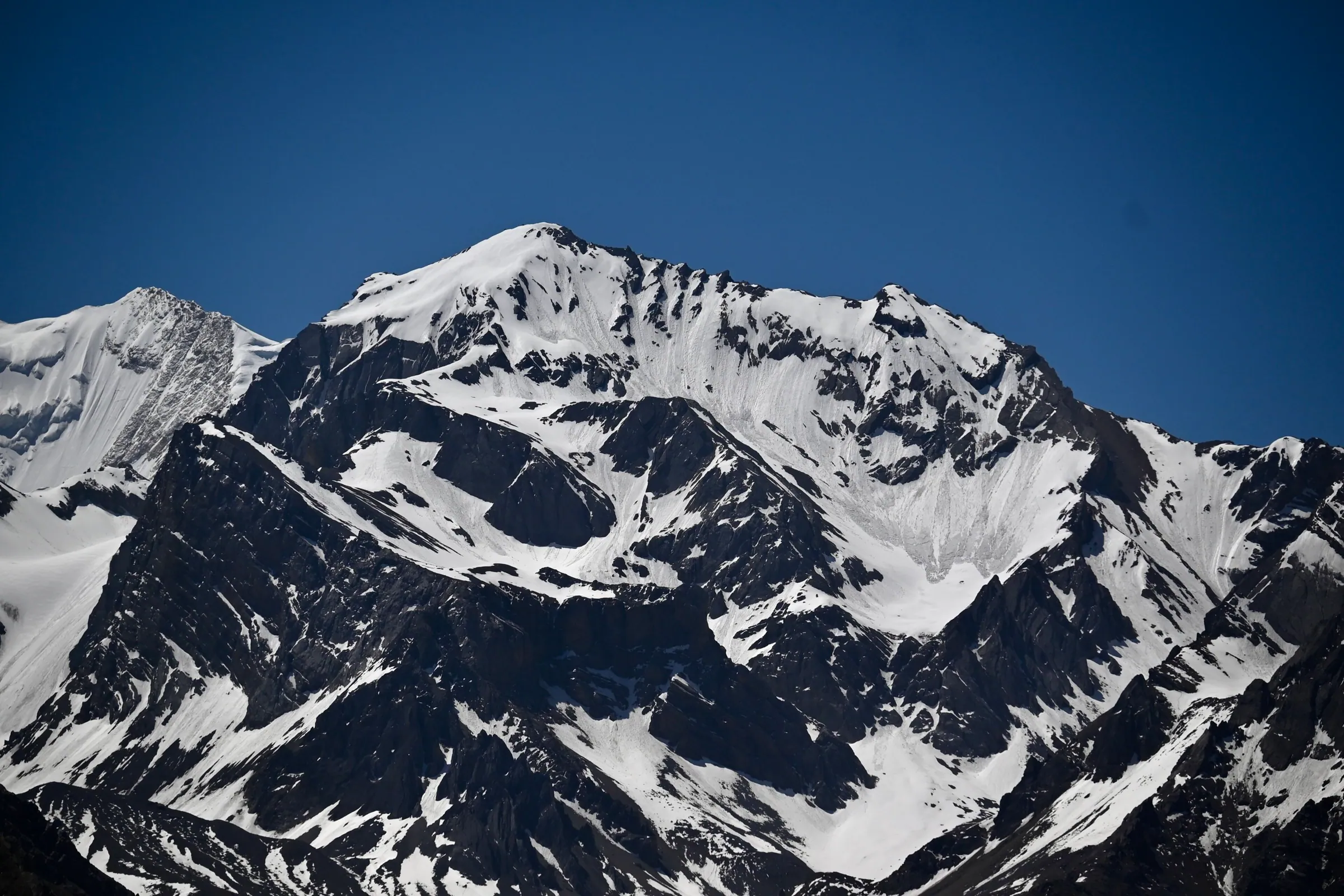
Where are the five Kailash on a map?
Mount Kailash sits in Tibet, Adi Kailash in Pithoragarh district of Uttarakhand, and the other three in the Chamba, Kullu and Kinnaur districts of Himachal Pradesh.
Read the five from west to east along the Himalaya and the map settles quickly. Manimahesh in Chamba, Shrikhand Mahadev in Kullu, Kinnaur Kailash in Kinnaur: three peaks strung across Himachal Pradesh. Then a long gap east. Adi Kailash stands on the far side of it, in the Vyas valley of Pithoragarh district, Uttarakhand. Then across the border, north of Lipulekh, Mount Kailash in Tibet.
That last pair sits closer together than most maps suggest. Lipulekh, over 5,000 m, is the pass at the head of the Indian valley, and on a clear day Mount Kailash is visible from there on Indian soil. It is one reason the two are so often spoken of in the same breath.
Road head and railhead on the Adi Kailash side
Trains stop well short of this valley. Tanakpur is the nearest railhead by road, about 238 km from Dharchula. From Kathgodam, beside Haldwani, the same drive is about 273 km. Flights into Naini Saini at Pithoragarh have come and gone: a Delhi service landed from 7 November 2024, a three-days-a-week Dehradun service restarted on 26 March 2026. Plan no date around one. Pantnagar, down on the plains, is the other airport in use.
For the three Himachal peaks, published trekking accounts put the Shrikhand walk's start at Jaon and the Manimahesh walk's start at Hadsar. We've found no official distance to Jaon or Hadsar, so neither gets a figure. Ask the driver who takes you in: he'll know what that stretch runs.
What is the story of Panch Kailash?
Hindu tradition holds each of the five peaks to be a seat of Shiva, and every one carries its own local story, told as belief rather than as record.
The grouping is devotional before it is geographical. What ties the five together is not a range or a route but the belief that Shiva is present at each, and the fact that five separate communities in five separate valleys have kept that belief alive in their own way.
The story told at each peak
- Mount Kailash: devotees believe Shiva resides on the peak with Parvati. Hindu, Buddhist, Bon and Jain traditions all attach themselves to the same mountain, as Alex McKay sets out in Kailas Histories (Brill, 2015).
- Adi Kailash: the story keeps to the ground below the peak. The district administration's page for the mountain names Parvati Kund, also called Parvati Sarovar, with Gauri Kund and a Shiva-Parvati temple below the mountain. The names around Jolingkong keep the Pandavas in view too: Pandav Parvat, Pandav Fort and Bheem ki Kheti.
- Kinnaur Kailash: devotees say the rock pillar on the ridge changes colour through the day, and that its form is Shiva's own.
- Shrikhand Mahadev: the summit is said to hold a natural ice lingam, which devotees walk to in the month of Shravan.
- Manimahesh: local tradition holds that the lake below the peak was made by Shiva, and that the mountain grants its darshan to those it chooses.
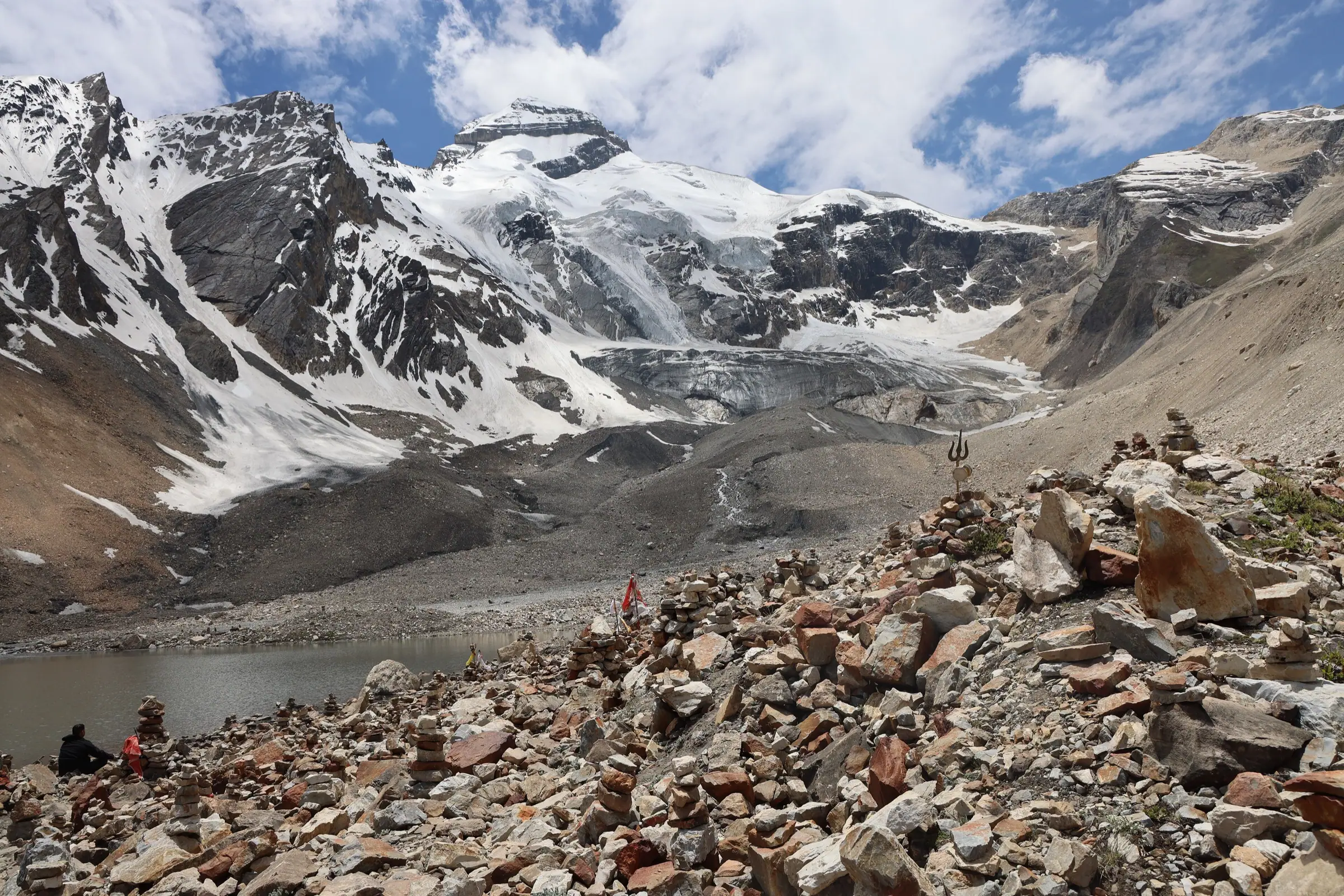
Is Lord Shiva still in Mount Kailash?
Believers hold that Shiva resides on Mount Kailash permanently; that is an article of faith across several traditions, not a claim any record can settle.
The mountain has never been climbed, and in every tradition attached to it climbing is not the point. Buddhists and Bon practitioners walk the circuit for their own reasons, and Jain tradition places Rishabhanatha's liberation there. Four faiths, one mountain, and the same restraint about standing on top of it.
Why the five-elements explanation should be read as interpretation
A tidy scheme circulates in travel writing that assigns one of the five elements to each peak: space to Mount Kailash, air to Adi Kailash, and so on. A second version, with a different and vaguer set of essences, circulates beside it. Neither names a scriptural source, and the research behind this page found none, as of September 2026. It is a modern framing, offered here as that and nothing more.
Which is the toughest trek in Panch Kailash, and which is the easiest?
Shrikhand Mahadev is the peak most often called the hardest of the five, and Adi Kailash the easiest, because a road reaches its foot at Jolingkong.
Difficulty here is not one thing. Mount Kailash asks for foreign travel and a walk of several days at altitude. Shrikhand asks for the longest climb. Adi Kailash asks almost nothing of the legs and a great deal of the lungs, because you gain height in a vehicle faster than you ever would on foot.
| Peak | How it is reached | Difficulty as commonly described |
|---|---|---|
| Shrikhand Mahadev | A trek of roughly 32 to 35 km each way from Jaon to the summit ridge | Hardest of the five in most published accounts |
| Mount Kailash | Travel to Tibet, China, then the parikrama walked over several days at altitude | Hard, with foreign travel and a government process before the walk begins |
| Kinnaur Kailash | A steep climb in Kinnaur district to the rock pillar and back | Strenuous, usually described as one very long day or more |
| Manimahesh | A walk of roughly 13 km from Hadsar to the lake | Moderate to hard, walked inside a declared yatra season |
| Adi Kailash | Driven, Gunji to Jolingkong about 36 km, with short walks at the darshan points | Easiest of the five; altitude rather than fitness is the demand |
Why Adi Kailash is the one families choose
The Vyas valley circuit is a road journey. The walking is short and happens at the darshan points; the nights sit at Gunji or Nabi, 3,200 m to about 3,290 m; a day goes to acclimatising, and oxygen rides in the vehicle. That is why travellers bring parents in their seventies on this one and not on the other four.
Altitude: read this before you decide
All five take you above 4,000 m, and altitude does not care how fit you are. This page prescribes no training plan and no medicine. Heart, lung or blood pressure treatment, a pregnancy, a recent operation: show the itinerary to your own doctor. Do that before you book anything. The altitude answers in our FAQ explain how the Vyas valley plan is built around it.
When is the season for each of the five?
Season differs by peak: the Adi Kailash road runs May to November, while the Manimahesh and Shrikhand yatras follow Hindu calendar dates declared afresh each year.
There is no shared window. Two of the five are governed by a calendar, one by a ministry, and the one we drive by snow and rain on a border road.
The Adi Kailash window, with month figures
Adi Kailash Explore runs the Vyas valley road May to November, 1 May to 20 November, with the high legs weather-dependent inside that window.
| Month | Gunji high / low | Kuti high / low | Jolingkong high / low |
|---|---|---|---|
| May | 12°C / 1°C | 6°C / -4°C | 2°C / -8°C |
| June | 16°C / 8°C | 11°C / 3°C | 7°C / -1°C |
| September | 16°C / 8°C | 11°C / 4°C | 8°C / 0°C |
| October | 11°C / 0°C | 6°C / -4°C | 2°C / -8°C |
Those figures explain the shape of a day on this route. At Jolingkong the same dataset counts 31 frost nights in May, and even July nights hold at 4°C. July and August belong to the monsoon, 479 mm of rain at Gunji in July, which is when the road is likeliest to be cut. For the months outside this window, read Gunji temperatures month by month.
Dates set by the Hindu calendar, and why you check each year
The Manimahesh yatra falls around Janmashtami and Radha Ashtami, and the Shrikhand Mahadev yatra in Shravan, with the Himachal Pradesh administration declaring the dates it will manage. Those dates move every year with the calendar. The Kailash Mansarovar Yatra to Mount Kailash runs on dates the Ministry of External Affairs announces, and in some years it has not run at all. For any of the three, the issuing authority's own page is the only thing worth trusting for your year.
What permit do you need for each Kailash?
Permits differ by peak: Mount Kailash runs through the Ministry of External Affairs process, Adi Kailash on an Inner Line Permit, the Himachal peaks under state and forest rules.
One piece of paper does not cover the set. Mount Kailash means another country, and for Indian travellers the Kailash Mansarovar Yatra organised by the Ministry of External Affairs, with its own application and selection. Adi Kailash needs nothing from China, only an Inner Line Permit. In Himachal Pradesh, district administration and forest permission govern the Kinnaur climb, and published accounts mention a daily cap on trekker numbers under the state's 2017 adventure activity rules, undated wherever it appears, so the district office is the place to confirm it.
The Inner Line Permit for Adi Kailash
Since 20 February 2025 the Vyas valley Inner Line Permit starts as an online form, and the SDM at Dharchula issues it.
Our team files it ahead of your arrival rather than at a counter on the day. Photo ID issued by government travels with you, along with passport photographs, for the checks up the road; the portal also asks for a doctor's certificate of fitness and a signed self-declaration, formats there to download, read on 25 September 2026. Papers change season to season, so check the portal against your own dates and read the full list.
Adi Kailash: how far, how high and how many days
Adi Kailash stands above the Vyas valley in Pithoragarh district, Uttarakhand, and the road runs about 648 km to Gunji, with Jolingkong further on.
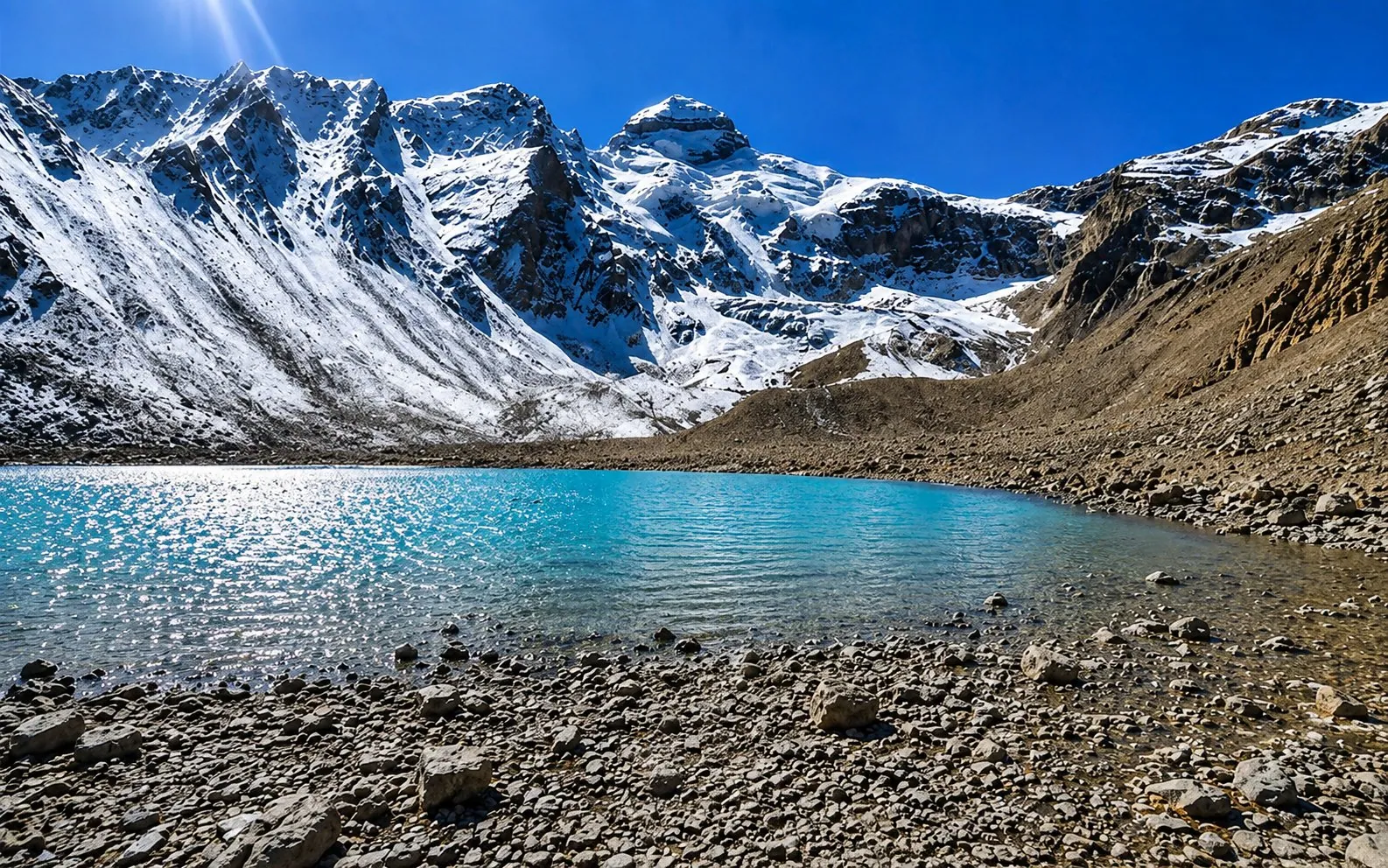
This is the one leg of the set our drivers know by feel. Dharchula sits on the Kali at 908 m. Beyond it the road runs north with the river, narrows above Garbyang, then eases at Gunji, 3,200 m. Past Kuti the surface roughens and the air thins. Then Jolingkong, and the peak over its lake.
- Delhi to Gunji: about 648 km
- Pithoragarh to Gunji: about 168 km
- Dharchula to Gunji: about 80 km
- Gunji to Jolingkong, for Adi Kailash: about 36 km
- Gunji to Kalapani: about 10 km

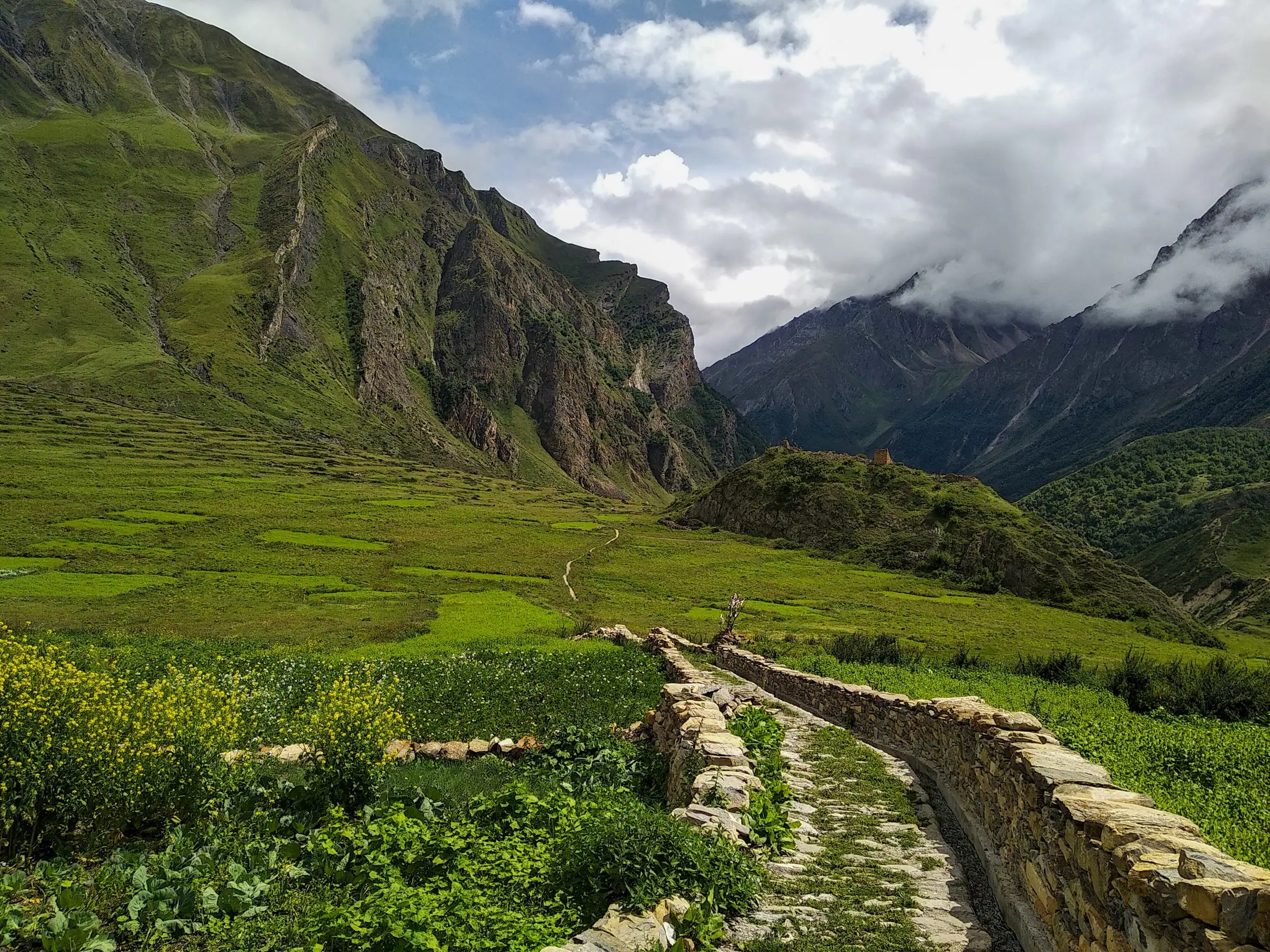
What you stand at, and what the peak is
Adi Kailash rises to 6,191 m, and nobody climbs it. Travellers stand beside Parvati Sarovar at Jolingkong, about 4,500 m. Below the mountain, the district administration's page records Gauri Kund and the Shiva-Parvati temple. Sleeping happens lower, at Gunji or Nabi, 3,200 m to about 3,290 m. The Om Parvat day climbs again, to Lipulekh, over 5,000 m. Four numbers, not one, and a page that prints only the peak height leaves a reader guessing what they have signed up for.
How many days from Delhi, Haldwani or Pithoragarh
From Pithoragarh the trip is 4 days. Begin at Haldwani and it is 5 days; begin at Delhi and it is 6 days, with the road time at both ends inside that count and the permit work done ahead. All three take in Jolingkong for Adi Kailash and Nabhidhang for Om Parvat. Lipulekh joins them on the days the road up has been cleared. The route leg by leg gives the driving order, and Gunji and the road to Lipulekh describes what stands along it.
The circuit's official standing comes from the district itself. The Government of Uttarakhand's Pithoragarh district page documents the peak and the kunds below it, and the district tourism office's newsletter of April 2025 places Adi Kailash second in the Panch Kailash. That is a primary source for one of the five, which is more than the ranking order usually gets.
Which are the 5 Kedar and the 5 Kailash?
Panch Kedar are five Shiva temples in the Garhwal Himalaya of Uttarakhand; Panch Kailash are five peaks spread across Tibet, Uttarakhand and Himachal Pradesh.
Two sets, one confusion. Kedar means the temples; Kailash means the mountains. Panch Kedar sits inside a single region of one state, which is why some travellers finish it in one season, and Panch Kailash does not.
- Kedarnath, the best known of the five and part of the Char Dham circuit
- Tungnath, the highest of the five temples
- Rudranath, reached on the longest walk of the set
- Madhyamaheshwar, in the meadows below the Chaukhamba peaks
- Kalpeshwar, the one usually described as reachable in every season
Which Panch Kedar is most difficult?
Rudranath is the Panch Kedar temple most often described as the hardest to reach on foot, and Kalpeshwar the easiest; no authority publishes a ranking.
Hard is a word travel writing uses loosely on both sets. Take it as a description of the walk in and of the weather, not as a grading anybody official has issued.
What does each of the five cost?
Permits and days on foot set the price: from Delhi, Adi Kailash Explore asks ₹30,300 a person for 6 days.
Four things move the price of any Kailash yatra: whether you leave the country, how many days you spend on foot, whether porters and mules are needed, and how far a vehicle has to travel to reach the start. Mount Kailash carries all four. The Himachal peaks carry the trek days and the porters. Adi Kailash carries distance and paperwork, and very little walking.
On the road we drive, ₹30,300 a person buys 6 days from Delhi, and ₹26,300 a person buys 5 days from Haldwani. That price holds transport for the whole route, beds, two meals a day, a certified guide and the permit work. Lunch and anything personal are not. What each start city costs sets out the rest. Kumaon Mandal Vikas Nigam, the state undertaking, publishes its own Adi Kailash and Om Parvat heli package page: a public reference worth reading, and worth asking them whether it is operating on your dates.
No price for the other four appears here. Adi Kailash Explore works one corner of this map: the Adi Kailash and Om Parvat road, the Darma valley and Munsiyari, all in Pithoragarh district. Shrikhand, Kinnaur, Manimahesh and the Tibet yatra belong to authorities and operators in their own districts, and they are the right people to quote you.
Which Kailash should you do first, and can you do all five?
Adi Kailash is the usual first Kailash because it is driven rather than trekked; all five cannot be done in one trip, since seasons and permits do not align.
A first Kailash for someone who has not been high before
Start where the road does the climbing. Adi Kailash puts you at about 4,500 m beside the lake without a trek, with a day kept for acclimatising, nothing slept higher than Nabi, and oxygen in the vehicle. If altitude troubles you here, you will know it before you commit to a week on foot in Himachal or a parikrama in Tibet. Any condition under treatment belongs in a conversation with your doctor first, and in a message to us before a seat is held.
Why all five takes years, not one holiday
The calendars will not cooperate. Shrikhand runs in Shravan, Manimahesh around Radha Ashtami, Mount Kailash on the ministry's announced dates, and the Vyas valley road May to November. Add three permit regimes and a border, and the honest answer is one Kailash a year for most people, four or five years for the set.
Starting at Delhi, Adi Kailash from Delhi is a 6-day trip with the drive both ways. Start at Haldwani and it's 5 days.
Questions travellers ask
Gang Rinpoche is the Tibetan name for it, and the mountain stands in Pulan County of the Tibet Autonomous Region. Indian travellers usually say Kailash Mansarovar, pairing the peak with the lake below it. That is why a single mountain turns up under three different names in search results, sometimes on the same page.
No age is published here. The research behind this page, done in September 2026, found no primary geological source for a figure, and the numbers circulating online carry none either. Hindu, Buddhist, Bon and Jain traditions, as Alex McKay sets out in Kailas Histories (Brill, 2015), speak of the mountain as timeless, which is a statement of faith rather than a date.
As a personal name in India, Kailash is common rather than rare, and it is also the name of the mountain, which is why name searches and mountain searches land on the same pages. For how often the name is given, you'd want name records. We know the five peaks, their locations and their heights.
No. Adi Kailash lies within India, in Pithoragarh district of Uttarakhand, and the paper required is the Inner Line Permit, filed online and issued at Dharchula. Of the five, only Mount Kailash requires travel to China and the permissions that come with it. Keep photo ID issued by government, and photographs, with you for the checks up the road.
For most, yes. The Vyas valley circuit is driven, with short walks where the darshan happens, and nobody sleeps higher than Nabi, about 3,290 m. A day goes to acclimatising and oxygen travels in the vehicle. Altitude stays the real test, so a condition under treatment, a recent operation or a pregnancy is worth putting to your own doctor, and to us, before a seat is held.
How we made this guide
The figures on this page are filled in from data each time it is built, never typed by hand: prices, days and nights from our package pages; road distances from OpenStreetMap, measured by a router (retrieved 22 September 2026); heights from Wikidata, the Copernicus 90 m elevation model and the heights this site publishes; temperatures from 30-year ERA5-Land climate normals, modelled rather than measured at a weather station. Checked by Deepak Yadav. If anything here is out of date, tell us on WhatsApp and we will correct it.
- Adi Kailash, short route: itinerary and price
- Adi Kailash & Om Parvat: itinerary and price
- Adi Kailash from Delhi: itinerary and price
- OpenStreetMap contributors, routed with OSRM: road distances · retrieved 22 September 2026
- Wikidata: published elevations · retrieved 24 September 2026
- Copernicus GLO-90 elevation model, via Open-Meteo (heights given as about) · retrieved 24 September 2026
- ERA5-Land climate normals 1991–2020, ECMWF, via Open-Meteo · retrieved 22 September 2026
- Monthly Tourism Newsletter Pithoragarh, April 2025, District Tourism Development Office, Pithoragarh
- Adi Kailash is the second major place among the Panch Kailash (Hindi), Amar Ujala, 11 October 2023
- Aadi Kailash, District Pithoragarh, Government of Uttarakhand
- Adi Kailash and Om Parvat heli package, Kumaon Mandal Vikas Nigam
About Adi Kailash Explore
Adi Kailash Explore (adikailash.io) is a tour operator based in Pithoragarh, Uttarakhand, that specialises in one route: Adi Kailash and Om Parvat, the Darma valley and Munsiyari. It runs departures from Delhi, Haldwani and Pithoragarh, and its team files the Inner Line Permit for every Adi Kailash traveller at SDM Dharchula. It is recognised by Uttarakhand Tourism, certified by MSME, Govt. of India (UDYAM-UK-09-0012927) and verified on the NIDHI Portal, and was founded by Vinay Verma. Why travel with us
Keep reading
All posts Adi Kailash16 min read
Adi Kailash Weather and Temperature: Today and by Month
Adi Kailash weather now and for 7 days at Jolingkong, Om Parvat and Gunji; in May Gunji runs 12°C by day. Adi Kailash ExploreAdi Kailash13 min readAdi Kailash, Uttarakhand: The Kailash You Can Drive To
Adi Kailash asks no trekking: the road reaches Jolingkong, about 4,500 m, with short walks at the top. Adi Kailash Explore add an acclimatisation day.Adi Kailash12 min readGunji, Uttarakhand: The Village Where the Road Forks
A Vyas valley trip through Gunji takes 6 days from Delhi at ₹30,300 a person, 4 days from Pithoragarh. Adi Kailash Explore run it May to November.The day-by-day plan
Download the Adi Kailash itinerary for free.
6 days and 5 nights from Delhi, as a 19-page PDF on WhatsApp.Adi Kailash & Om Parvat from Delhi: 6 days and 5 nights, as a 19-page PDF on WhatsApp. Forward it to your family, then ask us anything.
One WhatsApp message. Free, in Hindi or English.Or call +91 76688 58311 · Hindi or English
Adi Kailash & Om Parvat from Delhi
6 days, 5 nights · 19 pages
- Delhistart
- Pithoragarh
- Gunji
- Jolingkong
- Nabhidhang
- Lipulekh
- Jageshwar
- Back to Delhi