Permits and planning11 min read
Jauljibi Mela opens on 14 November where the Kali and Gori rivers meet
Jauljibi Mela opens on 14 November at the Kali-Gori confluence in Pithoragarh district, and ran 11 days in 2025. It's a border trade and cultural fair, held on the Kali where the river is the India-Nepal boundary. The date matters for one more reason: it falls two weeks after the Vyas valley road season closes, so this is a Kumaon road trip, not an Adi Kailash one.
By Deepak Yadav, of the Adi Kailash Explore team Checked by Deepak YadavAsk us on WhatsApp
TL;DRThe post in 5 lines
- Jauljibi Mela opens on 14 November at the confluence of the Kali and Gori rivers, in Dharchula tehsil of Pithoragarh district, Uttarakhand.
- The 2025 fair ran 11 days, as the Times of India reported, and the closing date follows the district administration's notice each year.
- Jauljibi grew on three-country trade: salt and borax from Tibet, wool and herbs from the Rung valleys, goods and horses from Nepal.
- Adi Kailash Explore drives the Vyas valley road May to November. Come for the mela in mid-November and Adi Kailash and Om Parvat are out.
- Mid-November at Dharchula, on the same road, averages 21°C by day and 9°C at night in the monthly normal, and November there is dry.
Key facts
- Location
- Jauljibi, at the Kali-Gori confluence, Dharchula tehsil, Pithoragarh district, Uttarakhand
- Rivers
- The Kali, which is the India-Nepal boundary here, and the Gori Ganga
- Opening date
- 14 November, the traditional opening; the 2026 dates follow the district's notice
- Duration
- 11 days in 2025; the closing date follows the district's notice
- Started
- 1914 by one account, credited to Gajendra Bahadur Pal of Askot
- Nearest town
- Dharchula, 908 m, the tehsil town on the same road
- Road
- On the Pithoragarh to Dharchula road, which measures about 91 km
- November weather
- 21°C days and 9°C nights at Dharchula
- Adi Kailash road season
- May to November, opening 1 May and closing 20 November
When does Jauljibi Mela start, and how long does it run?
Jauljibi Mela opens on 14 November, and the 2025 fair ran 11 days; the closing date follows the administration's notice.
14 November is the traditional opening date for Jauljibi, and the district reporting carries it too. Amar Ujala reported in 2023 that the ADM had inspected the fair ground ahead of a fair starting on the 14th. In 2025 the Times of India reported the opening of an 11-day trade fair near the Nepal border.
The 2026 dates, and who announces them
The 2026 dates follow the administration's notice, and Adi Kailash Explore doesn't print a closing date before that notice is out.
The opening date is steady. The closing date isn't, and the only duration we hold a dated report for is the 11 days of 2025. If your leave is fixed, build it around the first days of the fair.
Message us on WhatsApp for the 2026 dates as the district has notified them.
Why 14 November, and the two days that came before it
Kartik Purnima is the full moon of the month of Kartik. One account of its history says the gathering ran for two days at Margashirsha Sankranti, and was moved in 1914 to Kartik Purnima. Since then the reporting has the fair opening in mid-November.
Where is Jauljibi, and which district is it in?
Jauljibi sits where the Kali and the Gori meet, in Dharchula tehsil of Pithoragarh district, Uttarakhand.
Two rivers decide everything here. The Gori Ganga comes down past Munsiyari. Along this stretch the Kali is the India-Nepal boundary. They meet at Jauljibi, and the fair ground is at the junction.
Pithoragarh district, Dharchula tehsil, below Askot
Jauljibi lies in Dharchula tehsil, in Pithoragarh district of Uttarakhand, on the road between Pithoragarh town and Dharchula. Askot was the old seat of the Pal rulers.
The Nepal bank, across the bridge
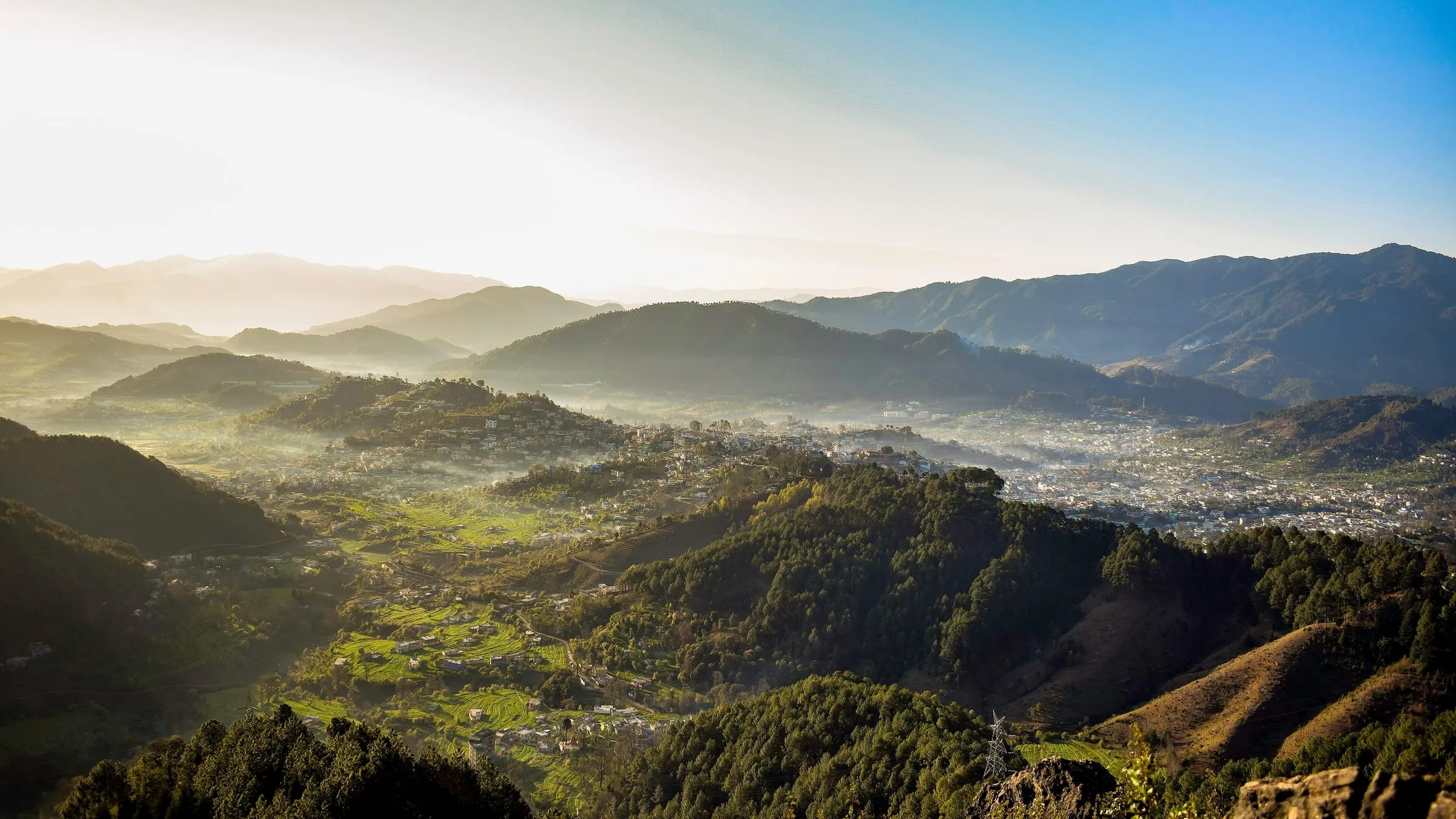
The fair is described as a fair of both banks: traders and visitors on the Indian side, Nepali traders from across the Kali. A bridge joins the two. What a visitor may do at that bridge, and what ID is asked for there, we won't tell you from a desk: ask the officials on the ground, on the day.
How low the fair ground sits
Dharchula stands at 908 m. Gunji, up in the Vyas valley, sits at 3,200 m. That difference is the whole story of a November fair: mild by day at the river, deep winter up the valley.
What was traded at Jauljibi: salt, borax, wool and horses
Jauljibi grew as a three-country market: Tibetan salt and borax, Rung wool and herbs, Nepali goods and livestock.
Kafal Tree calls Jauljibi the shared cultural heritage of three countries, and that's the plainest way to understand what the fair was. Goods came down from Tibet and across from Nepal, and the confluence was where they changed hands. Salt and borax came over the high passes.
The Rung traders of Darma, Johar and the Vyas valley
The people who worked those passes were the Rung, also called Shauka, of the Darma, Johar and Vyas valleys. They brought wool and herbs down. You'll still find their villages: Dugtu and Dantu up the Darma valley, Gunji and Kuti in the Vyas. The trade route is gone, the families aren't.
What came across from Nepal, and the horses
Accounts of the old fair name honey, butter, asafoetida and shilajit coming up from the Nepal side, with horses brought down from Humla and Jumla. Those accounts name livestock as part of the market. Whether horses still reach the Nepal bank, we can't tell you honestly, because we have no dated report of it either way.
Why a confluence, and not a town
The sources this page holds do not say why the market grew at this junction rather than in a town.
Who started the mela, and what 1962 changed
The Askot ruler Gajendra Bahadur Pal is credited with starting the fair in 1914, and the 1962 war ended the Tibet trade.
Two accounts of the founding sit side by side. In the first, Gajendra Bahadur Pal of the Askot Pal line is credited with starting the fair in 1914. In the second, an older two-day gathering at Margashirsha Sankranti was shifted in 1914 to Kartik Purnima. Both make 1914 the year something changed.
After 1962, the Tibetan traders stopped coming
The passes to Tibet closed after the 1962 war, and the Tibetan half of the market closed with them. Salt and borax stopped arriving. What was left at Jauljibi was the India-Nepal fair.
What kept the fair alive
The state now has a hand in it. The Northern Gazette reported the Chief Minister inaugurating the traditional Jauljibi fair in November 2025, which tells you where the mela now sits.
What happens at Jauljibi Mela today
Jauljibi Mela today runs as a trade and cultural fair: stalls, folk programmes, and visitors from both sides of the Kali.
The Times of India still called it a trade fair in 2025. How big it is today, in stalls or in heads through the gate, we don't publish a figure for.
The stage, and the evenings
Folk music and dance are the part people film, which is why search results fill up with video.
A trade fair, or a cultural one?
Both, with the weight moved across. The three-country trade that made the name is gone. What's left is a meeting: Rung, Kumaoni and Nepali families who see each other at the fair once a year. Come for that and the scale stops mattering.
How to reach Jauljibi for the mela
Jauljibi sits on the Pithoragarh to Dharchula road, which measures about 91 km end to end.
Munsiyari stands on the Gori. Munsiyari, the other start, stands on the Gori. From Delhi it's about 480 km by road. From Haldwani, about 185 km. After that you take the Dharchula road, and the confluence is on it, before Dharchula.
| From | To | km (OpenStreetMap) |
|---|---|---|
| Delhi | Pithoragarh | 480 |
| Haldwani | Pithoragarh | 185 |
| Kathgodam | Pithoragarh | 183 |
| Tanakpur | Pithoragarh | 147 |
| Pithoragarh | Dharchula | 91 |
| Munsiyari | Dharchula | 94 |
We don't hold a measured road figure for Jauljibi itself, so work with the Dharchula distance and stop short of it. Drive it in daylight.
Railhead and airport
By road the nearest railhead is Tanakpur, about 147 km to Pithoragarh, against about 183 km from Kathgodam beside Haldwani. Your closest airport is Naini Saini, up at Pithoragarh. Flights in and out of it come and go. A Delhi service started in November 2024 (The Hindu). A Dehradun service came back three days a week in March 2026 (ThePrint). The other option is Pantnagar, down on the plains near Haldwani. Before you build a leg around a flight, check what's really flying on your dates.
By bus and shared jeep on fair days
If buses and shared jeeps are running the Pithoragarh to Dharchula road on your dates, anything headed for Dharchula passes the confluence. Timings aren't ours to publish. If you're coming without a vehicle, reach Pithoragarh or Dharchula the evening before and do the last leg in the morning.
Mid-November at the confluence: what to expect and what to carry
Mid-November at Dharchula averages 21°C by day and 9°C at night in the 1991 to 2020 monthly normal, and November there is dry.
The valley floor is kind in November. Days are warm in the sun and the rain has finished: Dharchula's November normal is 8 mm. The cold arrives when the sun goes off the valley floor. Carry a jacket you'd wear at night, not a down suit.
| Place | November day | November night | Frost nights |
|---|---|---|---|
| Dharchula | 21°C | 9°C | 0 |
| Pithoragarh | 19°C | 8°C | 0 |
| Munsiyari | 13°C | 1°C | 11 |
| Gunji, Vyas valley | 7°C | -5°C | 26 |
What those figures mean for your bag
Two layers and a warm jacket cover the fair itself. Sleeping is where people get caught out: at Pithoragarh the November night normal is 8°C. Pack a cap and socks you can sleep in.
Cash, fuel and the light
Draw cash in Pithoragarh or Dharchula, before the fair day rather than during it. Fill the tank in town for the same reason. Then there's the light: plan to be off this road before dark.
Where to sleep: Jauljibi, Dharchula or Pithoragarh
Pithoragarh has rooms listed online, and that is where to start. KMVN lists its TRH Pithoragarh online, with deluxe, super deluxe and executive doubles (the listing shows no tariffs). The state tourism board's homestay site lists 39 homestays under Pithoragarh. One of them is Samriddhi Homestay at Tarigaon, carded at Rs 2,000 a night. That was the card on 29 September 2026. People asking about Dharchula report that stays there are limited. Book before you travel.
Can you add Adi Kailash, Om Parvat, Darma or Munsiyari to a mela trip?
No: the Adi Kailash road season closes 20 November, two weeks before the mela opens, so mid-November is a Kumaon trip.
This is the question that brings people to grief. The fair opens on 14 November. The Vyas valley road season runs May to November, opening 1 May and closing 20 November, so by the time the stalls go up at the confluence our season has been over a fortnight. Adi Kailash and Om Parvat are not add-ons to a mela trip.
Why the Vyas valley road closes on 20 November
Height, and what height does in November. Gunji's November normal is 7°C by day and -5°C at night. At Jolingkong, beside Parvati Sarovar, the November night normal is -14°C. Month by month, the numbers are in Adi Kailash temperature by month.
What is still open from Pithoragarh and Dharchula in November
Plenty, at these heights. Dharchula is worth the night on its own, at 908 m where three roads climb out of town. Askot and Didihat are nearby as well. None of these needs the Inner Line Permit: that one is for the Vyas and Darma valleys.
Munsiyari and Darma in mid-November
Munsiyari is the pairing that makes sense. It stands on the Gori, the river that meets the Kali at the fair ground, about 94 km from Dharchula by road. November there averages 13°C by day and 1°C at night, so the nights bite (month by month). The Darma valley is another matter: Dantu, at the head of its road, stands at about 3,150 m, and it needs the same border permit as the Vyas valley.
When to come instead, if Adi Kailash is the real reason
Come between 1 May and 20 November for the high valley, and keep the fair as its own trip. That window is the Adi Kailash road's season, and the permit work for it is filed before you arrive. Adi Kailash & Om Parvat from Haldwani runs 5 days. The price is ₹26,300 a person. Starting in Delhi adds the drive up and back. Out of Delhi, Adi Kailash from Delhi runs 6 days. The price is ₹30,300 a person. The trips we run carry their dates and one price a person, in writing.
Send us your November dates on WhatsApp and we'll say plainly what's possible and what isn't.
Where can you watch Jauljibi Mela live?
Jauljibi Mela live video comes from the Facebook, Instagram and YouTube pages filming the ground.
Search for the mela live and video is what you get, which is the right answer. Pithoragarh pages on Facebook, Instagram and YouTube post the dance programmes and the ground. For the fair's own announcements, the district administration is the place to look.
Dates, the road and the November normals you can plan from weeks ahead. The programme on a given evening is on those channels, not on this page.
Questions travellers ask
Ask the officials at the bridge on the day: crossing rules on an international border are theirs to apply, and they change. Sources describing the fair place it on both banks of the Kali, with Nepali traders coming across to the Indian ground. That is not the same as a visitor being free to walk over. Ask on the spot, and plan your day on the Indian side.
The reporting Adi Kailash Explore holds does not mention an entry fee, which is not the same as there being none, so check the district's notice for the fair. The stalls are shops, so carry small cash. If a charge is notified for 2026, the district's own notice is where it will appear.
Yes, with the cold in mind rather than the altitude: the fair ground is on the valley floor, not up in the Vyas valley. Dharchula's November nights average 9°C. Keep an older traveller's day short, come in the afternoon rather than after dark, and have the room booked before you arrive.
November is dry, which is the good part: Dharchula's November rain normal is 8 mm. The cold at either end of the day is the hard part. Ride the Pithoragarh to Dharchula stretch in the middle of the day, with gloves and a windproof layer. Road conditions change week to week, so ask locally before you set off.
How we made this guide
The figures on this page are filled in from data each time it is built, never typed by hand: prices, days and nights from our package pages; road distances from OpenStreetMap, measured by a router (retrieved 22 September 2026); heights from Wikidata, the Copernicus 90 m elevation model and the heights this site publishes; temperatures from 30-year ERA5-Land climate normals, modelled rather than measured at a weather station. Checked by Deepak Yadav. If anything here is out of date, tell us on WhatsApp and we will correct it.
- Adi Kailash & Om Parvat: itinerary and price
- Adi Kailash from Delhi: itinerary and price
- OpenStreetMap contributors, routed with OSRM: road distances · retrieved 22 September 2026
- Wikidata: published elevations · retrieved 24 September 2026
- Copernicus GLO-90 elevation model, via Open-Meteo (heights given as about) · retrieved 24 September 2026
- ERA5-Land climate normals 1991–2020, ECMWF, via Open-Meteo · retrieved 22 September 2026
- 11-day Jauljibi trade fair commences near Nepal border, The Times of India
- CM Dhami inaugurates the traditional Jauljibi fair, The Northern Gazette
- Shared cultural heritage of three countries: the historical Jauljibi fair, Kafal Tree
- Jauljibi fair from the 14th; ADM inspects the ground, Amar Ujala
About Adi Kailash Explore
Adi Kailash Explore (adikailash.io) is a tour operator based in Pithoragarh, Uttarakhand, that specialises in one route: Adi Kailash and Om Parvat, the Darma valley and Munsiyari. It runs departures from Delhi, Haldwani and Pithoragarh, and its team files the Inner Line Permit for every Adi Kailash traveller at SDM Dharchula. It is recognised by Uttarakhand Tourism, certified by MSME, Govt. of India (UDYAM-UK-09-0012927) and verified on the NIDHI Portal, and was founded by Vinay Verma. Why travel with us
Keep reading
All postsAdi Kailash16 min readDharchula, Uttarakhand: The Last Ordinary Town North
Dharchula has no railway station and no airport: Tanakpur railhead lies about 238 km away by road. Adi Kailash Explore list the bus and taxi legs.Munsiyari18 min readMunsiyari Weather Month by Month, and When Does It Snow?
Munsiyari temperature runs from 7°C days and -4°C nights in January to 21°C in June. Adi Kailash Explore chart every month, with snow days for each. Adi Kailash16 min read