Adi KailashUpdated 18 min read
Adi Kailash Parikrama Run 2026 at Gunji, 24 to 26 October, and the permit pause
The Adi Kailash Parikrama Run 2026 runs at Gunji from 24 to 26 October. The 70 km and 42 km go on the 24th, the 21 km, 10 km and 5 km on the 25th, the mountain-bike race on the 26th. Entries closed on 10 October. Travellers' permits are on hold from 19 to 26 October. Adi Kailash Explore drives this road and does not organise the run.
By Vinay Verma, founder of Adi Kailash ExploreAsk us on WhatsApp
TL;DRThe post in 5 lines
- The organiser's schedule puts the 70 km and the 42 km on 24 October 2026, the 21 km, 10 km and 5 km on 25 October, and the mountain-bike race on 26 October.
- Adi Kailash Explore does not organise the run, and travellers' inner line permits are on hold from 19 to 26 October 2026 by the Dharchula SDM's order.
- In 2026 the ultra starts at Jolingkong, about 36 km up the valley from Gunji, on the first race day.
- Runners must reach Gunji days before their race, and Dharchula to Gunji is about 80 km of mountain road, Delhi to Gunji about 648 km.
- Runners sleep in that cold. The 1991 to 2020 normals put October at Gunji at 11°C by day and 0°C at night. That's 14 frost nights in the month.
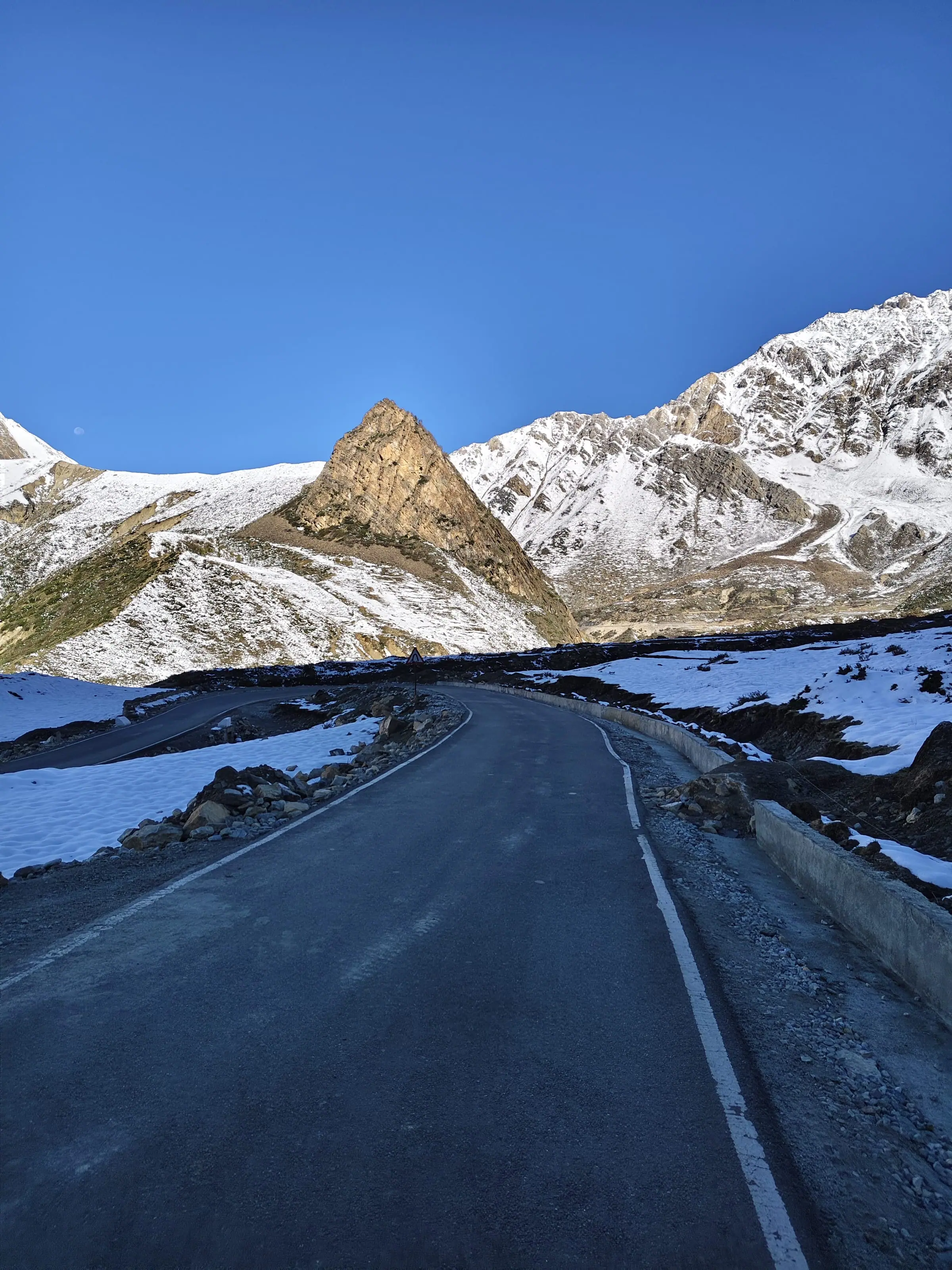
Is Adi Kailash open now?
As of
Open: permits are issued until 10 November 2026
- Permits
- Issued again since the Parikrama Run hold ended on 26 October. The last permits of the 2026 season are issued on 10 November, by the SDM's office at Dharchula and on the district's portal. (Adi Kailash Explore's team at Dharchula, 6 November 2026; The district's permit portal, checked 7 November 2026)
- The yatra
- Open on 6 November 2026, in the second phase of the year, which began on 20 September. (Adi Kailash Explore's team at Dharchula, 6 November 2026; The Northern Gazette, 20 September 2026)
- The road
- Adi Kailash and Om Parvat darshan carry on. The Army closed the Old Lipulekh Pass for snow on 13 October, until further orders. (The Northern Gazette, 13 October 2026)
- 2027
- No opening date for 2027 has been announced. In 2026 the first phase ran from 1 May to 1 July. (Amar Ujala, 21 September 2026)
The position changes with the weather and the district's orders. Ask us on WhatsApp where it stands today
Key facts
- Event dates
- 24 to 26 October 2026: 70 km and 42 km on the 24th, 21, 10 and 5 km on the 25th, the MTB race on the 26th
- Race ground
- Gunji, Vyas valley, Pithoragarh district, 3,200 m
- Ultra start
- Jolingkong, about 4,500 m, about 36 km from Gunji
- Road to the race
- Dharchula to Gunji about 80 km; Delhi to Gunji about 648 km
- Reporting at Gunji
- 20 October for the 70 km, 21 October for the 42 km, 22 October for the 21 km, 10 km and 5 km, 24 October for the MTB rides
- Entries
- Closed on 10 October 2026; more than 1,300 runners registered
- Permit
- Inner Line Permit; online on the Pithoragarh district portal, issued at Dharchula. On hold for travellers 19 to 26 October 2026
- Late October at Gunji
- October monthly normals, 1991 to 2020: 11°C days, 0°C nights, 14 frost nights
- Our departures
- May to November
Adi Kailash Parikrama Run 2026: the dates, in one place
The organiser's schedule runs from 24 to 26 October 2026: the long races on the 24th, the short ones on the 25th, the mountain-bike race on the 26th.
The October normals put Gunji's average night at 0°C, and the 30-year normals give the month 14 frost nights. That is the week a running event has been put into, for its second edition.
Until mid-October the pages you landed on printed different spreads. The three versions as they stood on 28 September 2026, with who stated each:
- 24 and 25 October 2026: The Northern Gazette, reporting on 31 July 2026, and the government tourism listing for the run.
- 24 to 25 October: the entry listing's own race-dates block, which puts the closing ceremony on 25 October.
- 24 to 26 October: the organiser's social posts, with the closing ceremony on 26 October.
By 20 October the organiser's own entry page had settled it: three days, 24 to 26 October, with the mountain-bike race on the last. The Northern Gazette's report of 8 October puts the full marathon on the 25th. The organiser's schedule keeps it on the 24th, so go by the organiser.
Which race runs on which day
The organiser puts the 70 km ultra and the 42 km on 24 October, the 21 km, 10 km and 5 km on 25 October, and the MTB race on 26 October.
Riders were asked to report at Gunji by 24 October, two days before their race. The runners' reporting dates come earlier still, and they are in the travel-days section below.
Why the 2025 date of 2 November still shows up in search results
The first edition ran on 2 November 2025, so ticket pages and race calendars from that year still carry a November date.
The Northern Gazette announced that first edition for 2 November on 29 September 2025, and reported on the run the day it was held. Ticket PDFs and trail-race directories from then have not all been updated since. A page showing 2 November is describing last year, not this one.
The races: distances, start points and cut-off times
The entry listing for 2026 names a 70 km ultra from Jolingkong to Gunji, 42 km, 21 km, 10 km and 5 km runs at Gunji, and two MTB rides.
The places the listings name all sit along the valley above Gunji: Jolingkong, Parvati Kund, Kuti, Nabidang and Kalapani. The long race starts at Jolingkong and finishes at Gunji. Every other run starts and finishes at Gunji. There's no course map published yet, so don't build a route in your head out of the place names.
| Category | Distance | Start and finish | Cut-off as listed |
|---|---|---|---|
| Ultra | 70 km on the 2026 entry listing; 60 km on two older pages | Jolingkong to Gunji | 12 hours on one guide's matrix |
| Marathon | 42 km | Starts and finishes at Gunji | 8 hours on the entry listing; 8.5 hours on one guide |
| Half marathon | 21 km | Starts and finishes at Gunji | Not stated in what we read |
| 10 km | 10 km | Starts and finishes at Gunji | 2 hours on the entry listing |
| 5 km | 5 km | Starts and finishes at Gunji | 1 hour on the entry listing |
| MTB challenge | 25 km and 50 km | From Gunji; the 25 km turns ahead of Nabi, the 50 km ahead of Kuti | Not stated in what we read |
The 70 km ultra: 70 km or 60 km?
The 2026 entry listing gives the flagship ultra as 70 km from Jolingkong to Gunji, while two other pages still call it 60 km.
The distance is the organisers' to confirm. What we hold is the road: Gunji to Jolingkong measures about 36 km on OpenStreetMap, climbing from 3,200 m to about 4,500 m. Enter on the distance the entry page prints on the day you pay, and ask the organiser for the course before you train for a number.
42 km, 21 km, 10 km and 5 km at Gunji
These four begin and end in the same village, so bib collection and the finish line are in one place and family knows where to stand. The cut-offs published for the short races look tight to a plains runner, an hour for the 5 km and two hours for the 10 km.
The MTB challenge: 25 km and 50 km
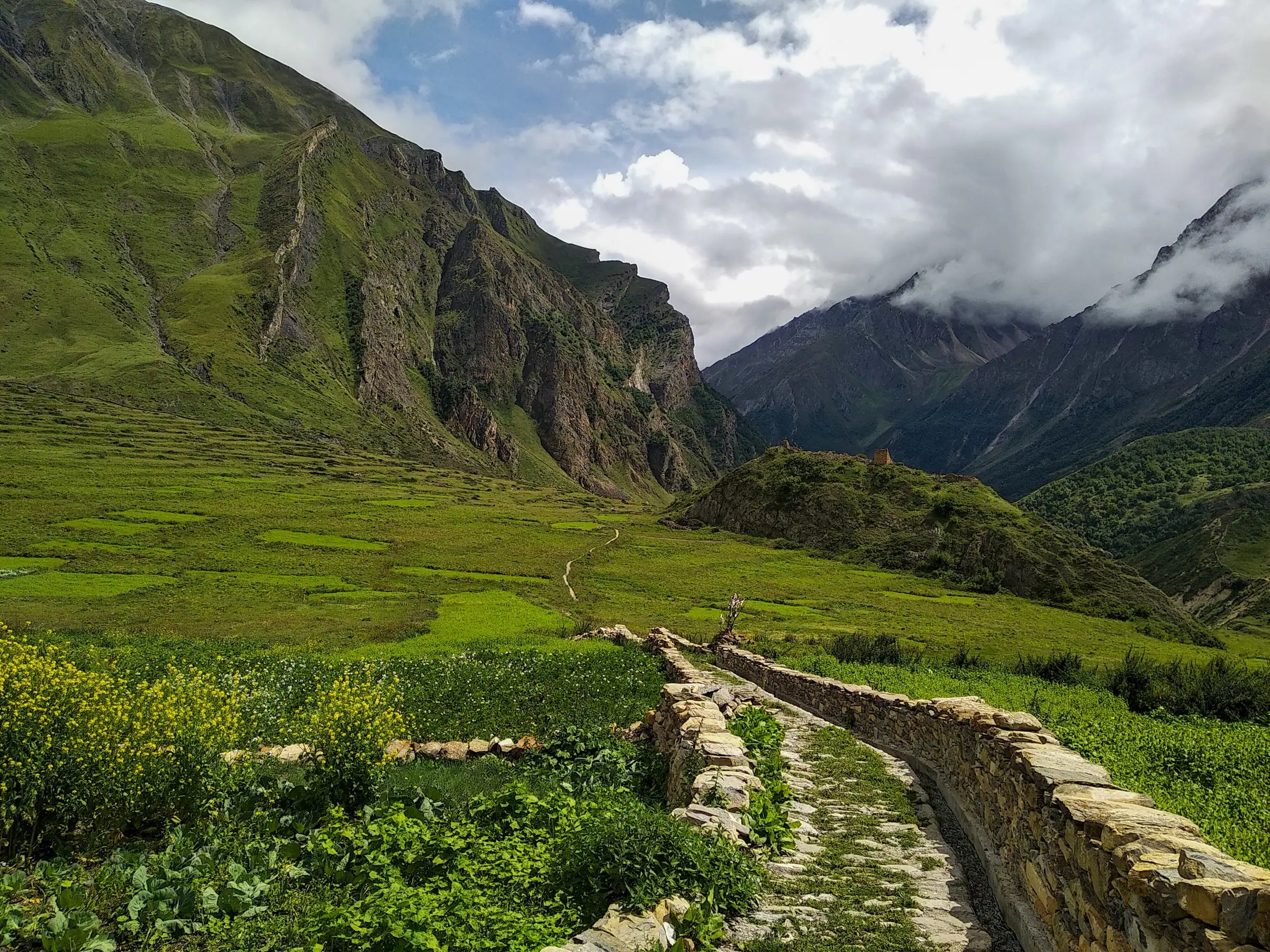
The rides share the same ground. Both turnaround points sit on the valley road that carries yatra traffic through the season. What each of those villages actually is, and how the valley is ordered, is in Gunji and the road above it.
Open, 40+, 50+, 60+ and under-18: who runs in which category
The entry listing splits each race by age and gender, with an Open group, 40+, 50+ and 60+ bands, and an under-18 group. Which bands are offered in which distance is set out race by race on the entry page. Read your own category there rather than assuming the ultra and the 5 km are divided the same way.
How do you register for the Adi Kailash Parikrama Run?
Entries for 2026 closed on 10 October. More than 1,300 runners had registered by 17 October, The Northern Gazette and Amar Ujala reported.
First, plainly. Adi Kailash Explore does not organise this run, sells no entries and cannot register anybody. The entry listing names the Uttarakhand Tourism Development Board as organiser, and another listing names Sportive, so the two do not agree. The government tourism listing credits ITBP and the border villages with support on the ground.
Where entries were taken, and when they closed
Entries were taken on the organiser's entry platform and through the QR codes in its social posts, and they closed on 10 October 2026.
Entries shut on 10 October, and the first reporting date at Gunji was 20 October. So runners committed to travel well before they ran. The race itself is the short part of that calendar.
What an entry costs
The lowest entry on the 2026 listing was ₹800 before GST and platform fees, and each category printed its own fee. Those are the organiser's fees and have nothing to do with any price of ours.
Missed the entries?
Entries for 2026 are closed. The next edition would be the third, and no date for it has been announced.
Watch the organiser's own channels for the next edition, and pay nobody else for an entry.
Who is allowed to enter: qualification, medical certificate and ID
The entry listing requires a qualifying finish for the 70 km and 42 km, a doctor's certificate dated within 15 days, and photo ID at bib collection.
Enthusiasm alone will not get you a bib here, which is fair for the ground it is run on. Everything below is the entry listing's own wording as it stood when this page was written.
Qualifying runs for the 70 km and the 42 km
The 2026 entry listing asks 70 km entrants for a certified 42 km finish within 10 months, or two 21 km finishes within 6 months, or a Niti Xtreme finish.
- 70 km: a certified 42 km finish in the previous 10 months, or two 21 km finishes in the previous 6 months, or a finish at Niti Xtreme.
- 42 km: a 21 km finish at high altitude in the previous 6 months, or two half marathons in the previous 10 months.
Keep those certificates and result links where you can reach them in a hurry. A qualification you cannot show at bib collection counts for nothing.
The medical certificate: who signs it and how recent it must be
The entry listing repeats in every category that the certificate must come from an MBBS doctor and be dated within 15 days before the race.
Fifteen days is a narrow window, and it falls while you are packing or already on the road. Get examined at home before you leave rather than hoping to find a doctor on the way up. It is a separate paper from the fitness certificate the district asks for with the permit.
Bib collection at Gunji: what you carry
Bib collection is in person at Gunji, with identity verified there: Aadhaar or a driving licence, as the listing puts it. The same ID is checked again on the road above Dharchula.
Do runners need an Inner Line Permit for Gunji?
Yes. Nobody reaches Gunji and the Vyas valley without an Inner Line Permit: filed online on the Pithoragarh district portal, collected at Dharchula.
Gunji stands in a border valley, and the permit is what lets a visitor past the checkpoint. Since 20 February 2025 you file the lot online, on the district's own application, and the SDM's office at Dharchula hands out what comes of it. A bib exempts a runner from none of this.
What the permit is, and who files it for participants
A search summary of the event says participant permits are processed through the tourism department. We have not seen the organiser put that in writing anywhere, so ask the event desk what they file for you and what stays your job. Whatever they handle, the papers in your own bag and the checks on the road are yours.
Documents to have ready
On 25 September 2026 the district was asking for a fitness certificate from a doctor on the register and a self-declaration, with formats to download. Requirements change with the season, so read the list against your own dates. Passport-size photographs and a government-issued photo ID go in the same folder.
Where the permit is checked between Dharchula and Gunji
Above Dharchula, papers are checked en route. Our Inner Line Permit guide walks through the documents, the cost and the waiting, in the order the counter asks for them.
Ask us on WhatsApp what the Dharchula permit counter is asking for in the week you travel.
When you must reach Gunji, and how many travel days that takes
The 2026 entry listing sets reporting at Gunji on 20 October for the 70 km, 21 October for the 42 km and 22 October for the shorter runs.
No entry page can do this arithmetic for you. A reporting date at Gunji is not like reporting at an airport: it comes at the end of two days of driving up from the plains, on a road the authorities can hold for weather or for work at any hour of the day.
Reporting dates by category
- 70 km: at Gunji by 20 October, four days before the race.
- 42 km: by 21 October.
- 21 km, 10 km and 5 km: by 22 October.
- MTB, 25 km and 50 km: by 24 October.
Delhi, Haldwani or Pithoragarh: the days to Gunji
Gunji lies about 648 km from Delhi and about 168 km from Pithoragarh, which works out as two driving days from the plains and one from Pithoragarh.
| Leg | km (OpenStreetMap) |
|---|---|
| Delhi to Pithoragarh | 480 |
| Haldwani to Dharchula | 276 |
| Pithoragarh to Dharchula | 91 |
| Dharchula to Gunji | 80 |
| Pithoragarh to Gunji | 168 |
| Gunji to Jolingkong | 36 |
| Gunji to Kalapani | 10 |
| Delhi to Gunji | 648 |
Our own trips show the shape of it. Adi Kailash from Delhi sleeps at Pithoragarh on day 1 and reaches Gunji on day 2, with the permit done that morning. From Haldwani, Adi Kailash & Om Parvat works the same way in 5 days. A 70 km entrant reporting on 20 October therefore wants to be leaving Delhi on the 18th, and the 17th is the version that survives a landslide or a vehicle held at a barrier. For the hours each leg takes, read how to reach Adi Kailash.

Gunji to Jolingkong: getting to the ultra start
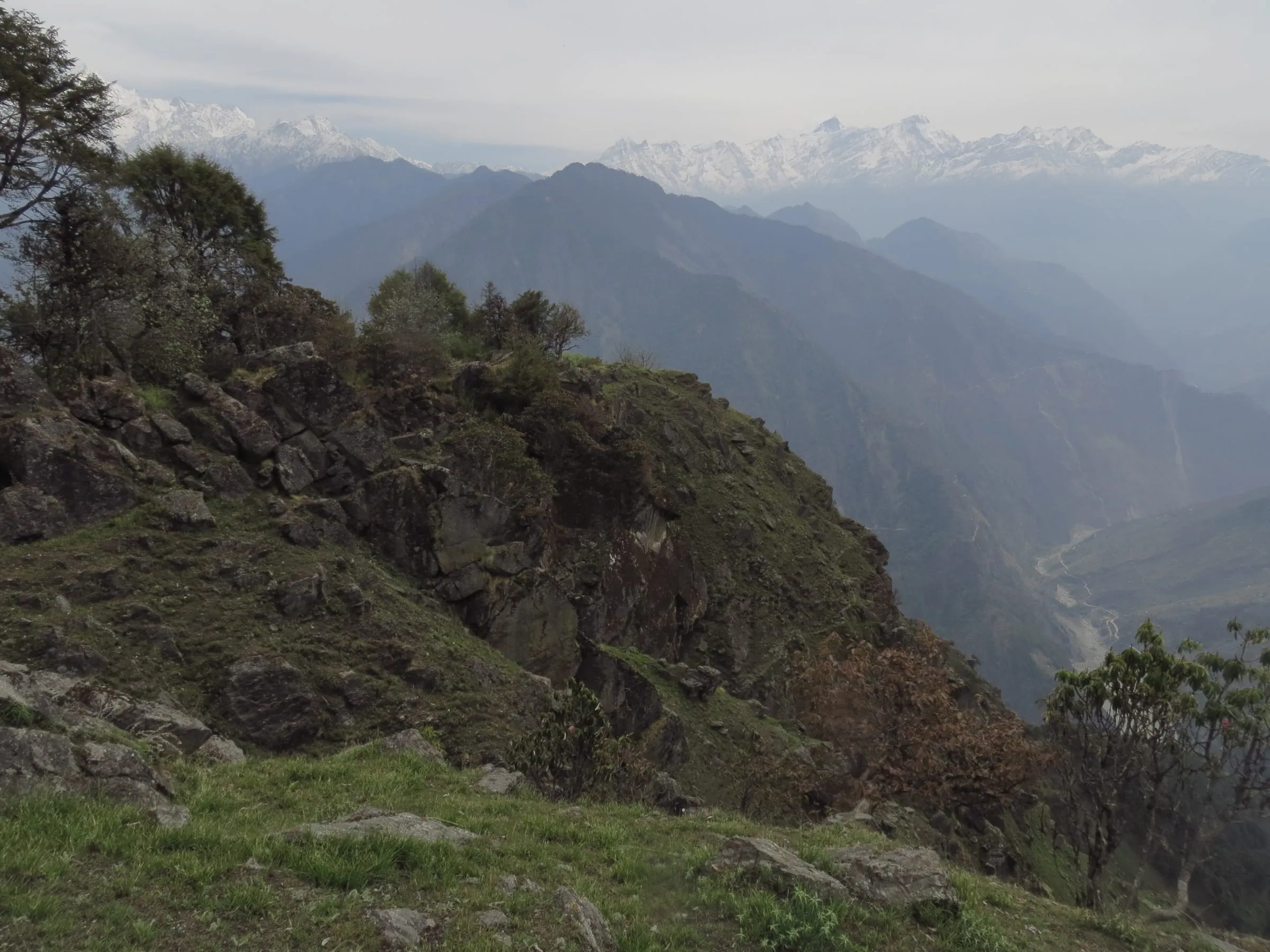
Jolingkong, where the ultra starts, is about 36 km above Gunji by road, a climb from 3,200 m to about 4,500 m.
On an ordinary yatra day that stretch is driven up from Gunji at first light and back down the same evening. For a race that starts up there, ask the event desk about their transport when you collect your bib. What moves on that road on a race morning is theirs to decide, not ours.
Where supporters and family can wait
Gunji is the finish for every run, so it is where family will wait. Two things to plan for. Supporters need the permit as much as runners do, and Gunji is a small village at the head of a long road. Count everyone who is coming into the permit and the vehicle from the start.
How high the course goes, and how cold Gunji is in late October
Gunji stands at 3,200 m, Kuti at about 3,820 m and Jolingkong at about 4,500 m, so every race here is run above 3,000 m.
The heights printed elsewhere do not agree. One page gives 15,000 ft, or 4,570 m, at Parvati Kund; a search summary says roughly 4,600 m; another prints a range of 10,300 to 15,000 ft for the course. None of them carries a source we can follow, so they are left as they are. These are the figures our own data holds for the places named: Gunji 3,200 m, Nabi about 3,290 m, Kalapani about 3,600 m, Kuti about 3,820 m, Jolingkong about 4,500 m.
The acclimatisation days built into the schedule
Read the reporting dates again and you can see what they are for. The 70 km field is asked to be at Gunji four days before the race, the 42 km field three. That gap is the acclimatisation the organiser has built into the schedule, and arriving late spends it.
Late October at Gunji: temperature, frost and snow in the 30-year normals
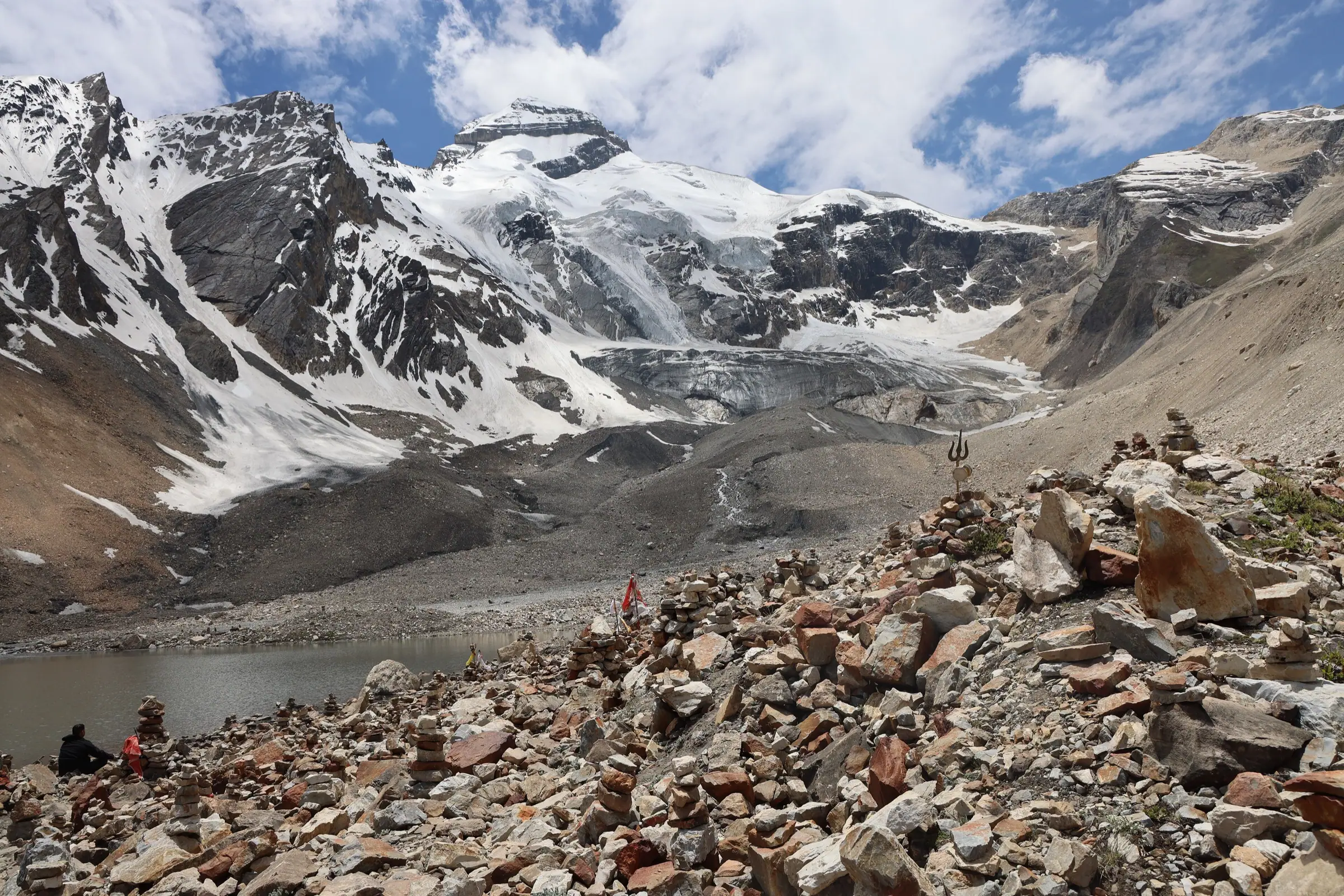
The October monthly normals, 1991 to 2020, give Gunji 11°C days and 0°C nights with 14 frost nights, and Jolingkong is colder again.
| Place | October day high | October night low | Frost nights | Snow days |
|---|---|---|---|---|
| Gunji, 3,200 m | 11°C | 0°C | 14 | 0 |
| Kuti, about 3,820 m | 6°C | -4°C | 26 | 2 |
| Jolingkong, about 4,500 m | 2°C | -8°C | 31 | 4 |
Read the Jolingkong row before you decide about the ultra. A start line where the average October night sits well below freezing, with frost almost every night of the month and snow days in the normals, is a different thing from a cold morning in the hills.
What runners are told to carry
The kit list that counts is the organiser's, printed with each category on the entry page. Another guide to this run gathers its own list under late-October sub-zero racing, and the normals in the table above are why cold is the thing to plan for. For the traveller's side of packing, month by month, see what the valley asks you to carry.
Altitude sickness: the event's rule, and who should not start
The event's own safeguard is the MBBS doctor's certificate dated within 15 days of the race, alongside the acclimatisation days set by the reporting schedule.
There is no altitude protocol from us on this page, because personal advice belongs with a doctor and not with a website. Two rules stand that nobody can soften: the event's medical certificate, and the fitness certificate the district requires before a permit is issued at all. Beyond those, the person to ask is a doctor who knows your history.
If you are under treatment for your heart, your lungs or your blood pressure, this is not the race to test it on. The same goes for recent surgery, and for a pregnancy. A race at this height is the wrong place to learn how your body answers. General altitude questions about the driven route are answered in our travel FAQ.
If you are not running: what race week means for an Adi Kailash trip
Inner line permits for travellers are on hold from 19 to 26 October 2026, by the Dharchula SDM's order, and the district's permit portal says so.
Plenty of people reading about this run will never enter it. They hold dates in late October, a family trip planned around this drive, and a headline about a race at Gunji. So: what the record says, and where the record stops.
The 2026 permit pause, and the 2025 one
The Dharchula SDM, Ashish Joshi, ordered that no inner line permits go to travellers from 19 to 26 October, The Northern Gazette reported on 28 September 2026. The district's permit portal shows applications on hold for those days. That week the SDM's office issues permits only to runners and their support staff, at Dharchula (Amar Ujala, 17 October 2026). It is the second year running: in 2025, permits for the yatra were stopped for the first edition too (The Northern Gazette, 24 October 2025).
Beds and vehicles at Gunji in race week
Gunji is a village. Your bed here is a guest house or a homestay room at Gunji or Nabi, not a hotel with a hundred of them. Runners and officials all report at the same village across those four days, and it is the beds that look tight, not the road. How much is held for the event, and what is left over, is not something anyone can tell you from a desk in September.
Travelling just after the run
The SDM's advice is plain: travel before 19 October or after 26 October. The yatra itself runs on. Its second phase began on 20 September and was expected to last into November, weather allowing (The Northern Gazette, 20 September 2026), and fresh snow had already fallen at Adi Kailash by 10 October (Amar Ujala).
Should you move your dates?
If your dates fall between 19 and 26 October, they have to move: travellers' permits are not issued that week. Our Adi Kailash from Delhi trip runs 6 days at ₹30,300 a person and reaches Gunji on day 2, so it is the permit day, not the start day, that has to clear the pause.
The first edition, 2 November 2025: what happened
The first Adi Kailash Parikrama Run was held on 2 November 2025 with 763 or more runners from 22 states, in severe cold, flagged off by the Chief Minister.
The first edition tells you more about this race than any course map could. The Northern Gazette announced it for 2 November on 29 September 2025, then reported afterwards that hundreds ran in severe cold, at altitude, in a valley whose road otherwise carries yatra traffic.
How many ran, and from where
The government tourism listing puts the field at 763 or more runners from 22 states across five categories, flagged off by the Chief Minister, with ITBP and the border villages supporting it.
Results and prize money: what is published
No prize purse and no result sheet for the first edition appear in any listing we could read, and inventing one is not on offer. If a prize structure is announced for 2026, the organiser's entry page and channels are where it will show first. Until it does, treat any figure you see elsewhere as unsourced.
Questions travellers ask
Adi Kailash Explore has nothing to print here on the age rule, and the district's permit process asks for a doctor's fitness certificate before anything is issued. You cover the route by vehicle, and walk only a short way at the darshan points. Your highest nights are at Gunji or Nabi, 3,200 m to about 3,290 m. Let us know first about any heart, lung or blood-pressure condition. Age bands in the run itself are the organiser's, set race by race.
By October the monsoon rain has dropped away at Gunji, and Adi Kailash Explore's departures still run, inside a season of May to November. October at Gunji runs 11°C by day and 0°C after dark in the 1991 to 2020 normals, with 14 frost nights. May is a little warmer at 12°C by day, with 10 frost nights. July and August bring the rain that shuts roads.
A two-hour half marathon is a respectable road time, and at Gunji it is not the number to plan to. The air at 3,200 m carries far less oxygen than the plains, so the same effort buys a slower pace and takes longer to recover from. Run to the published cut-off for your category and to how you feel after the acclimatisation days, not to a personal best.
The government tourism listing describes the Adi Kailash Parikrama Run as being among the world's top five high-altitude ultra runs, which is that listing's claim rather than a ranking anyone has settled. We have not seen a settled ranking of difficulty between India's high-altitude ultras. What is not in dispute is the ground: a course above 3,000 m, run in late October, with frost in the October normals at Gunji and higher.
Niti Xtreme is the one race named on the 2026 entry listing as a qualifying finish for the 70 km, alongside a certified 42 km or two 21 km races. Beyond that name, the listing accepts high-altitude 21 km and 42 km finishes rather than a fixed list of events. No 2026 calendar of Indian ultras sits in our sources, so this page publishes none: ask the organiser whether your race counts.
Not from 19 to 26 October 2026: travellers' inner line permits are on hold that week, by the Dharchula SDM's order. In an ordinary week the two come a day apart on one permit: Jolingkong for Adi Kailash, Nabhidhang for Om Parvat. Send your dates before you commit to them.
How we made this guide
The figures on this page are filled in from data each time it is built, never typed by hand: prices, days and nights from our package pages; road distances from OpenStreetMap, measured by a router (retrieved 22 September 2026); heights from the Copernicus 90 m elevation model and the heights this site publishes; temperatures from 30-year ERA5-Land climate normals, modelled rather than measured at a weather station. If anything here is out of date, tell us on WhatsApp and we will correct it.
- Adi Kailash & Om Parvat: itinerary and price
- Adi Kailash from Delhi: itinerary and price
- OpenStreetMap contributors, routed with OSRM: road distances · retrieved 22 September 2026
- Copernicus GLO-90 elevation model, via Open-Meteo (heights given as about) · retrieved 24 September 2026
- ERA5-Land climate normals 1991–2020, ECMWF, via Open-Meteo · retrieved 22 September 2026
- High Himalayan ultra marathon on Oct 24 and 25, The Northern Gazette
- Adi Kailash Parikarma Run marathon to be held on Nov 2, The Northern Gazette
- Hundreds participate in first ever 'Adi Kailash Parikrama Run' at high altitude, The Northern Gazette
- For Ultra Marathon run, inner line permits stopped for Adi Kailash yatra, The Northern Gazette
- Adi Kailash Parikrama Run 2.0, the organiser's entry page · retrieved 20 October 2026
- No inner line permits for Adi Kailash pilgrims due to adventure run, The Northern Gazette, 28 September 2026
- Adi Kailash Parikrama Run to be held from Oct 24 to 26, The Northern Gazette, 8 October 2026
- Over 1,300 runners to participate in second Adi Kailash Parikrama Run, The Northern Gazette, 17 October 2026
- Parikrama Run team reaches Jyolingkong, Amar Ujala, 17 October 2026
- Inner Line Permit portal, Pithoragarh district: the notice on travellers' permits · retrieved 20 October 2026
- Second phase of Adi Kailash yatra begins, The Northern Gazette, 20 September 2026
- Snowfall at Adi Kailash, Amar Ujala, 10 October 2026
About Adi Kailash Explore
Adi Kailash Explore (adikailash.io) is a tour operator based in Pithoragarh, Uttarakhand, that specialises in one route: Adi Kailash and Om Parvat, the Darma valley and Munsiyari. It runs departures from Delhi, Haldwani and Pithoragarh, and its team files the Inner Line Permit for every Adi Kailash traveller at SDM Dharchula. It is recognised by Uttarakhand Tourism, certified by MSME, Govt. of India (UDYAM-UK-09-0012927) and verified on the NIDHI Portal, and was founded by Vinay Verma. Why travel with us
Vinay Verma
Founder, Adi Kailash Explore; runs the Adi Kailash road from Pithoragarh.
Keep reading
All postsAdi Kailash12 min readGunji, Uttarakhand: The Village Where the Road Forks
A Vyas valley trip through Gunji takes 6 days from Delhi at ₹30,300 a person, 4 days from Pithoragarh. Adi Kailash Explore run it May to November. Adi Kailash16 min read
Adi Kailash Weather and Temperature: Today and by Month
Adi Kailash weather now and for 7 days at Jolingkong, Om Parvat and Gunji; in May Gunji runs 12°C by day. Adi Kailash ExploreAdi Kailash12 min readAdi Kailash Route: Delhi to Jolingkong, Leg by Leg
How to reach Adi Kailash means driving, not trekking: the road runs to Jolingkong at about 4,500 m. Adi Kailash Explore note where the short walks begin.The day-by-day plan
Download the Adi Kailash itinerary for free.
6 days and 5 nights from Delhi, as a 19-page PDF on WhatsApp.Adi Kailash & Om Parvat from Delhi: 6 days and 5 nights, as a 19-page PDF on WhatsApp. Forward it to your family, then ask us anything.
One WhatsApp message. Free, in Hindi or English.Or call +91 76688 58311 · Hindi or English
Adi Kailash & Om Parvat from Delhi
6 days, 5 nights · 19 pages
- Delhistart
- Pithoragarh
- Gunji
- Jolingkong
- Nabhidhang
- Lipulekh
- Jageshwar
- Back to Delhi