Munsiyari21 min read
Munsiyari Trip Cost: 3 Budgets for the Same 3 Nights
Three nights in Munsiyari cost ₹14,400 a person as a package from Haldwani, or three lines you price yourself. Those lines are the road up from the plains, the room and the food. If you're two to six people from Delhi or the NCR, putting a number on this before you fix dates, the headcount is what moves it most.
By Vinay Verma, founder of Adi Kailash ExploreAsk us on WhatsApp
TL;DRThe post in 6 lines
- A Munsiyari trip costs ₹14,400 a person as a 4-day package from Haldwani, or whatever your own road, room and food lines add up to.
- Adi Kailash Explore runs Munsiyari from Delhi at ₹20,400 a person over 5 days, with transport, hotel nights, breakfast and dinner inside the price.
- Taxi quotes to Munsiyari are per vehicle, not per seat, so the same figure splits between two, four or six heads.
- Munsiyari homestays showed Rs 1,000 to Rs 3,000 a night on the state's homestay booking site, read 29 September 2026.
- October and November are the dry months at Munsiyari: 53 mm of normal rain in October, 49 mm in November, with October's nights the warmer two.
- Seat fares, room rates and the hops in town are agreed locally and move with the season, so ask for this week's rates.
Key facts
- Package from Haldwani
- ₹14,400 a person, 4 days and 3 nights
- Package from Delhi
- ₹20,400 a person, 5 days
- Advance that holds a seat
- ₹5,000 a seat
- Distance from Delhi
- About 623 km
- Distance from Kathgodam
- About 282 km
- Homestay rates listed
- Rs 1,000 to Rs 3,000 a night
- Driest months
- October 53 mm, November 49 mm
- Walking on our trips
- One morning: Khaliya Top and Zero Point
How much does a Munsiyari trip cost?
Adi Kailash Explore charges ₹14,400 a person from Haldwani; a self-planned trip costs whatever your own lines add up to.
Budgets go wrong on the first line, because the road up is sold three completely different ways. After that line, the money is ordinary: a room, three meals a day, a vehicle for the hops. Get the road right and the rest behaves.
Three ways to do the same three nights
The same three nights can be done by bus and shared jeep, by hired taxi, or bought as a package at one price.
By bus and shared jeep you buy a seat, twice: once up and once back. By hired taxi you buy the vehicle, whoever is sitting in it. As a package you buy one figure a person, and ours is ₹14,400 from Haldwani for 4 days and 3 nights.
Three ways, three different trips.
What any cost figure assumes
A Munsiyari cost figure means nothing until four things are fixed: headcount, start city, month and the standard of room.
- How many of you are paying, because the vehicle cost splits and the room cost mostly doesn't
- Where you start: Delhi, Kathgodam or Haldwani, which is two legs or one
- Which month, because a wet week and a dry week are not the same trip
- What you'll accept as a room, from a village homestay to a hotel facing the Panchachuli
Change the headcount alone and the per-head cost of a hired taxi moves a long way. That's the whole arithmetic of this trip.
Why the published figures disagree so much
Munsiyari budgets you read online disagree because almost none carry a date, a headcount or a measured road distance.
Many of the numbers circulating for this trip come from social posts. They may well have been right, for one traveller, in one month, in one kind of room. Nobody says which month they were right for.
Then there's the distance. The road from Delhi measures about 623 km. From Kathgodam it's about 282 km. Fuel and taxi maths built on a shorter figure comes out short.
The budget, line by line, so nothing hides under sightseeing
Nine lines make a Munsiyari budget: travel to the railhead, the leg up, stay, meals, local hops, lunch, tips, the return seat and a buffer.
One column below is what you'd be pricing yourself. The other is what our figure already covers, so you can see where a package earns its money and where it doesn't.
| Cost line | Doing it yourself | In our Munsiyari package |
|---|---|---|
| Delhi to the railhead | Train or bus to Kathgodam, about 292 km by road | Included from Delhi on the 5-day trip |
| The leg up to Munsiyari | Bus, a shared jeep seat or a whole taxi, about 282 km | Included, with the driver's allowance, tolls and parking |
| Three nights' stay | Homestay to hotel; UTDB listings ran Rs 1,000 to Rs 3,000 a night | Included, hotel in Munsiyari |
| Breakfast and dinner | Paid meal by meal | Included |
| Lunch on the road | Yours | Not included |
| Local hops and sightseeing days | Priced per outing, agreed locally | Included: Khaliya Top, Darkot, the museum, the temple in town, Birthi Falls |
| The return seat out | Booked by you, and the line to arrange first | Included, dropped back where you started |
| Tips and personal spends | Yours | Not included |
| A buffer for a road day | Keep one | Days the road doesn't allow aren't charged |
Getting to the railhead
Kathgodam, beside Haldwani, is the railhead for Munsiyari: about 292 km from Delhi by road.
Which train and which class you take sets this line, so price it on the booking site before you price anything above it. Buses run up to Haldwani as well. The route detail is all on how to reach Munsiyari.
The leg up, and what each way of covering it costs
Kathgodam to Munsiyari is about 282 km of climbing road, covered by bus, by a shared jeep seat or by a hired taxi.
The shape of it is simple enough. A bus seat, a shared jeep seat and a whole hired vehicle are three different things to buy, not three prices for the same thing.
Seat fares and taxi rates on this road are agreed locally and move with the season, so ask us for this week's.
Stay: homestay, hotel, or a room facing the peaks
Homestays around Munsiyari showed Rs 1,000 to Rs 3,000 a night on the state's booking site, read 29 September 2026.
That band is the most honest stay figure anyone can give you, because the state's own site publishes it with the property named. Sarmoli, Nanasem, Madkot, Bhaiskhal, Naya Basti. Villages, not brochures.
KMVN's rest house in town takes bookings online but prints no tariff, and the district's tourism newsletter adds log huts at Khaliya Top and the Ecopark cottages. If you want a room facing the peaks, ask for one by name when you book. What the week's rate is, ask us.
What food costs per day
Munsiyari food runs from a dhaba thali to hotel dining, and two meals a day sit inside the package price.
Two meals are inside our price and lunch on the road is yours. Doing it alone, the split can be the same: breakfast where you sleep, something hot at a dhaba at midday, dinner back in town. Three meals, one of them eaten standing up.
Local transport inside Munsiyari
Munsiyari's sights sit along a spread-out ridge, so getting to them means a vehicle rather than a walk.
This is the line a self-made budget most easily leaves out. The Khaliya trailhead, Darkot, Betulidhar, Birthi Falls and the spot for first light are each a hop. Each hop is a negotiation, unless a vehicle is already yours for the day.
The buffer, and why a road day needs one
A Munsiyari budget needs a spare day and spare money, because a mountain road can take either from you.
Rain, a slide, a blocked stretch being cleared: any of them can cost you a night and a meal you hadn't counted. Keep one night of room and food in reserve, and keep the return train loose if you can. A fixed return ticket and a mountain road are not ideal companions.
Doing it on your own by bus and shared jeep
Bus and shared jeep is the cheapest honest Munsiyari trip, and it is paid for in time, comfort and flexibility.
The cheap version runs like this. You reach Kathgodam by train or bus, then take a bus or a shared jeep for the climb of about 282 km. You arrive tired, and you find a room that night or book one ahead. Three nights in town, hops shared where sharing is possible, then the same chain back.
Where the saving comes from, and where it doesn't
Any saving on a self-planned Munsiyari trip comes from the road legs rather than from the room or the food.
A shared seat instead of a whole vehicle is where the cut is, up and down. After that there is less to cut: you still sleep somewhere, you still eat three times, and the hops inside Munsiyari cost what they cost. On the forums, people ask whether a shoestring Munsiyari trip is possible, and the answer turns on two rates: the seat up and the room.
Who shouldn't try the cheap version
Shared jeeps and buses suit flexible travellers, not elderly parents, small children or anyone with a fixed return date.
Sitting upright on this road is real work. A shared jeep is shared, and the seat you get is the seat you get. If you're bringing parents over sixty, or a small child, the comfort stops being a luxury line. And if your return train from Kathgodam is booked and close, you've given yourself a timetable the road has never agreed to.
Hiring a taxi: what two, four and six people each pay
A taxi to Munsiyari is quoted per vehicle, so one figure splits between two, four or six heads.
This is the arithmetic that decides most Munsiyari budgets. A whole-vehicle quote from Kathgodam, Haldwani or Pantnagar is a single number. Divide it by the people paying, and set that against a shared seat multiplied by the same people.
The same vehicle, three per-head costs
Divide the whole-vehicle quote by the paying heads, both ways, then compare it with the seat fare times the same heads.
- Get the quote as one figure for the vehicle, up and back, not as a rate per person
- Divide it by everyone who is paying, including children who occupy a seat
- Price the same party on shared seats, both ways, and compare the two totals
- Ask which vehicle class the quote is for, because a sixth passenger can mean a bigger vehicle and a new figure
Where the taxi overtakes the seats comes down to this season's two rates. Send your headcount and we'll put both numbers beside each other for your dates. The per vehicle against per seat frame is worked through for the border road on the Dharchula taxi fare post, and the logic here is the same.
What to pin down in a taxi quote
Ask a Munsiyari taxi quote what sits inside the figure before comparing it with anything else.
The driver's nights up in Munsiyari, for a start, and his allowance for them. Then the tolls and the parking slips. Then the one to ask about plainly: whether the sightseeing days in town are inside the figure or billed as you go.
Ask how many days the figure covers, and what a held-up day adds. Somebody pays for that day, and it won't be the driver.
Driving your own car instead
Driving yourself to Munsiyari means about 623 km each way, in fuel, tolls and two long days at the wheel.
On paper this looks like the cheap way to move four or five people. In practice, price the fuel on the measured distance, not the short figures that float around. Add the tolls to Kathgodam, add parking, and add the local hops anyway. After two days at the wheel you won't be doing the pre-dawn run yourself.
Worth it if you enjoy the driving. Not worth it if you'd rather look out of the window.
When a package is cheaper than doing it yourself, and when it isn't
A package suits two travellers, elderly parents and fixed return dates; a flexible group of six will usually do better putting the trip together itself.
We'd rather you did this comparison properly than booked us by accident. So here are both our Munsiyari prices against the same nights assembled alone.
What our price covers
Adi Kailash Explore's Munsiyari price covers transport for the whole route, hotel nights, breakfast and dinner, the sightseeing days and local support.
Munsiyari and Khaliya Top is ₹14,400 a person over 4 days from Haldwani. The drive up, three nights in Munsiyari, a morning on Khaliya Top with Zero Point beyond it. Then a day for Darkot and the Tribal Heritage Museum, the Nanda Devi temple in town, and Birthi Falls on the way down.
From Delhi, the 5-day trip is ₹20,400 a person and adds the two plains legs plus a night at Pithoragarh. Lunch and personal spends sit outside the price. The allowance for the driver and his nights up there is inside the figure, and so are the tolls.
The cases where a package wins
Two travellers, a party with elderly parents and a fixed return date all favour one price over a self-made chain.
With two of you, a hired vehicle is expensive and shared seats are slow, so one price absorbs the worst of both. With parents along, the vehicle waiting outside the hotel at seven in the morning is the thing you're actually buying. And if your return date can't move, rooms and a vehicle already held for your dates are worth money.
The cases where it doesn't
A flexible group of five or six, or a long slow trip, may well do better self-planned.
Six people splitting one vehicle, who can lose a day without losing the trip, and who are happy to find rooms as they go, don't need us. Nor does the traveller who wants a long quiet stay in a Sarmoli homestay. Our price buys certainty over three fixed nights, and that's worth less the longer and looser your plan gets.
Six things to check in any Munsiyari quote
Check six things in a Munsiyari quote: the basis, the nights, the meals, the sightseeing, the road-day terms and the paperwork.
- Is the figure per person or per vehicle, and is it on twin sharing? Ask what a single room adds
- How many nights, and where each one is spent, town by town
- Which meals are in: breakfast and dinner, or only breakfast
- Are the local sightseeing days and the trailhead hop inside the price
- What happens to the money if the road is cut for a day, in writing before you pay
- Does payment go to a company account with a booking ID and an invoice, not to a personal number
Cheapest and best are not words you can check. What's inside the figure is. On ours, ₹5,000 a seat holds the booking and the balance is settled in writing closer to departure; how the receipt, the invoice and the booking ID work is set out on how we work.
The lines people forget
Four lines break self-made Munsiyari budgets: the trailhead hop, the sunrise run, the return seat and cash in hand.
Our drivers do these four every week of the season. They're too ordinary to think about, until you're standing in the dark on a ridge trying to arrange one.
The jeep to the Khaliya trailhead and back
Reaching the Khaliya Top trailhead above Munsiyari needs a vehicle each way, which is a separate hop if no vehicle is with you.
What costs money is getting to where the walk starts. You also want the same vehicle waiting when you come down tired, so agree the return before you get out of it. If a gate or parking charge applies that week, the drivers know it, so ask us before you fix the day.
The sunrise hop
First light on the Panchachuli means leaving your room in the dark, which is a pre-dawn vehicle arranged the night before.
Some rooms have the view from the window, and then you need nothing at all. Fix the hop the previous evening with a driver who is genuinely awake at that hour, or you'll spend the best light of the trip in a tea shop.
The return seat, and why it's the first one to book
The seat out of Munsiyari is the line to arrange before the room.
On the morning you must leave, there may be no second option. Hold the return leg first, then build the rest of the trip around it.
Cash, and a network that comes and goes
Cash matters in Munsiyari because the mobile network drops in and out, and UPI goes with it.
Hops, tea and tips settle in cash. Draw it on the plains, before you leave Kathgodam or Haldwani, and carry more than you think three days need. Treat every machine further up as a maybe.
A 3 to 4 day Munsiyari plan from Delhi or Gurgaon, costed
Four days from Haldwani or five from Delhi fit Munsiyari comfortably; three days from Delhi spends most of itself on the road.
Munsiyari is about 623 km from Delhi. That distance, not the sightseeing, sets the length of the trip, and it's why a plan from the NCR gives two of its days to driving.
Is three days enough for Munsiyari?
Three days works from Haldwani or Kathgodam, and runs tight from Delhi, where the road legs take two of them.
With the railhead leg taken at night if your train allows, a three-day shape goes like this. Day one, up from Kathgodam, into Munsiyari by evening, the view point if the light holds. Day two, Khaliya Top and Zero Point, back at the hotel by dark. Day three, away early and down to the railhead.
The money is the same two road legs, two nights, two days of a local vehicle and the meals. What the three-day version cuts is the second sightseeing day: Darkot, the museum and Birthi Falls go with it. If the Panchachuli is the point, buy yourself one more night.
The four-day shape from Haldwani
Four days from Haldwani gives a drive in, the Khaliya morning, one full day of sightseeing and a drive out.
- Day 1: Haldwani up to Munsiyari, check in, then the view point and the bazaar as the light goes
- Day 2: the walk up to Khaliya Top, Zero Point beyond it, back at the hotel by evening
- Day 3: Darkot village, the Tribal Heritage Museum, then the Nanda Devi temple and the bazaar
- Day 4: away early, Birthi Falls on the road down, Haldwani by evening
On that shape your money goes on two long road legs, three nights, three days of a local vehicle and the meals. Our version prices all of it at ₹14,400 a person. Yours will come out as the same list in a different order.
Does a longer trip cost less per day?
Extra nights in Munsiyari cost only a room and the meals, so a longer trip lowers the average cost of a day.
The road legs are the fixed cost, paid once whether you stay three nights or seven. Add a fourth night and you're paying for a room and two meals, nothing more. That's the one piece of budget maths on this trip that works in your favour.
Which month is best for Munsiyari, and what the calendar does to the budget
October and November are Munsiyari's dry months, and October is the one travellers ask about most.
The month decides the view, and the view is most of what you came for. October's normal rainfall at Munsiyari is 53 mm. July's is 837 mm. That is the whole argument about timing, in two figures.
| Month | Day | Night | Rain | What it means for your plan |
|---|---|---|---|---|
| May | 19°C | 7°C | 101 mm | Mild, and much drier than the monsoon months: an easy plan to hold |
| July | 21°C | 16°C | 837 mm | The wettest month: budget a spare day and expect a slow road |
| October | 17°C | 5°C | 53 mm | Dry, and the warmest of the dry months |
| November | 13°C | 1°C | 49 mm | Dry days and 11 frost nights: pack for cold, not rain |
| January | 7°C | -4°C | 146 mm | 8 snow days: the road itself becomes the question |
Is October the best time to visit Munsiyari?
October is dry at Munsiyari, and its nights are warmer than November's.
Both months are dry: 53 mm in October against 49 mm in November. The difference is the cold. November carries 11 frost nights, and October carries almost none, so October gives you the washed air without the hard dawn.
Monsoon weeks, and the risk you take for them
Monsoon weeks are the wettest at Munsiyari, when cloud sits on the peaks and the road can be held up for hours.
July's normal rainfall at Munsiyari is 837 mm. That means cloud over the peaks you came for, and a road that can be held up for hours. If you travel then, carry a spare day and don't commit to a return train the same evening. The month-by-month picture is on Munsiyari weather.
Winter: what changes
Munsiyari winters bring snow days and hard frost, which changes the road, the room and what the trip is for.
January normals give 8 snow days and 28 frost nights, with nights at -4°C. Munsiyari is reachable in winter, and heating becomes something you ask about before you book a room.
Ask us on WhatsApp which months Adi Kailash Explore is running Munsiyari departures on your dates.
Does Khaliya Top add to the budget, and is the trek difficult?
Khaliya Top is a morning's walk a reasonably fit family can manage, and the cost in it is the vehicle to the trailhead.
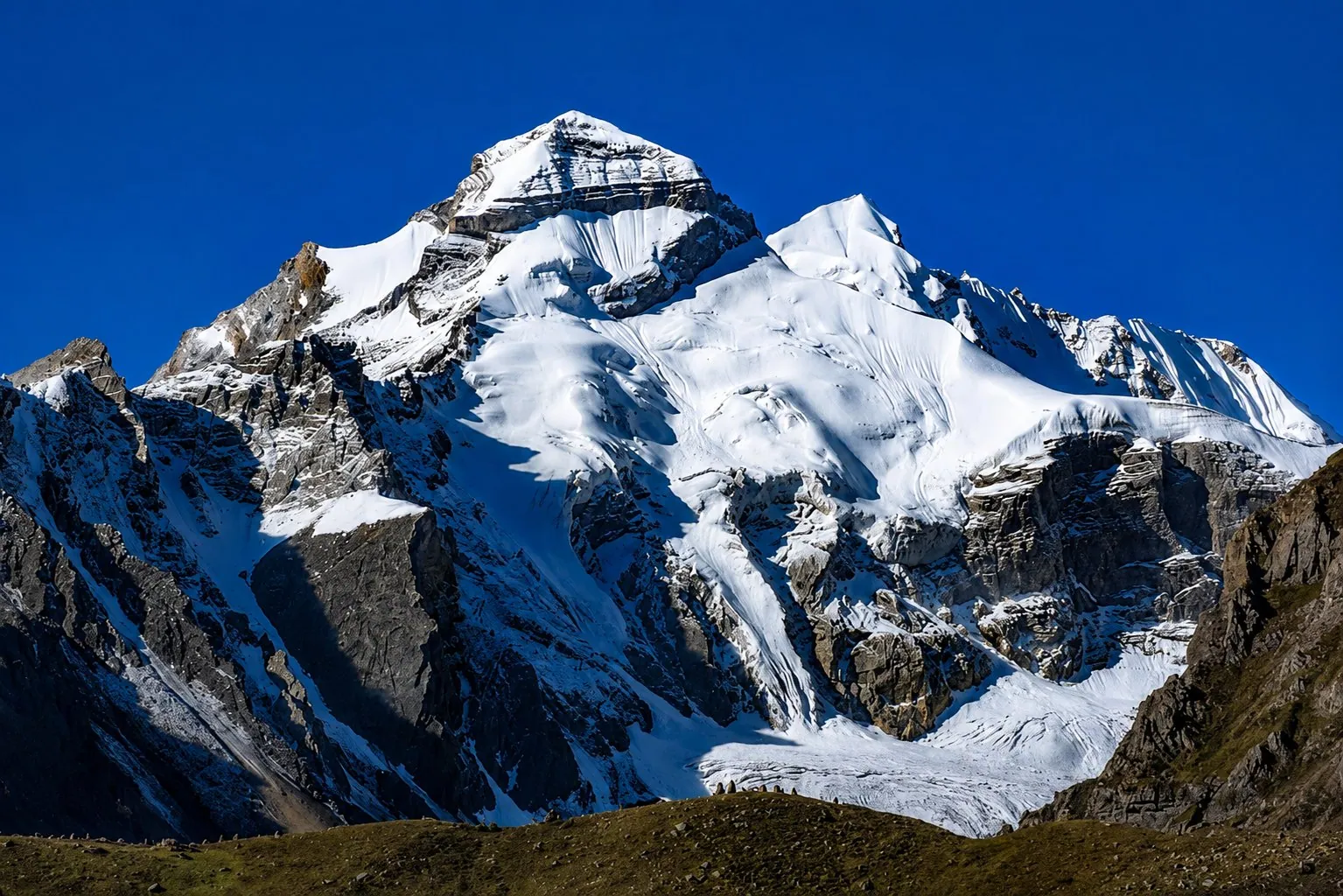
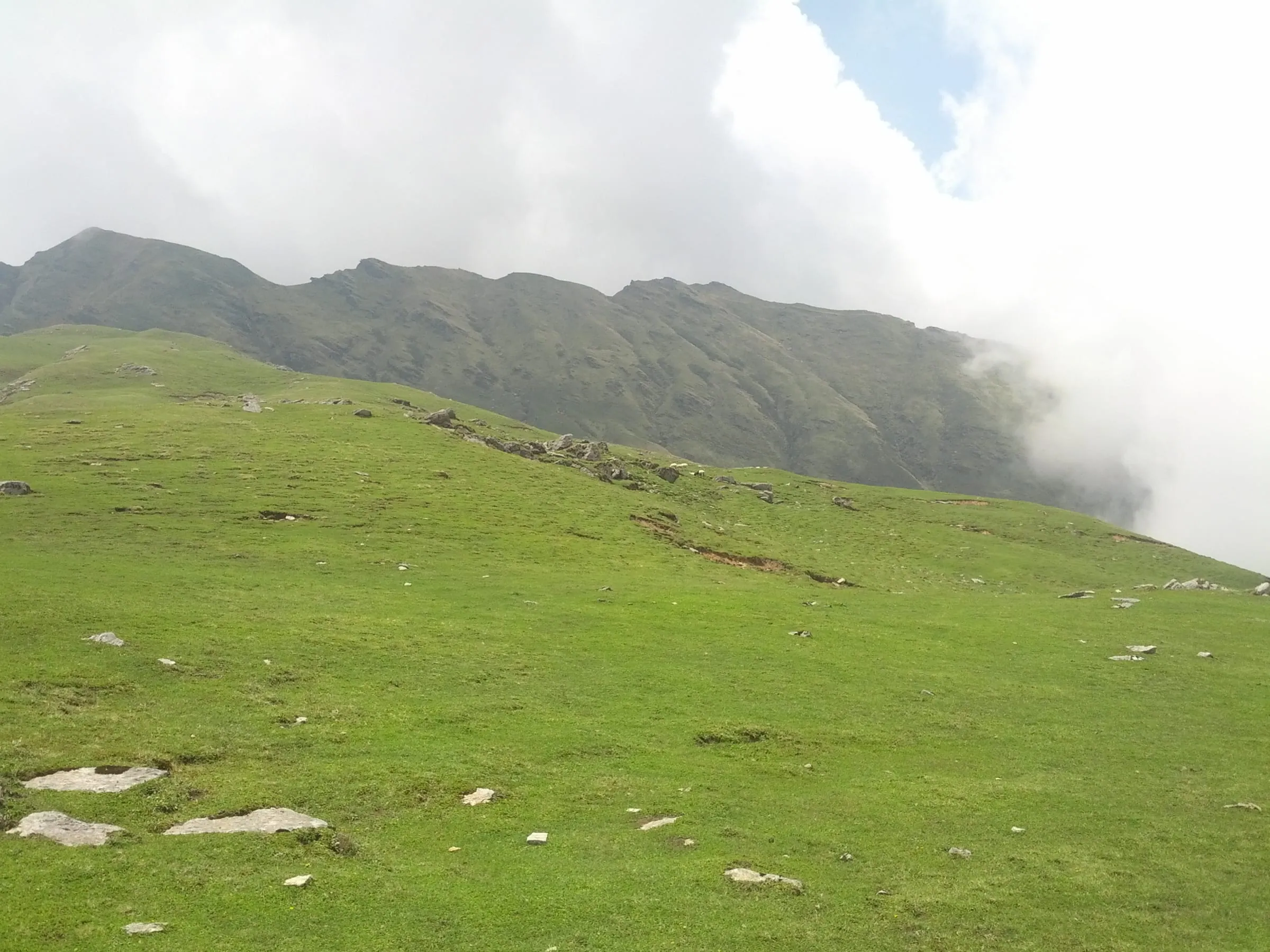
Khaliya is a meadow first, then a ridge, and then the snow line standing in front of you. Zero Point lies beyond the top. It's a day out rather than an expedition: up in the morning, back at the hotel by evening.
How hard are the walks, really
The Munsiyari day walks are long on breath and short on technique.
You'll feel the height in your legs and your lungs on the last stretch to the ridge. Nothing on it is technical. Thamri Kund is the other walk travellers ask about, and both are described in order on the 13 places post.
If you have a heart or breathing condition, ask your own doctor before you plan either walk, and tell us so we can shape the day around it.
Milam and Ralam are a different trip
Milam and Ralam are separate expeditions, not sightseeing lines in a three-night budget.
They belong nowhere near a Khaliya Top budget, and no sightseeing figure covers them. Tell us the route and the party and a guide rate comes back for your dates.
Munsiyari or Auli: which costs more?
Munsiyari is a long drive from anywhere, so the comparison turns on the distance from your start.
We run Munsiyari and we don't run Auli, so take this as the cost frame and not a verdict. The big lines are the same in both: the road leg from the plains, the room, the food. What differs is the distance you drive to reach them.
Munsiyari is about 623 km from Delhi and about 261 km from Nainital, so it's a committed drive from almost anywhere. What you buy for it is a snow range in sight from the town itself. The side-by-side with Auli and with Nainital sits on 13 places to visit in Munsiyari.
Adding Munsiyari to a Darma or Adi Kailash trip
Munsiyari sits about 125 km from Pithoragarh and about 94 km from Dharchula, so it joins a longer Kumaon plan easily.
Readers weighing a three-day Munsiyari trip against a longer Kumaon plan are really asking what the extra valley costs. Bought separately, the Darma trip from Haldwani is ₹50,000 a person and Adi Kailash from Haldwani is ₹26,300 a person. Run as one journey, the plains legs stop being paid twice, and that's where the saving sits.
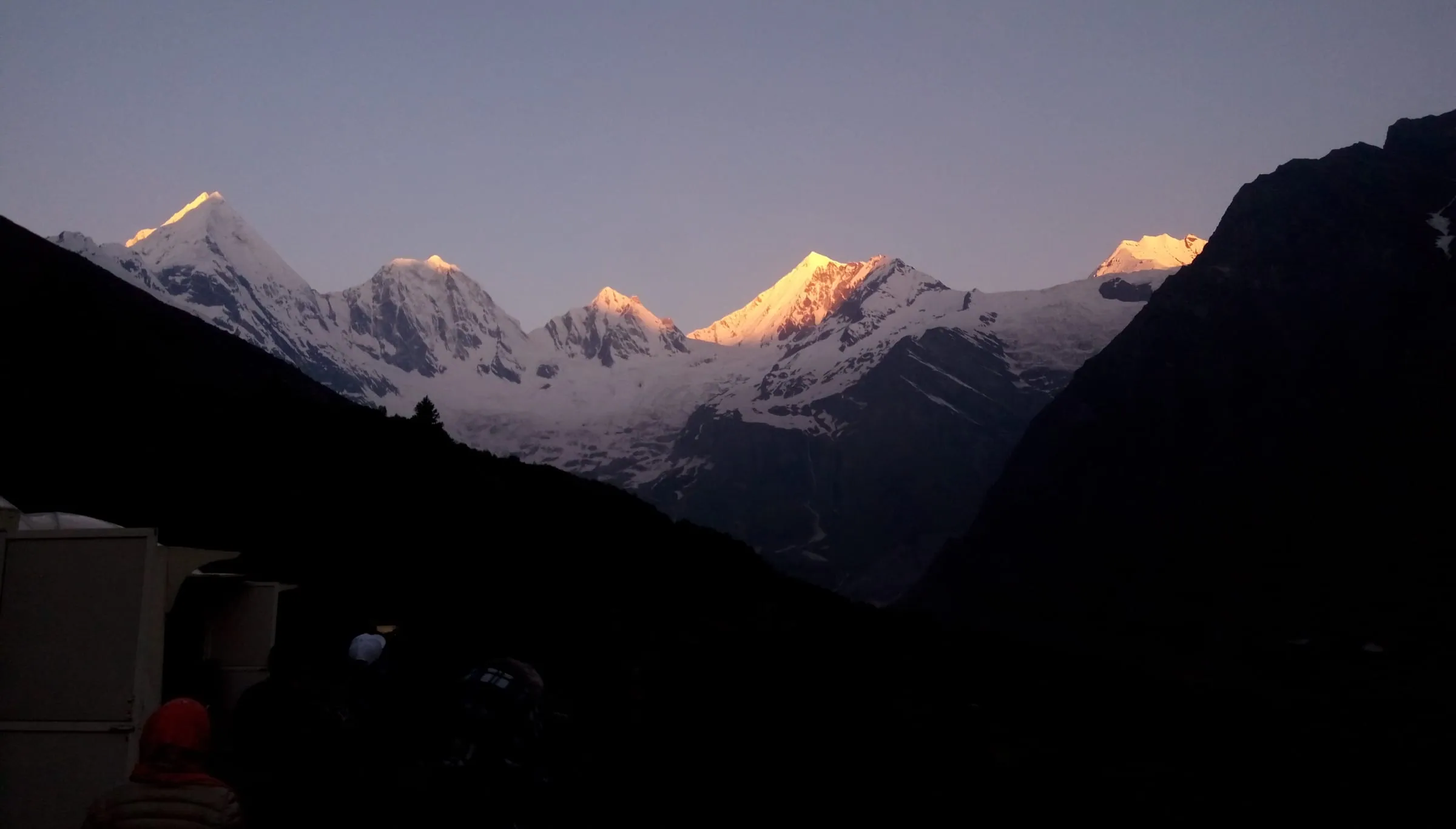
The combined figure moves with your nights and your headcount. Send the shape of it and one price comes back in writing. The valley itself is described on Darma Valley, and the cost page for the high route is Adi Kailash yatra cost.
Questions travellers ask
Fix the headcount and the month first, because those two move every other line. Then book the railhead leg to Kathgodam, hold the leg up and the return out of Munsiyari, and only then choose the room. The hops inside Munsiyari are arranged last, either with a driver you keep for three days or outing by outing. Plan the return before the arrival.
Days the road doesn't allow are not charged. Where a leg is cut, we reroute within the same area and tell you the moment we know. If the whole departure can't run, you choose a full refund or another date, and refunds go back to the account you paid from within 7 to 10 working days. Whatever applies to your booking is written down before any money moves.
Take the bus or a shared jeep on a first trip. about 285 km of climbing road is a long day on two wheels. If you ride it, give the leg two days rather than one, start early and be off the road before dark.
No Inner Line Permit is needed for a hotel night in Munsiyari: that permit covers the Vyas and Darma valleys on the border, which is a different trip altogether. So an ordinary Munsiyari budget carries no permit line. For the longer Johar routes towards Milam and Ralam, ask before you budget anything, because what's required changes with the route and the season.
A full package tour is one price covering transport, stays and the named meals, with the route run for you. On the Munsiyari trips that means transport for the whole route from the start city, hotel nights in Munsiyari, breakfast and dinner, the sightseeing days, and the running costs of the vehicle, down to the parking slips. Lunch and personal spends sit outside. Anything a quote doesn't name, assume you're paying for it.
Earlier is safer, because seats on a departure are finite. ₹5,000 a seat holds the booking, with the receipt and batch confirmation the same day, and the balance is settled in writing closer to departure. Send your dates and headcount, and the day plan with one price comes back before you commit anything.
How we made this guide
The figures on this page are filled in from data each time it is built, never typed by hand: prices, days and nights from our package pages; road distances from OpenStreetMap, measured by a router (retrieved 22 September 2026); temperatures from 30-year ERA5-Land climate normals, modelled rather than measured at a weather station. If anything here is out of date, tell us on WhatsApp and we will correct it.
- Munsiyari & Khaliya Top: itinerary and price
- Munsiyari from Delhi: itinerary and price
- Darma Valley Expedition from Haldwani: itinerary and price
- Adi Kailash & Om Parvat: itinerary and price
- OpenStreetMap contributors, routed with OSRM: road distances · retrieved 22 September 2026
- ERA5-Land climate normals 1991–2020, ECMWF, via Open-Meteo · retrieved 22 September 2026
- Uttarastays, UTDB's homestay booking site: Pithoragarh listings (read 29 September 2026)
- KMVN, TRH Munsyari
- District Pithoragarh monthly tourism newsletter, December 2024
About Adi Kailash Explore
Adi Kailash Explore (adikailash.io) is a tour operator based in Pithoragarh, Uttarakhand, that specialises in one route: Adi Kailash and Om Parvat, the Darma valley and Munsiyari. It runs departures from Delhi, Haldwani and Pithoragarh, and its team files the Inner Line Permit for every Adi Kailash traveller at SDM Dharchula. It is recognised by Uttarakhand Tourism, certified by MSME, Govt. of India (UDYAM-UK-09-0012927) and verified on the NIDHI Portal, and was founded by Vinay Verma. Why travel with us
Vinay Verma
Founder, Adi Kailash Explore; runs the Adi Kailash road from Pithoragarh.
Keep reading
All postsMunsiyari18 min readMunsiyari Weather Month by Month, and When Does It Snow?
Munsiyari temperature runs from 7°C days and -4°C nights in January to 21°C in June. Adi Kailash Explore chart every month, with snow days for each.Munsiyari18 min read13 Places to Visit in Munsiyari, in the Order You Pass Them
About 623 km from Delhi, the places to visit in Munsiyari begin on the road in, at Birthi Falls and Kalamuni Top. Adi Kailash Explore set the order.Munsiyari18 min readHow to Reach Munsiyari from Delhi, Leg by Leg
No airport and no railway station, so how to reach Munsiyari is a road question: about 261 km from Nainital. Adi Kailash Explore name the hours per leg.The day-by-day plan
Get the Munsiyari itinerary for free.
4 days and 3 nights from Haldwani, day by day on WhatsApp.Munsiyari from Haldwani: 4 days and 3 nights, day by day, sent on WhatsApp. Share it with your family, then ask us anything.
One WhatsApp message. Free, in Hindi or English.Or call +91 76688 58311 · Hindi or English
Munsiyari from Haldwani
4 days, 3 nights · day by day
- Haldwanistart
- Munsiyari
- Khaliya Top
- Tribal Museum
- Darkot
- Birthi Falls
- Back to Haldwani