Adi Kailash17 min read
Yes, you can do the Adi Kailash yatra without a tour package, up to a point
Yes, the Adi Kailash yatra works without a package: you file the permit yourself on the district portal, and buses reach Dharchula. What ends at Dharchula is the transport. The road on to Gunji, about 80 km, and Jolingkong past that is arranged vehicle by vehicle, and that one gap decides whether your plan works.
By Rishabh Verma, of the Adi Kailash Explore teamAsk us on WhatsApp
TL;DRThe post in 6 lines
- Adi Kailash without a tour package is possible: the Inner Line Permit form is filled in the traveller's own name on the district portal, and buses reach Dharchula.
- Public transport stops at Dharchula. The road to Gunji, about 80 km, and Jolingkong, about 36 km further on, has no scheduled service.
- Inner Line Permit applications go through the district's own portal at Pithoragarh, and the office of the SDM in Dharchula grants the permit.
- Reaching Dharchula is the public half of the journey: buses from Delhi, about 570 km, or a train to Tanakpur or Kathgodam and a hill road from there.
- Adi Kailash Explore files the permit and holds the vehicle on this road: ₹30,300 a person from Delhi, ₹26,300 from Haldwani.
- Adi Kailash road travel runs May to November, 1 May to 20 November, and the wettest weeks at Gunji fall in July and August.
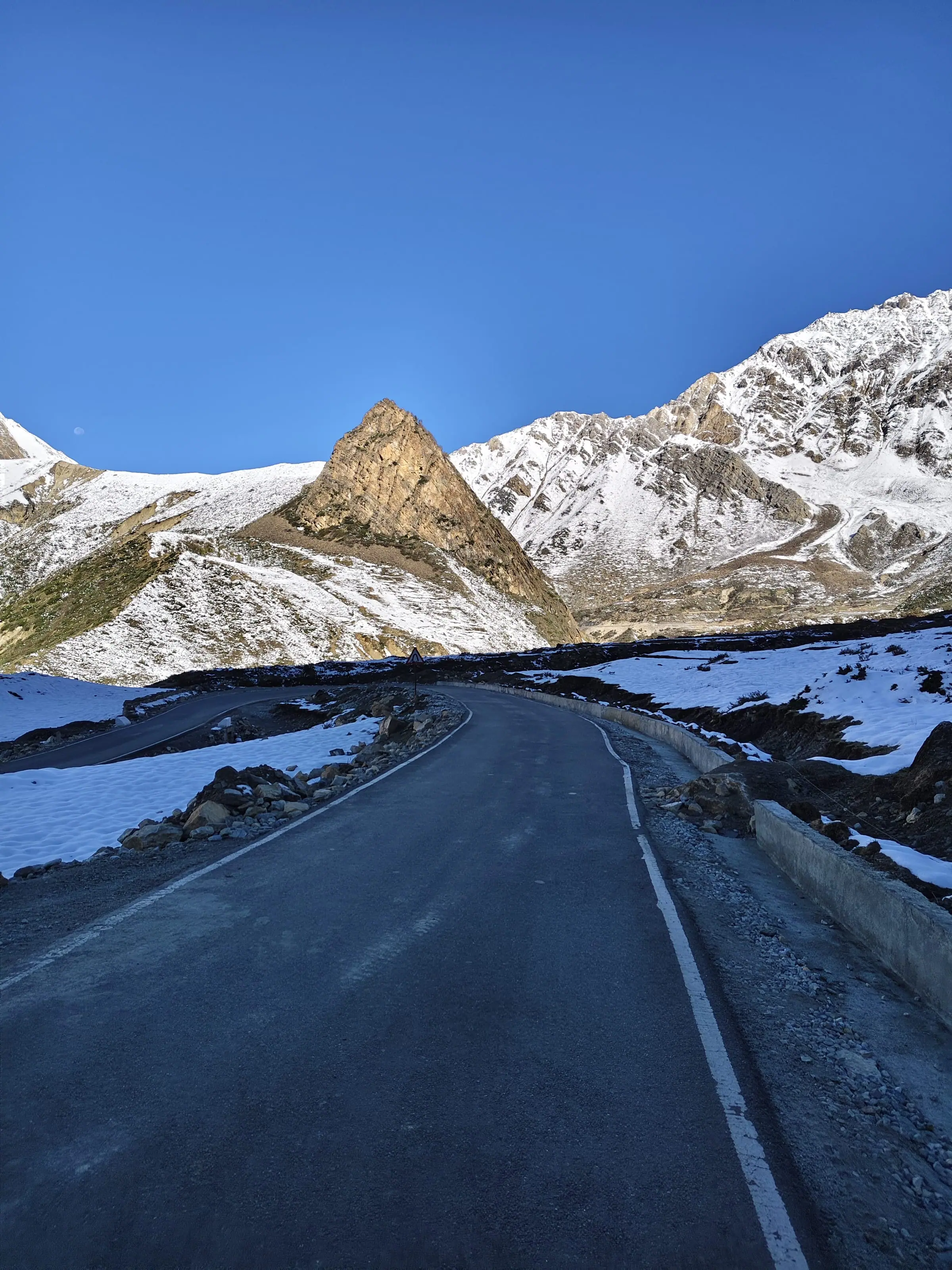
Key facts
- Where it is
- Vyas valley, Pithoragarh district, Uttarakhand
- Public transport ends at
- Dharchula, 908 m
- Road beyond Dharchula
- Gunji about 80 km, then Jolingkong about 36 km
- Permit
- Inner Line Permit: the district portal takes the application, SDM Dharchula grants it
- Season
- May to November (1 May to 20 November)
- Highest night
- Gunji or Nabi, 3,200 m to about 3,290 m
- Highest points reached
- Jolingkong about 4,500 m, Lipulekh over 5,000 m
- Done as a package
- 6 days starting in Delhi, 5 days starting in Haldwani
Can you do the Adi Kailash yatra without a tour package?
Yes. The Inner Line Permit application is made online on the district portal and granted by the SDM at Dharchula, buses reach that town, but no scheduled service runs the road on to Gunji and Jolingkong.
Some travellers read the package pages, decide the price is more than they want to spend, and would rather do it themselves. That is a reasonable thing to want. So here is the road as it is, including the parts that do not need us.
The permit is not the obstacle. It is applied for in your own name, online. Getting up to Dharchula is not the obstacle either: buses have been bringing people into that town far longer than anyone has been selling a yatra. The trouble starts north of it, where the road leaves Tawaghat and climbs into the Vyas valley above the Kali.
Public transport ends at Dharchula, 908 m. Gunji, where you sleep, is at 3,200 m.
The short answer, and the one thing it depends on
Independent travel to Adi Kailash works if the traveller can arrange a vehicle in Dharchula for the road up to Gunji and back down again.
Everything else has a counter, a portal or a ticket window behind it. The high road has none. Gunji is about 80 km from Dharchula. Jolingkong lies about 36 km further on, and it is there, beside Parvati Sarovar, that you take the darshan of Adi Kailash. Both of those legs come down to what vehicle you can put yourself into on the day.
Solve that and the rest of the trip is yours to run. Fail to solve it and you are standing in Dharchula with a valid permit and nowhere to use it.
What a package is actually paying for past Dharchula
It helps to know what you are replacing, so you can price your own version of it. On our Adi Kailash trips the money above Dharchula goes on these things.
- A vehicle and its driver held for your group on the high road, waiting through the days it cannot move.
- A permit filed weeks ahead, not on the morning you want to be on the road.
- Rooms kept in your name at Gunji or Nabi, 3,200 m to about 3,290 m, the highest you sleep on this route.
- Oxygen in the car, and a certified guide travelling beside you.
- Two meals a day, breakfast and dinner, with the driver's allowance, the tolls and the parking settled by us rather than argued at a barrier.
Who this works for alone, and who should not try it
It works for travellers with spare days, some Hindi, and the temperament to lose a day without losing the trip. Whether two or three people do better than one depends on the price of the vehicle above Dharchula, and that price is agreed in Dharchula on the day.
It works badly for anyone on a fixed return ticket, anyone travelling in the monsoon weeks, and anyone bringing parents who tire easily. Heart or lung trouble, blood pressure that isn't under control, diabetes, pregnancy, an operation not long behind you: take all of it to your own doctor before you plan a thing. And do not plan a night at 3,200 m with nobody behind you.
How far do the buses and trains get you?
Buses run from Delhi, about 570 km by road, and trains reach Tanakpur or Kathgodam; from either railhead the rest of the way to Dharchula is by road.
This part of the trip needs no operator at all. It is a long road, but a public one: about 570 km from Delhi on an Uttarakhand Transport Corporation bus, or about 238 km from Tanakpur, the nearest railhead, with Kathgodam the other station travellers use.
The last hill leg, Pithoragarh to Dharchula, is about 91 km by bus or shared taxi, and flights into Naini Saini start and stop, so assume no service on your dates. Timings, fares, railheads, taxi rates and rooms in town are set out in reaching Dharchula by bus, train, taxi or air.
How do you file the Inner Line Permit yourself?
The Inner Line Permit application runs on the Pithoragarh district portal, the SDM at Dharchula grants it, and the form is filled in the traveller's own name.
Since 20 February 2025 the paperwork for the Vyas and Darma valleys has moved fully online: you fill the form on the district's own portal, and the permit is granted at Dharchula by the SDM. We file these for our travellers before they arrive.
The documents to have ready
Work from the district's own steps to get the permit rather than from a second-hand list, because it changes by season. When we read it on 25 September 2026 it asked for the following, with formats to download.
- Photo identity issued by the government, and passport-size photographs.
- A medical fitness certificate, signed by a registered doctor.
- A self-declaration affidavit in the portal's own format.
Carry paper copies of all of it, and keep your ID in a pocket rather than in the bag. Identity is checked on the way up, and a phone with no signal is not a document. Our permit guide takes the list one paper at a time and says what each one is for.
Online first, or the office at Dharchula?
Apply online first. The portal is the route the district has published, and it puts your papers in the system before you are standing at a counter. What a walk-in traveller with no prior application gets at the Dharchula office, and how many working days that takes in practice, is not something we will guess at in print: it turns on the officer, the season and the day's load.
How many days to allow
Give the permit its own day in your plan, and a spare one behind it. Our trips are built that way: papers in the morning at Pithoragarh, then the vehicle leaves for Gunji, which only works because the application went in well before. Applying late is how a day gets lost, and on this road a lost day can cost you the vehicle too.
Who cannot use this route
Non-Indian passport holders do not go through the same process. A different clearance applies, and it is decided by the administration rather than by any operator. If you hold a foreign passport or an OCI card, settle that question with the administration before you buy a ticket to Delhi.
How do you get from Dharchula to Gunji and Jolingkong on your own?
Public transport ends at Dharchula: the road on to Gunji, about 80 km, has no scheduled service, so a vehicle is hired locally, priced per vehicle.
This is where a plan made from home runs out. Above Dharchula the road passes Tawaghat and climbs beside the Kali to Gunji, about 80 km and 3,200 m up, with Jolingkong about 36 km further on. Nothing on either arm runs to a published timetable, so the vehicle is agreed in Dharchula, and what is quoted is the whole vehicle for the run up and back, not a seat.
Fix the return leg in the same agreement, because a traveller who releases a vehicle at Gunji is betting on the next one having room. What that hire costs day by day, what the quote leaves out, whether a shared taxi or your own car is an option, and the questions to ask before agreeing a rate are set out in the Dharchula to Adi Kailash taxi fare guide.
What does it cost on your own, against a package?
Adi Kailash Explore's 6-day Delhi trip costs ₹30,300 a person: alone, it's bus fares, a hired vehicle above Dharchula and extra days.
A neat independent total cannot be printed here, because the number that decides it is what the high road costs the week you are there. What can be set out honestly is the shape of the two bills.
Where doing it yourself is genuinely cheaper
The public legs. A bus seat from Delhi, a train to Tanakpur or Kathgodam, a shared taxi out of Pithoragarh, a room in Dharchula and food on the road: those are the legs whose prices you can check and control yourself.
Where the saving disappears
Above Dharchula, because the vehicle is the one cost you cannot fix from home. Whether you share that vehicle with others or pay for it alone is settled in Dharchula on the day. Until you know that number, you cannot set an independent budget against a package price.
The days it costs you, not only the money
| On the road | Arranged by you | In our Adi Kailash trips |
|---|---|---|
| Road beyond Dharchula | Vehicle found in Dharchula, rate set on the day | A held vehicle and its driver, top to bottom |
| Inner Line Permit | Filed by you on the district portal | Lodged weeks before your dates |
| Rooms at Gunji or Nabi | Found on arrival | Kept in your name |
| Oxygen in the vehicle | Yours to organise | In the car |
| Meals | Paid as you go | Two meals a day, lunch your own |
| Days end to end | Add slack for the permit and a missed vehicle | 6 days from Delhi, 5 days from Haldwani |
With a driver waiting and the permit already granted, the circuit fits into 6 days from Delhi and 5 days from Haldwani. Alone, the driving is neither quicker nor slower; it is the waiting that stretches. How the price differs between the two start cities, and what gets spent en route, is worked out in our cost guide.
Would you rather someone else stood in the permit queue and held the vehicle? Then take the trip we run out of Delhi: Adi Kailash from Delhi.
Is there an ATM, UPI or mobile network past Dharchula?
Dharchula is the last reliable town: cash is the safe assumption above it, UPI should not be counted on, and the phone goes quiet for stretches.
Dharchula, 908 m, is the last place on this road that behaves like a town. Above it the things a traveller quietly relies on stop being dependable one by one, and a vehicle rate agreed in the morning may have to be paid in cash that evening. Carry enough notes for the whole high section and a buffer on top, treat UPI as unavailable rather than as a fallback, and fill the tank before the hill section.
Signal comes and goes on the about 80 km up to Gunji, so warn the family that a silent day or two is normal, not news. Which SIM actually works where, the roaming trap near the Nepal and China borders, the last ATM and the kilometres past the last pump are mapped in signal, cash and fuel stop by stop from Dharchula to Jolingkong.
Five things that go wrong for independent travellers here
Permit verification running late, no vehicle on the day, weather closing the road, too much height gained in one drive, and illness with no oxygen in the car.
None of these are exotic. They are the ordinary failures of this road, and every one of them is survivable with spare days and a plan made in advance.
The permit takes an extra day
You applied late, or a document was not in the portal's format, and the day you meant to go up is spent in Dharchula instead. The recovery is to have applied early and kept a spare day behind it. What turns it into a ruined trip is a return train booked tight.
No vehicle moves that day
Vehicles on the high road are not a timetable, they are a set of separate arrangements. Whether one is going on your day is not something you can know from home. Fixing your ride the evening before, face to face, is the difference between a morning start and a morning spent asking around.
Weather closes the road below Gunji
Weather runs the road above Dharchula. It can shut at short notice. On a package we reroute the group, and we don't charge you for days that cannot run. On your own, a closure is your own money and your own decision about whether to sit it out.
You gain too much height in one drive
Dharchula sits at 908 m. Gunji, where you will sleep, is at 3,200 m, and the road covers that in a single day. It is a steep gain for a body that was in the plains two days ago. A night at Pithoragarh, 1,645 m, and an easy first day at Gunji instead of a dash to Jolingkong are the cheapest insurance on this trip.
Someone in the group falls ill at Gunji
Nobody goes higher while anyone in the group feels unwell, and losing height is the response. Our vehicles carry oxygen; a hired jeep may not, so ask before you leave Dharchula. Anything personal belongs with your own doctor before the trip, and nobody should take a stranger's prescription up a mountain.
Which months and which travellers should not attempt this alone?
July and August bring the heaviest rain to Gunji, October brings frost nights, and travellers with heart or lung conditions should not attempt the high valley without support.
Our operating season for this road is May to November, opening 1 May and closing 20 November. Inside that window the months are not equal, and an independent traveller with no reserve vehicle feels the difference far more than a group does.
| Month | Gunji day / night | Rain at Gunji | Frost nights, Gunji | Frost nights, Jolingkong |
|---|---|---|---|---|
| May | 12°C / 1°C | 74 mm | 10 | 31 |
| June | 16°C / 8°C | 199 mm | 0 | 16 |
| July | 18°C / 12°C | 479 mm | 0 | 0 |
| August | 17°C / 12°C | 437 mm | 0 | 0 |
| September | 16°C / 8°C | 176 mm | 0 | 13 |
| October | 11°C / 0°C | 38 mm | 14 | 31 |
The monsoon weeks, and why the road matters more than the rain
July and August are the wet months up there, 479 mm and 437 mm at Gunji. Being rained on is not the problem. The problem is a road that shuts with no warning, and no spare day of your own to wait it out. Travelling alone in those weeks is the version of this trip we would talk a friend out of.
Travelling alone as a woman, and travelling with parents over sixty
We will not tell you whether to travel this road alone, but here is what you would have to fall back on. What is thin is the fallback: rooms, vehicles and network above Dharchula are not things to count on. Reach Dharchula in daylight, keep your ride arranged rather than found on the road, and leave your day's plan with someone at home.
For parents over sixty the honest answer is different. The altitude, the cold night at 3,200 m and the chance of a day's wait are a lot to hand to a family with no vehicle held and no oxygen in the car. That is the version of this trip where having a company behind you earns its money.
Late October, and how little slack is left
By October the days at Gunji reach only 11°C. The nights drop to 0°C. Gunji counts 14 frost nights that month, and Jolingkong 31. Our season ends on 20 November. Month by month temperatures sit in our weather guide for Gunji. The district portal carries the official registration window.
Questions people ask about Adi Kailash and Kailash Mansarovar
Adi Kailash stands in India and needs only an Inner Line Permit; Mount Kailash and Lake Mansarovar are in Tibet, where most of these questions actually belong.
A lot of what people type into a search for this trip is really about the Tibet yatra. The two get mixed up constantly, so it is worth separating them before you plan anything.
How much does it cost to trek the Adi Kailash yatra?
It is not a trek, which changes the costing. The route is driven, with a short walk where the darshan happens, so the bill is vehicles, rooms, food and the permit rather than porters and camps. With us it comes to ₹30,300 a person from Delhi and ₹26,300 from Haldwani. Done alone, the public legs are cheap and the high road is the line you cannot fix in advance.
Which Kailash yatra is the easiest?
Five peaks are held in Hindu tradition to be seats of Shiva. Adi Kailash is the one a road reaches inside India, on an Inner Line Permit and no foreign visa. The five compared one by one, with heights and permits for each, are in our Panch Kailash guide.
What happens if you visit Adi Kailash?
That is a question of belief, and it deserves to be answered as one. Travellers who make this yatra speak of Adi Kailash as a seat of Shiva, and of the darshan at Jolingkong as carrying what Mount Kailash carries without crossing a border; some say it washes off old wrongs. We are drivers and permit-filers, not priests. At first light the mountain stands over still water. Travellers who see it go very quiet.
Can we take a bath in Mansarovar, or in Parvati Sarovar?
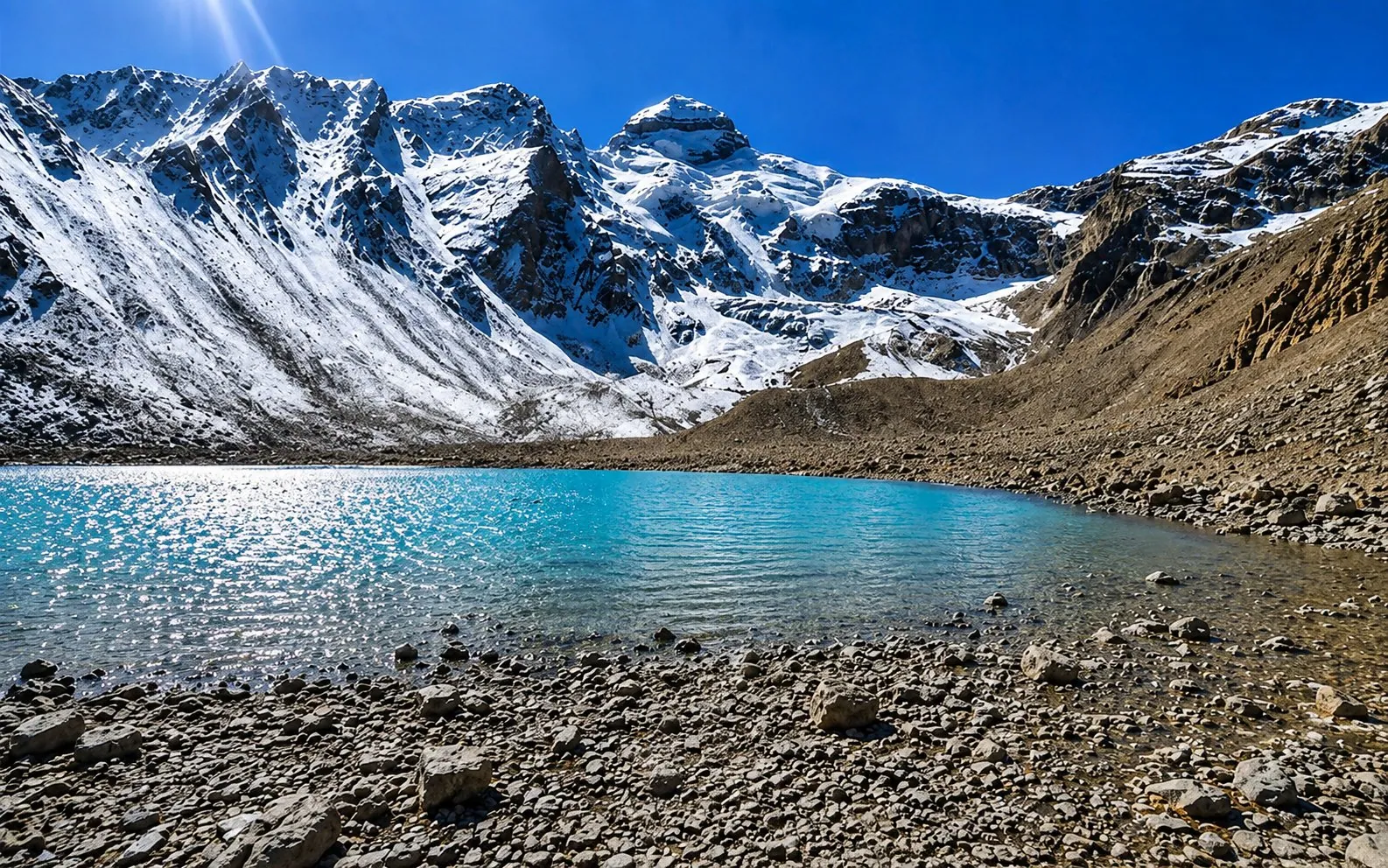
Lake Mansarovar is in Tibet and is not on this route at all. The lake below Adi Kailash is Parvati Sarovar at Jolingkong, where travellers pray at the temple beside the water and some take a dip. What everyone who goes there is expected to keep is one simple rule: the water is not to be dirtied.
What is the oxygen level up there?
Air thins with height, and this route takes you from Dharchula at 908 m to a night at Gunji, 3,200 m, then a day at Jolingkong, about 4,500 m, and Lipulekh, over 5,000 m, when the authorities allow it. We have no sourced percentage to give, so none appears here. Climb slowly, and ask your doctor about your own case.
How many people have died on the Kailash yatra?
That question belongs to the Tibet yatra, not to this road: it comes from reports of the Kailash Mansarovar route through the passes into China. No official figure for it is in front of us, so we are not going to put a number to it. On the Adi Kailash road, the risks worth planning around are altitude, weather closures and vehicles, in that order.
Questions travellers ask
It is a drive, not a trek, and the walking is short. At Jolingkong you walk a stretch beside Parvati Sarovar. Gauri Kund and the Manokamna temple at Nabi village are stops on that same day. Wear proper shoes, because the ground is loose and cold.
Pack for cold nights in every month of the season: at Gunji even May nights sit around 1°C. Keep in hand what gets checked: government photo identity, passport-size photographs, the fitness certificate and the self-declaration the portal lists, and the permit itself. In the bag, sturdy shoes, a torch, personal medication, a power bank and enough cash for the whole high section.
A foreign passport does not go through the Inner Line Permit process that an Indian one does. A separate clearance applies and the district administration decides it. Write to the administration, or to us, before committing to dates or tickets. Nobody is turned away here for a passport, but a permit that is not ours to issue is not ours to promise.
Whether KMVN is running batches an independent traveller can join this season is worth confirming with KMVN directly rather than from an old listing, because the arrangement has changed over the years. What a government batch and a private operator each give you, and how to verify any operator before paying, is set out in our guide to choosing an operator.
A certified guide is part of what Adi Kailash Explore's Adi Kailash trips include; whether an independent traveller is required to have one is a local rule, and the Dharchula SDM office can confirm it for your dates. Required or not, someone who knows the valley saves you the two things you cannot buy back later: a wasted day, and a wrong call on the weather.
More days than a package takes. The packages run 6 days from Delhi and 5 days from Haldwani, with the vehicle held and the permit filed before arrival. Coming up by public transport and hunting a ride above Dharchula, build in spare days for the permit, for a vehicle that does not go and for a road closed by weather. Never plan a tight return.
How we made this guide
The figures on this page are filled in from data each time it is built, never typed by hand: prices, days and nights from our package pages; road distances from OpenStreetMap, measured by a router (retrieved 22 September 2026); heights from Wikidata, the Copernicus 90 m elevation model and the heights this site publishes; temperatures from 30-year ERA5-Land climate normals, modelled rather than measured at a weather station. If anything here is out of date, tell us on WhatsApp and we will correct it.
- Adi Kailash from Delhi: itinerary and price
- Adi Kailash & Om Parvat: itinerary and price
- OpenStreetMap contributors, routed with OSRM: road distances · retrieved 22 September 2026
- Wikidata: published elevations · retrieved 24 September 2026
- Copernicus GLO-90 elevation model, via Open-Meteo (heights given as about) · retrieved 24 September 2026
- ERA5-Land climate normals 1991–2020, ECMWF, via Open-Meteo · retrieved 22 September 2026
- Amar Ujala: inner line permits to be issued online (20 February 2025)
- District permit portal, Pithoragarh
- District permit portal: steps to get the ILP (read 25 September 2026)
- The Hindu: first commercial flight lands at Naini Saini airport (7 November 2024)
- ThePrint: Dehradun to Pithoragarh flight service flagged off (26 March 2026)
About Adi Kailash Explore
Adi Kailash Explore (adikailash.io) is a tour operator based in Pithoragarh, Uttarakhand, that specialises in one route: Adi Kailash and Om Parvat, the Darma valley and Munsiyari. It runs departures from Delhi, Haldwani and Pithoragarh, and its team files the Inner Line Permit for every Adi Kailash traveller at SDM Dharchula. It is recognised by Uttarakhand Tourism, certified by MSME, Govt. of India (UDYAM-UK-09-0012927) and verified on the NIDHI Portal, and was founded by Vinay Verma. Why travel with us
Keep reading
All posts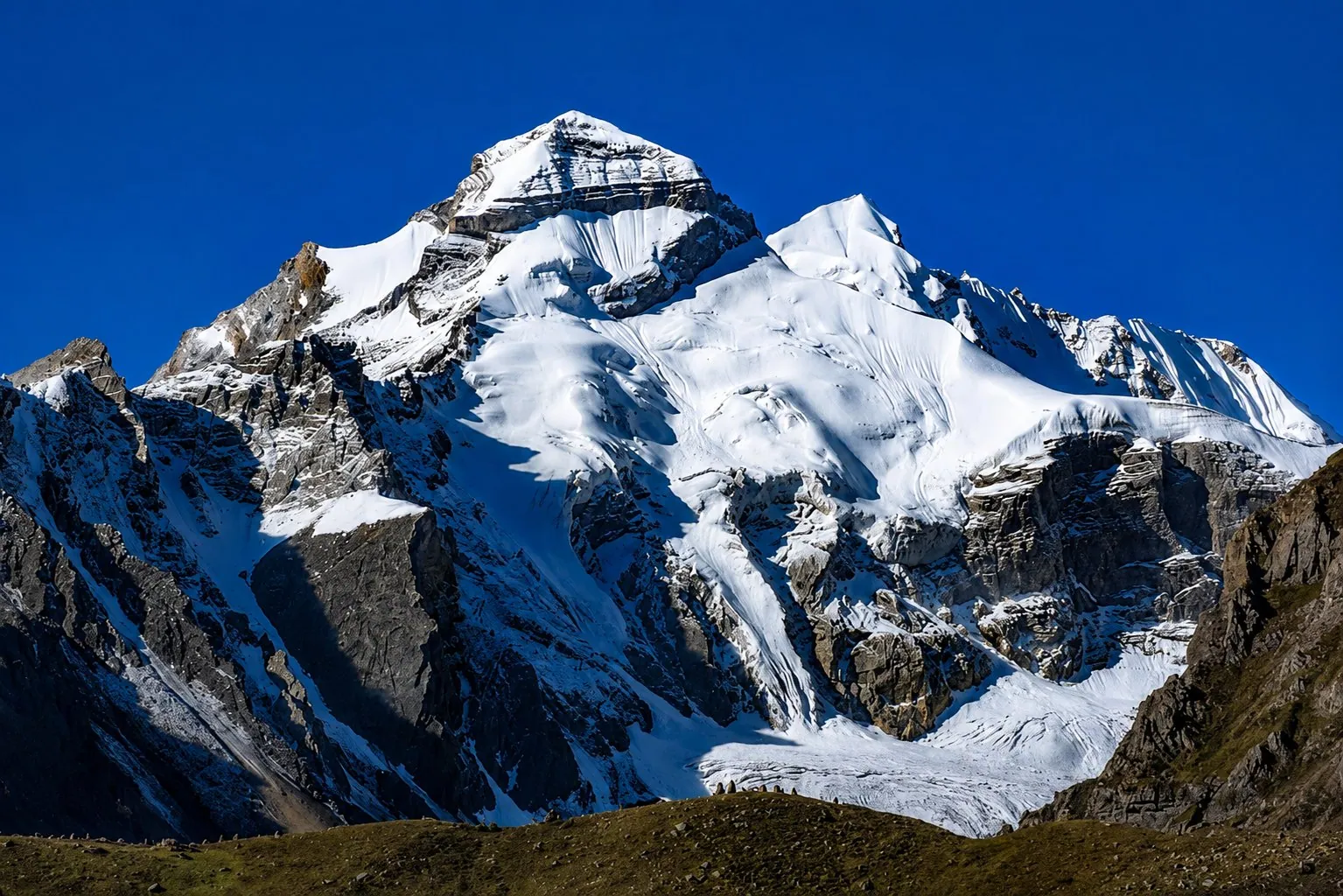 Adi Kailash12 min read
Adi Kailash Route: Delhi to Jolingkong, Leg by Leg
How to reach Adi Kailash means driving, not trekking: the road runs to Jolingkong at about 4,500 m. Adi Kailash Explore note where the short walks begin. Adi Kailash16 min read
Adi Kailash Weather and Temperature: Today and by Month
Adi Kailash weather now and for 7 days at Jolingkong, Om Parvat and Gunji; in May Gunji runs 12°C by day. Adi Kailash ExploreAdi Kailash12 min readGunji, Uttarakhand: The Village Where the Road Forks
A Vyas valley trip through Gunji takes 6 days from Delhi at ₹30,300 a person, 4 days from Pithoragarh. Adi Kailash Explore run it May to November.The day-by-day plan
Download the Adi Kailash itinerary for free.
6 days and 5 nights from Delhi, as a 19-page PDF on WhatsApp.Adi Kailash & Om Parvat from Delhi: 6 days and 5 nights, as a 19-page PDF on WhatsApp. Forward it to your family, then ask us anything.
One WhatsApp message. Free, in Hindi or English.Or call +91 76688 58311 · Hindi or English
Adi Kailash & Om Parvat from Delhi
6 days, 5 nights · 19 pages
- Delhistart
- Pithoragarh
- Gunji
- Jolingkong
- Nabhidhang
- Lipulekh
- Jageshwar
- Back to Delhi